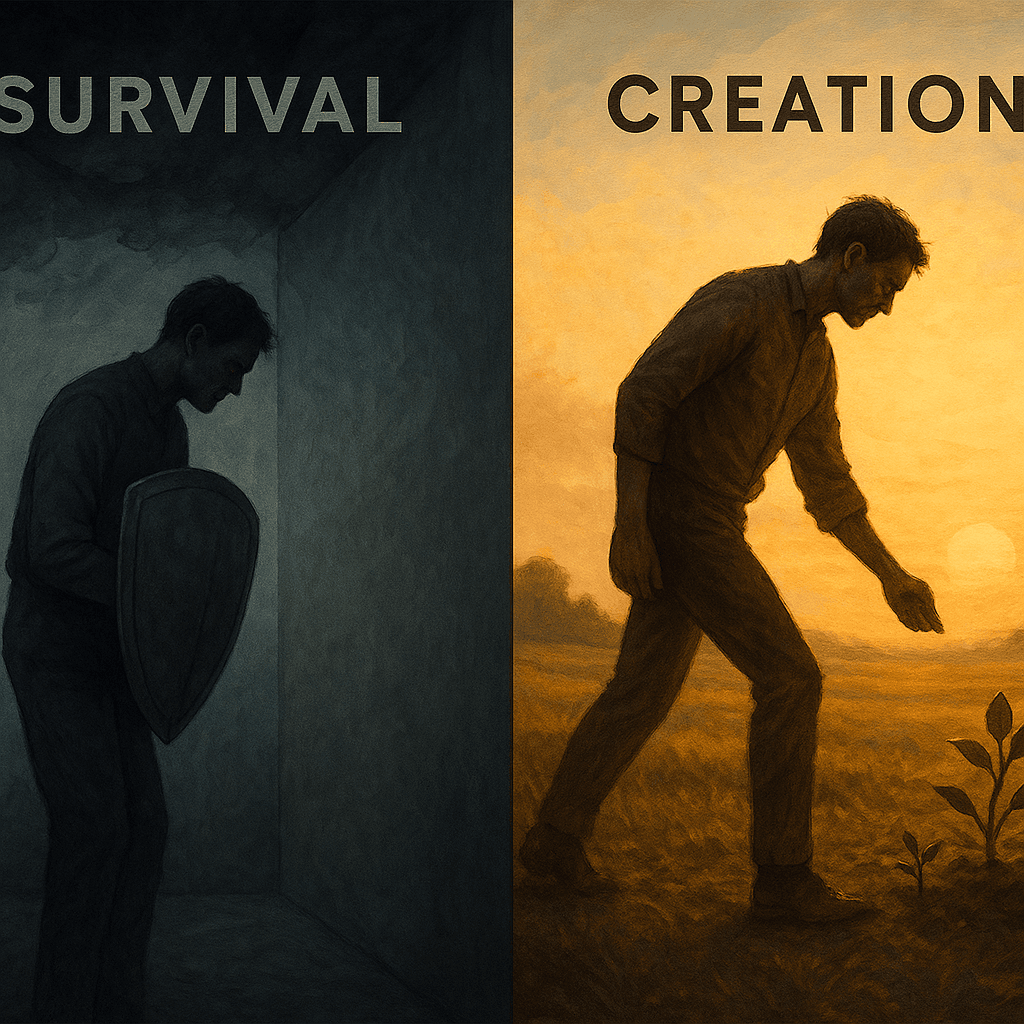
Featured image for How Jungian Archetypes Influence Your Career Choices

How Jungian Archetypes Influence Your Career Choices

Career decisions rarely happen in a neat, rational spreadsheet. People like to think they choose work based on salary charts, job stability, or whatever is trending on LinkedIn. But that is only half the story. Underneath the polished resumes and strategic plans, something quieter is steering the wheel. That something often looks a lot like Jungian archetypes. These deep psychological patterns - first explored by Carl Jung - shape how individuals see the world, respond to pressure, and define

Yaro Pry's avatarYaro Pry··5 min read
Featured image for The Shadow Self: Understanding Jung’s Concept of Personality

The Shadow Self: Understanding Jung’s Concept of Personality

There’s a part of every person they don’t post about. Not on Instagram. Not on LinkedIn. Not even in their group chat. Carl Jung called it the Shadow. And honestly? It might be the most important part of personality that no one wants to talk about. The shadow self isn’t evil. It isn’t some horror-movie alter ego lurking in a basement. It’s simply the collection of traits, impulses, and desires a person has learned to suppress. The stuff that doesn’t fit the image. The qualities that feel… inconv

Yaro Pry's avatarYaro Pry··5 min read
Featured image for Judging vs. Perceiving: How You Organize Your Life

Judging vs. Perceiving: How You Organize Your Life

Some people pack their suitcase three days before a trip. Others throw things into a bag an hour before leaving and call it "adventure." Neither is wrong. But the difference? It runs deeper than habits. It’s about Judging vs. Perceiving - two powerful personality orientations that quietly shape how someone plans, decides, works, and even relaxes. If you’ve ever wondered why certain people crave structure while others feel suffocated by it, this is the conversation worth having. ## What Does Judg

Yaro Pry's avatarYaro Pry··4 min read
Featured image for Thinking vs. Feeling: Your Core Decision-Making Process

Thinking vs. Feeling: Your Core Decision-Making Process

Why do some people build pros-and-cons lists before choosing a new job, while others simply ask, “How does this feel?” The contrast is fascinating. It shows up in boardrooms, relationships, even in the cereal aisle. One person analyzes fiber content and price per ounce. The other reaches for the box that sparks nostalgia. Thinking vs. Feeling is not about intelligence versus emotion. It is about how a person evaluates the world. And if you ask many psychologists, this preference shapes far more

Yaro Pry's avatarYaro Pry··4 min read
Featured image for Sensing vs. Intuition: How Do You Process Information?

Sensing vs. Intuition: How Do You Process Information?

Some people trust what they can see, touch, and verify. Others lean into hunches, patterns, and possibilities. One focuses on facts. The other chases meaning. Welcome to the fascinating divide between Sensing vs. Intuition - two fundamentally different ways of processing information. This isn’t about intelligence. It’s not about who’s more logical or creative. It’s about perception. How someone takes in the world. How details become decisions. And honestly? Understanding this one distinction c

Yaro Pry's avatarYaro Pry··4 min read
Featured image for Introduction to Jungian Typology: Beyond Introversion and Extroversion

Introduction to Jungian Typology: Beyond Introversion and Extroversion

Most people think Jungian typology starts and ends with one question - are you an introvert or an extrovert? That’s the cocktail party version. The pop-psych headline. The simplified meme floating around social media. But here’s the truth. That binary barely scratches the surface. Jungian typology is less like a light switch and more like a control panel filled with dials, sliders, and hidden settings. It explores how people process information, make decisions, interact with the world, and rec

Yaro Pry's avatarYaro Pry··5 min read