Survival vs. Creation: Which Motivational Level Are You In?
 Yaro Pry··4 min read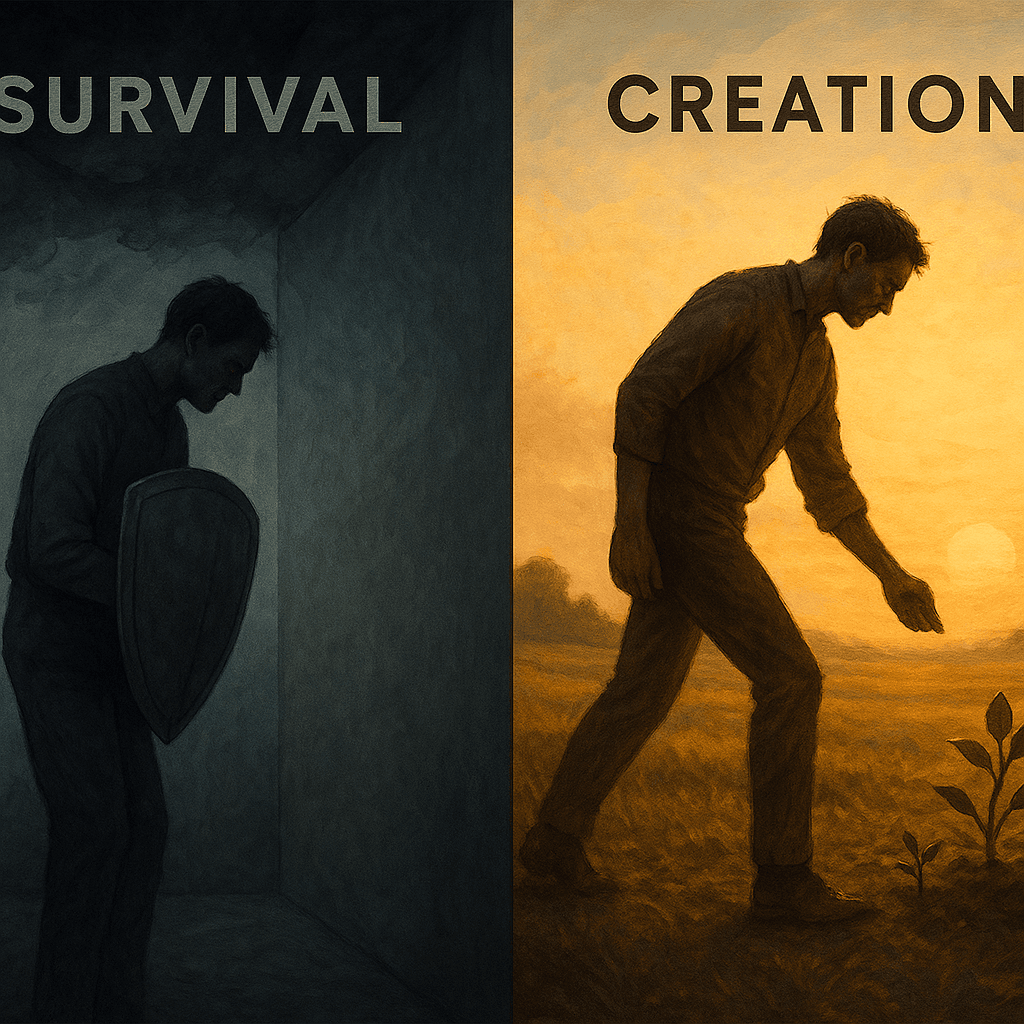
There’s a quiet question humming underneath most decisions people make. Should I play it safe… or build something bigger? It shows up when someone stays in a draining job. When they hesitate to start a side project. When they say “maybe next year” for the fifth time in a row. At the heart of it all sits a powerful divide: survival mode vs. creation mode. If you ask me, this single distinction explains more about human behavior than most productivity hacks ever will. Let’s unpack it.
What Is Survival Mode, Really?
Survival mode isn’t dramatic. It doesn’t always look like chaos or crisis. Sometimes it looks… responsible. Paying bills. Avoiding risk. Keeping the peace. Not rocking the boat. But psychologically? Survival mode is when decisions are driven by fear, security needs, or the desire to avoid loss. It’s the brain saying: - Don’t lose what you have - Don’t embarrass yourself - Don’t make a mistake - Stay safe Sounds reasonable, right? Here’s the catch: survival is reactive. It narrows focus. It shrinks imagination. It trades long-term growth for short-term stability. Think of it like driving with the parking brake slightly on. The car moves. Technically. But something drags.
Signs Someone Is Operating From Survival
A person in this state often: 1. Avoids change even when unhappy 2. Makes decisions based on "what if it fails?" 3. Feels constantly tired but not necessarily overworked 4. Chooses comfort over curiosity 5. Prioritizes approval over authenticity That doesn’t mean they’re weak. It means their motivational level is defensive. And defense is exhausting.
What Is Creation Mode?
Creation mode feels different. It’s expansive. Forward-looking. Sometimes uncomfortable - but energizing. In this state, decisions are driven by growth, contribution, expression, meaning. The internal dialogue shifts: - What could I build? - What would excite me? - Who could I become? - How can I improve this? Notice the energy? Creation asks questions that open doors instead of guarding them. Imagine two gardeners. One spends all day pulling weeds in fear they’ll take over. The other plants new seeds. Both are busy. Only one builds something beautiful. That’s the difference.
Why Most People Default to Survival
Here’s a hot take: survival mode isn’t a flaw. It’s biology. Humans evolved to detect threats, not opportunities. The nervous system reacts faster to danger than possibility. Add financial pressure, social comparison, family expectations - and survival becomes the default setting. Modern life amplifies it. Notifications. News cycles. Economic uncertainty. Everyone quietly scanning for the next problem. No wonder ambition feels risky. But motivational psychology shows something fascinating: once basic needs are reasonably stable, growth needs begin pushing forward. Curiosity, mastery, purpose. They don’t disappear. They wait. The real question becomes - is someone aware of which level is driving them?
The Psychology Behind Motivational Levels
This isn’t just philosophy. There’s science under the hood. Platforms like lifematika.com analyze motivation using established psychological frameworks, including Self-Determination Theory and deeper motivational level mapping. In simple terms, they examine whether actions are driven by fear-based necessity or intrinsic growth. The difference matters. Self-Determination Theory, for example, highlights three core drivers: - Autonomy - Competence - Relatedness When those are fulfilled, people naturally shift toward creation. When they’re threatened, survival takes over. Add value systems (Schwartz), emotional intelligence metrics, and personality traits like openness from the Big Five model - and you start seeing patterns. Some individuals lean toward innovation. Others lean toward security. Neither is wrong. But unconscious patterns? That’s where stagnation lives.
A Quick Self-Check
Before labeling anything, pause. Ask: - Is this decision expanding my future or protecting my present? - Am I choosing from fear or vision? - If failure were impossible, would I still pick this option? - Do I feel tight… or energized? The body usually knows before logic catches up.
Survival Isn’t the Enemy
Let’s be clear. Survival mode saves people during real crises. Job loss. Illness. Major transitions. It sharpens focus and preserves resources. That’s valuable. The problem begins when survival becomes a lifestyle. Living there long term is like keeping armor on at a dinner party. Protective, yes. Comfortable? Not exactly. Over time it can lead to: - Chronic dissatisfaction - Low-grade anxiety - Creative frustration - Quiet resentment And that feeling many can’t quite name - "Is this it?"
Creation Requires Courage
Shifting upward isn’t about reckless leaps. It’s about small expansions. Creation might look like: - Taking a course aligned with genuine interest - Starting a conversation that feels vulnerable - Pitching an idea at work - Setting a boundary - Building something no one asked for - yet Notice something? None of those are guaranteed to succeed. That’s the point. Creation accepts uncertainty as part of the deal.
Personality Plays a Role
Not everyone approaches this shift the same way. Someone high in conscientiousness might move toward creation through structured goals and planning. An individual strong in openness may experiment creatively and pivot often. A person driven by influence (DISC framework) could create by inspiring others. Another motivated by stability might first need psychological safety before expanding. This is why broad advice like “just follow your passion” falls flat. Motivation is layered. Personality, values, emotional awareness - they all interact. A comprehensive psychometric assessment, like the 95-question model used by lifematika, can reveal which systems are dominant and which are underdeveloped. That clarity changes things. Because once someone sees their pattern, they can adjust it.
Growth Feels Strange at First
Here’s something people don’t talk about enough. When someone shifts from survival to creation, it can feel… unsafe. The nervous system interprets unfamiliar expansion as risk. Doubt gets louder. Inner critics wake up. That doesn’t mean the move is wrong. It means identity is stretching. Like muscles after a new workout - soreness signals adaptation.
Why Awareness Changes Everything
Most individuals don’t consciously choose survival mode. They drift into it. Bills pile up. Responsibilities grow. Dreams get postponed. One day blends into the next. But awareness interrupts autopilot. When a detailed personality and motivation analysis lays out strengths, values, emotional drivers, and behavioral tendencies in one structured report, patterns become visible. Seeing how intrinsic motivation compares to fear-based decision loops can be eye-opening. And clarity is powerful. It turns vague dissatisfaction into actionable insight.
So… Which Level Are You In?
This isn’t a moral hierarchy. Survival isn’t bad. Creation isn’t superior. They serve different purposes. But staying stuck in the lower gear when the road opens up? That’s optional. The real shift happens when someone asks, honestly: Am I protecting who I am… or building who I could become? That question alone can move a life. Maybe not overnight. But gradually. Intentionally. Forward. And that’s where creation begins.