Why We Group People into Types: The History of Psychometrics
 Yaro Pry··4 min read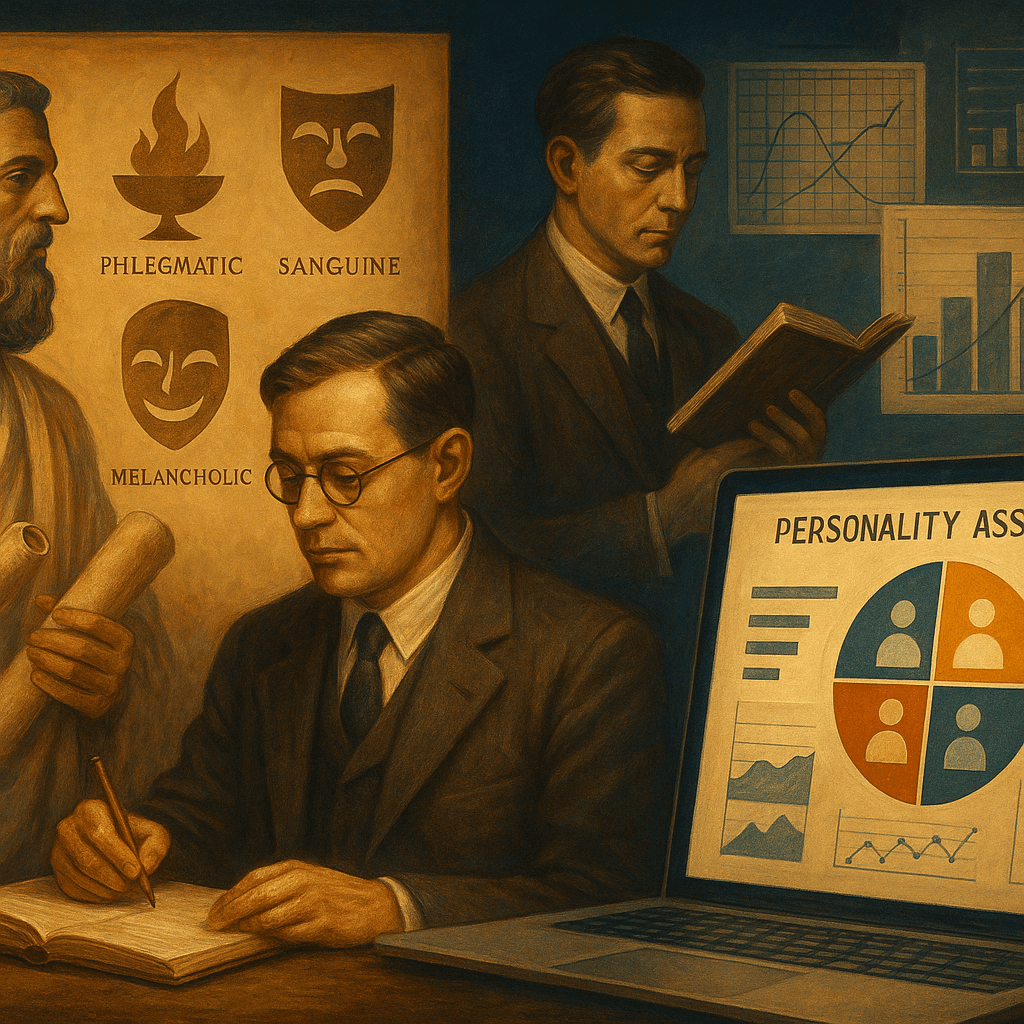
People love labels. Always have. The quiet one. The leader. The rebel. The sensitive soul. Walk into any office, classroom, or family dinner and you’ll hear it - subtle sorting, silent categorizing, mental sticky notes placed on foreheads. But why do we do it? Why this deep, almost instinctive need to group people into types? It’s not just social gossip. It’s history. It’s psychology. It’s survival. And if you ask me, it’s one of the most fascinating parts of being human. Let’s dig in.
The Ancient Obsession with Personality Types
Long before modern psychology had labs and peer-reviewed journals, humans were already trying to decode personality. The ancient Greeks believed in the four temperaments - sanguine, choleric, melancholic, phlegmatic. They thought bodily fluids shaped behavior. Sounds strange now, sure. But at the time? It was cutting-edge thinking. The idea was simple:
- Sanguine - optimistic and social
- Choleric - ambitious and leader-like
- Melancholic - analytical and thoughtful
- Phlegmatic - calm and steady
Primitive? Yes. Wrong? Not entirely. They were reaching for patterns. Humans crave patterns like lungs crave oxygen. Fast forward centuries. The tools improved. The curiosity didn’t.
From Philosophy to Science - The Birth of Psychometrics
Here’s where things get serious. In the late 19th and early 20th centuries, psychology wanted legitimacy. Scientists began asking: Can we measure personality the way we measure height or weight? That question sparked psychometrics - the science of measuring mental traits. And suddenly, personality wasn’t just poetry. It became data. Researchers developed structured questionnaires. Statistical models emerged. Patterns were tested, challenged, refined. Was it perfect? Not even close. But it changed everything. Psychometrics gave us tools to:
- Identify personality traits
- Predict behavioral tendencies
- Understand motivation
- Improve hiring decisions
- Guide personal development
In other words, it gave structure to something deeply human and beautifully messy.
Why We Still Group People Today
Here’s the hot take: we group people because our brains are lazy. Not in a bad way. Efficient. The brain looks for shortcuts. Imagine trying to evaluate every single person from scratch, every time. Exhausting, right? So we create mental categories. Types are cognitive compression files. They shrink complexity into something manageable. When someone says, “She’s detail-oriented,” your brain instantly activates a cluster of expectations. Organization. Precision. Maybe a color-coded calendar. Boom. Efficient processing. But modern psychometrics does something smarter than everyday labeling. It tests those assumptions.
The Shift from Stereotypes to Structured Models
There’s a massive difference between casual labeling and scientific assessment. One is guesswork. The other is evidence-based measurement. Take widely recognized models like:
- OCEAN - Big Five: openness, conscientiousness, extraversion, agreeableness, neuroticism
- Jungian typology: cognitive functions and introversion versus extraversion
- DISC: dominance, influence, steadiness, conscientiousness
- VIA character strengths: core virtues
- Self-Determination Theory: intrinsic motivation drivers
- Schwartz values: foundational life priorities
- Emotional intelligence frameworks
- Motivational level analysis
Each model looks at personality from a different angle. Like rotating a diamond under light. One angle shows structure. Another reveals values. Another uncovers emotional patterns. Combine them? You get depth. And depth is where self-awareness lives.
The Real Reason People Take Personality Tests
Let’s be honest. Most people don’t take a personality assessment just for fun facts. They’re looking for clarity. Questions like:
- Why do I react this way?
- What kind of career fits me?
- Why do I clash with certain people?
- What motivates me, really?
Personality typing becomes a mirror. Not a box. And the best modern platforms understand that distinction.
A New Era of Scientific Self-Discovery
Here’s where things get interesting. Instead of relying on a single framework, newer platforms combine multiple validated psychological models into one integrated report. One example is lifematika.com - a scientific psychometric platform designed for deep self-discovery. It’s built around a 95-question assessment that takes about 15 minutes. No registration. Free to start. Instant detailed report. But what makes it compelling isn’t speed. It’s structure. The system integrates eight leading psychological methodologies simultaneously. Not just Big Five. Not just Jung. All of them working together to create a holistic profile. That means users don’t just learn, “You are introverted.” They discover:
- Their core personality traits
- Their communication style
- Their intrinsic motivation drivers
- Their emotional intelligence patterns
- Their fundamental values
- Their behavioral strengths
It’s like moving from a sketch to a high-resolution portrait. And yes - users can retake it. After career changes. After major life events. After personal growth phases. Because personality evolves. That flexibility matters.
Are Personality Types Limiting?
Critics argue that typing reduces individuality. That it puts people in boxes. Fair concern. But here’s the nuance. A type is a starting point, not a cage. When done scientifically, psychometric analysis doesn’t say, “You are this and nothing else.” It says, “You tend to operate this way under certain conditions.” See the difference? One is rigid identity. The other is probabilistic insight. That distinction changes everything.
The Psychology Behind Our Need for Categories
Let’s zoom out. Humans evolved in tribes. Rapidly assessing others meant survival. Who’s trustworthy? Who’s dominant? Who cooperates? Categorization wasn’t prejudice. It was protection. Modern life is more complex, but the brain still runs similar software. We sort to understand. We group to predict. We label to reduce uncertainty. Psychometrics simply refines that instinct with research and statistical rigor. Instead of guessing someone’s temperament based on vibes, structured assessments measure consistent patterns across dozens of indicators. That’s progress.
The Future of Psychometrics
Where is this all heading? More integration. More precision. More personalization. As data science advances, personality analysis becomes increasingly dynamic. Instead of static labels, we’ll see evolving profiles that adjust with life changes. Career shifts. Parenthood. Burnout. Reinvention. Platforms that allow reassessment - like lifematika - already reflect this direction. Personality isn’t a fixed sculpture. It’s more like clay, shaped by experience. And honestly, that’s reassuring.
So Why Do We Group People into Types?
Because chaos is uncomfortable. Because patterns feel safe. Because understanding ourselves feels powerful. From ancient Greek temperaments to modern psychometric platforms, the mission hasn’t changed: decode human nature. The tools evolved. The curiosity stayed. And maybe that’s the real story here. Not that we like putting people into boxes. But that we’re endlessly fascinated by what makes us different - and what connects us. Sounds simple. It’s not. And that’s exactly why psychometrics continues to matter.