Understanding the MBTI Test: A Complete 2026 Guide
 Yaro Pry··4 min read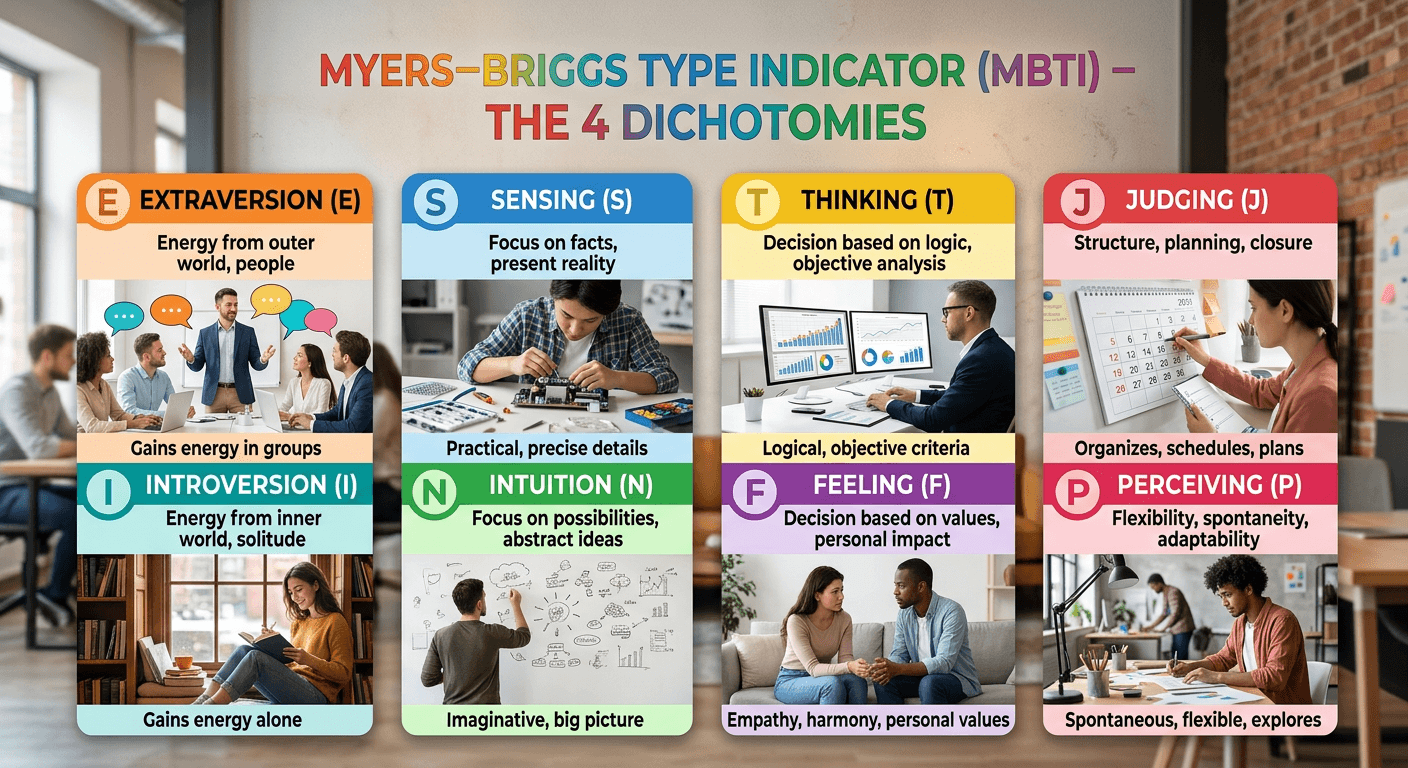
Understanding the MBTI test is like opening a treasure chest filled with insights about ourselves. From the curious to the perplexed, many people find themselves asking, "What is this MBTI test all about?" If you're feeling lost in the sea of personality types, don't worry; you’re not alone. The Myers-Briggs Type Indicator (MBTI) is a widely recognized tool designed to assess personality types. It evaluates preferences across four dichotomies—extraversion vs. introversion, sensing vs. intuition, thinking vs. feeling, and judging vs. perceiving—that ultimately encapsulate how individuals engage with the world.

Quick Summary {#quick-summary}
The MBTI test identifies personality types based on four dichotomies, helping individuals understand their preferences and behaviors. It serves as a popular tool for personal development and team dynamics.
- The MBTI test categorizes individuals into 16 distinct personality types.
- It’s commonly used in career planning and team building.
- Many online versions are available, making it easily accessible.
- Accuracy can vary, so consider official sources for a reliable assessment.
Table of Contents {#table-of-contents}
- Understanding the MBTI Test
- How the MBTI Works
- The Four Dichotomies
- Extraversion vs. Introversion
- Sensing vs. Intuition
- Thinking vs. Feeling
- Judging vs. Perceiving
- Taking the MBTI Test Online
- How Accurate is the MBTI Test?
- Benefits of the MBTI Test
- Conclusion
Understanding the MBTI Test {#understanding-the-mbti-test}
It's fascinating how personality quirks shape our lives, isn’t it? The MBTI test helps people dig deep into their psyche, offering fascinating insights that can be eye-opening. Imagine going through life viewing the world through a specific lens—one that both highlights your strengths and casts shadows on your blind spots. Each of the 16 types—like the INFP dreamers, ESFJ warm-hearted caretakers, and everything in between—paints a unique portrait of a personality. The beauty lies in its adaptability; educators, businesses, and even couples use this test to foster understanding and communication. .
How the MBTI Works {#how-the-mbti-works}
If you're wondering how this complex mechanic of self-discovery functions, let’s break it down. The test comprises a series of questions that prompt you to choose between two options. A lot like picking between chocolate or vanilla ice cream—do you value practicality or creativity? Do you recharge by being alone or surrounded by friends? These choices lead to your ultimate type and can steer your understanding of interpersonal relationships.
The Four Dichotomies {#the-four-dichotomies}
Every personality type in the MBTI framework is defined by four dichotomies. Each pair of opposites illustrates a dimension of your personality, mapping out how you perceive the world and make decisions.
Extraversion vs. Introversion {#extraversion-vs-introversion}
Imagine a bustling party. Some people thrive amid the chatter, while others need a cozy corner to catch their breath. Extraversion (E) means gaining energy from the outside world; introversion (I) focuses on recharging in solitude. There’s no right or wrong here, just personal preference.
Sensing vs. Intuition {#sensing-vs-intuition}
Picture a detective gathering clues. A sensor (S) sees the details—the texture of a wall, the scent of the air. An intuitive (N) focuses on the bigger picture, searching for patterns and connections. It’s not about being detail-oriented or visionary; rather, it’s about how you naturally process information.
Thinking vs. Feeling {#thinking-vs-feeling}
Take a moment and think about decision-making. Do you lean towards logic and analysis (T) or emotions and values (F)? Thinkers prioritize objectivity, while feelers seek harmony and empathy in their choices. Each has its strengths; both play vital roles in interpersonal dynamics.
Judging vs. Perceiving {#judging-vs-perceiving}
This dichotomy is all about how you approach the outside world. Judgers (J) like structure and closure. They thrive on schedules and lists. Perceivers (P), on the other hand, enjoy spontaneity and keeping their options open. Depending on your preference, life feels like an organized symphony or an improvised jazz session.
Taking the MBTI Test Online {#taking-the-mbti-test-online}
Here’s a hot take: if you haven’t taken the MBTI test online yet, are you even trying to understand yourself? Several platforms offer this assessment, but tread carefully—some are more reliable than others. An official MBTI test will generally provide a more accurate depiction of your personality type. At {https://lifematika.com/test}, you have the option to get that official experience.
How Accurate is the MBTI Test? {#how-accurate-is-the-mbti-test}
The $64,000 question: how accurate is the MBTI test? If you ask me, it's a mixed bag. While many find value in its insights, it’s essential to remember that personality isn't static. It can shift based on contexts, experiences, or phases of life. Some research suggests the MBTI can vary between administrations, meaning your results might change. Approach it as a helpful guide rather than a concrete definition.
Benefits of the MBTI Test {#benefits-of-the-mbti-test}
Think of the MBTI test as a map for your personal journey. It can help you:
- Identify your strengths and weaknesses.
- Improve communication in relationships and teams.
- Choose fulfilling career paths that align with your personality.
- Gain insights into the dynamics of personal and professional relationships.
So, the next time someone mentions the MBTI test, don’t roll your eyes. Instead, consider it as a window into understanding both yourself and others. The complexities of human behavior can be as intricate as a woven tapestry; the MBTI just helps to unravel some of those threads.