Using DISC to Improve Customer Service Interactions
 Yaro Pry··5 min read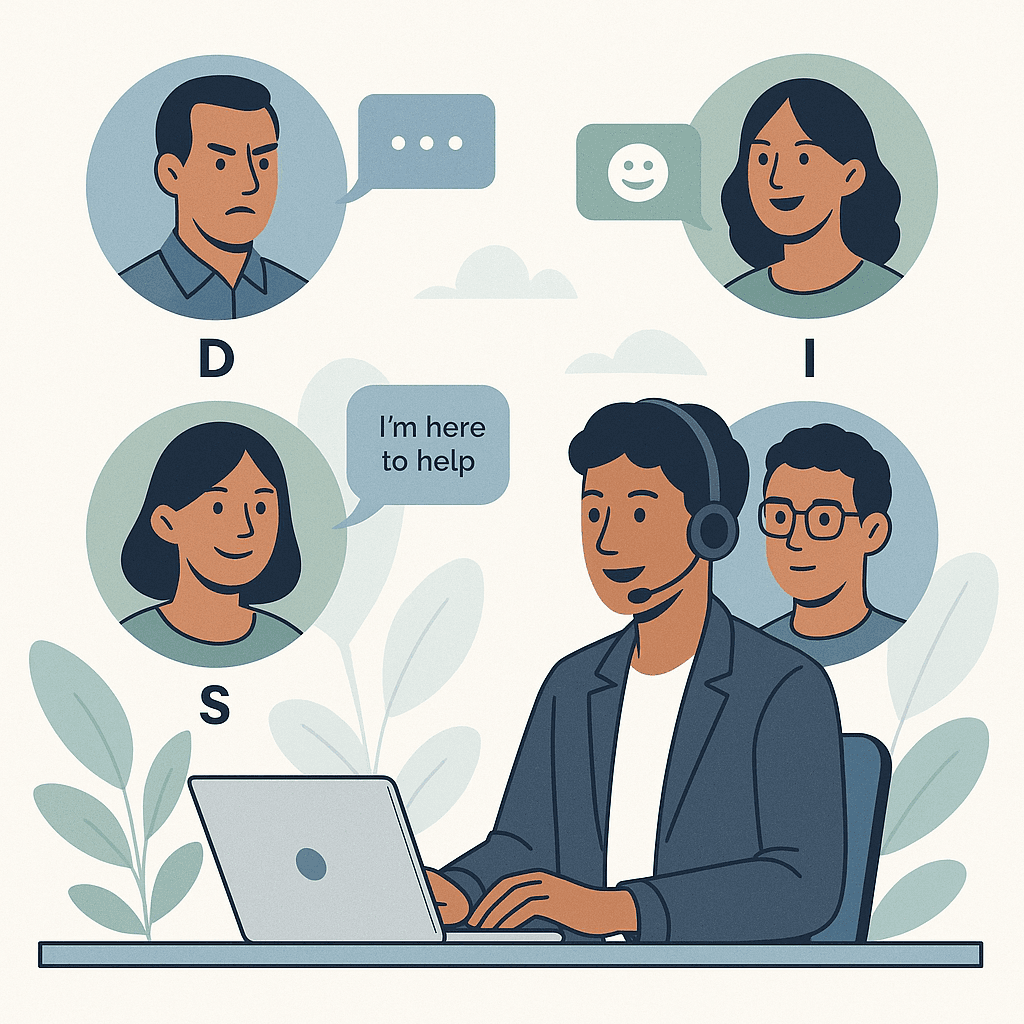
Customer service can feel like speed dating for brands. One minute, an agent is calming an upset buyer. The next, they are guiding a confused first-time user. Blink again - and they are celebrating a loyal fan who just wants to chat. Different moods. Different expectations. Different personalities. Here’s the thing most companies miss: customer service is not just about solving problems. It’s about understanding people. And that is where DISC becomes more than a personality buzzword - it becomes a practical tool. If you ask many seasoned team leaders, they will admit this openly. Technical training is easy. Teaching empathy? Reading emotional cues? Adjusting communication styles in real time? That’s the real game. Let’s break down how DISC transforms customer service interactions from reactive to intentional.
What Is DISC and Why Should Customer Service Teams Care?
DISC is a behavioral assessment model that categorizes personality tendencies into four primary styles:
- D - Dominance
- I - Influence
- S - Steadiness
- C - Conscientiousness
Simple on paper. Powerful in practice. Unlike abstract psychology theories that sit in textbooks, DISC focuses on observable behavior. How people communicate. How they respond to stress. How they make decisions. Sounds practical, right? In customer service, behavior is everything. Tone. Word choice. Speed of response. Willingness to compromise. All of it matters. When representatives understand DISC personality types, they stop guessing. They start adapting.
Breaking Down the Four DISC Styles in Customer Service
Each personality style brings its own expectations into a service interaction. Recognizing them quickly can mean the difference between escalation and resolution.
D - Dominance: The Direct Challenger
D-style customers are results-driven. They value efficiency and dislike wasting time. They typically:
- Get straight to the point
- Show impatience with delays
- Prefer clear, concise answers
- Focus on outcomes, not explanations
Trying to overwhelm them with details? Bad move. The best approach:
- Acknowledge the issue quickly.
- Offer a direct solution.
- Provide a timeline.
- Avoid unnecessary small talk.
Think of them like someone in an airport sprinting toward their gate. They do not want a tour of the terminal. They want directions.
I - Influence: The Social Connector
I-style personalities thrive on interaction. They enjoy conversation and positive energy. They often:
- Share personal details
- Appreciate friendly tone
- Respond well to enthusiasm
- Value relationship over process
With them, robotic scripts fall flat. Instead, agents should:
- Match their upbeat tone
- Use affirming language
- Build rapport before diving into logistics
- Keep communication warm and engaging
Cutting them off too quickly? That can feel dismissive.
S - Steadiness: The Loyal Supporter
S personalities prioritize harmony and stability. They tend to:
- Avoid conflict
- Speak calmly
- Seek reassurance
- Prefer predictable processes
When issues arise, they may not express frustration openly. But that does not mean it is not there. Effective support for S-types includes:
- Offering reassurance
- Explaining next steps clearly
- Maintaining a patient tone
- Avoiding rushed responses
They are like careful gardeners - they nurture relationships over time. Treat them gently.
C - Conscientiousness: The Analytical Thinker
C personalities crave accuracy and logic. They often:
- Ask detailed questions
- Request evidence
- Analyze policies
- Spot inconsistencies quickly
Vague answers frustrate them. The smart strategy?
- Provide data-backed explanations
- Clarify processes thoroughly
- Use structured communication
- Allow space for questions
They are less concerned with charm and more concerned with precision.
Why DISC Works So Well in Customer Service
Customer service is emotional terrain. One wrong tone shift can escalate tension. One poorly timed interruption can break trust. DISC gives teams a behavioral map. Instead of reacting blindly, representatives can identify patterns:
- Is this person pushing for speed? Likely D.
- Are they seeking connection? Possibly I.
- Do they need reassurance? Often S.
- Are they requesting detailed clarification? Probably C.
That awareness changes everything. It turns conversations into strategic exchanges rather than defensive battles.
Training Teams to Use DISC Effectively
Here’s a hot take: handing employees a personality chart is not enough. Implementation matters. For DISC in customer service to stick, organizations should:
1. Start With Self-Awareness
Before reading customers, agents need to understand their own style. A highly dominant representative may unintentionally intimidate a steady client. An overly analytical agent might overwhelm an influence-driven caller. Platforms like lifematika.com offer scientifically grounded assessments that help individuals uncover their behavioral patterns. In about 15 minutes, users answer 95 questions and receive an in-depth analysis rooted in eight psychological frameworks - including DISC. No registration walls. No complicated onboarding. Just insight. When service teams understand themselves first, adaptation becomes natural rather than forced.
2. Practice Real Scenarios
Role-play sessions make theory practical. For example:
- Simulate a D-type complaint call.
- Practice handling a highly analytical C-style email.
- Model empathy for an S personality facing frustration.
- Engage warmly with an enthusiastic I customer.
Repetition builds confidence. Confidence reduces panic.
3. Develop Communication Frameworks
Teams benefit from flexible scripts designed around DISC. Not rigid templates. Frameworks. For instance:
- D response format - Problem, Solution, Timeline.
- I response format - Appreciation, Connection, Solution.
- S response format - Reassurance, Explanation, Support.
- C response format - Data, Logic, Documentation.
Structure reduces guesswork.
The Hidden Advantage - Conflict Prevention
Most companies use customer service strategies to resolve issues. DISC does something smarter. It prevents unnecessary conflict. Imagine telling a dominant executive to "please wait while we review this thoroughly." That feels like friction. Or giving a conscientious engineer a vague answer like "don’t worry, it should work." That feels careless. Misalignment fuels frustration. Alignment builds trust. Customer loyalty is rarely about perfection. It is about feeling understood.
DISC and Emotional Intelligence
Some critics argue that personality frameworks oversimplify human behavior. Fair point. No model captures every nuance. However, when DISC integrates with emotional intelligence training, the results are powerful. Representatives learn to read tone shifts, identify stress signals, and pivot accordingly. Self-awareness plus adaptability - that combination feels almost unfair in competitive markets. And platforms grounded in research, like lifematika.com, expand this further by incorporating models beyond DISC, including OCEAN traits, motivational drivers, and character strengths. That holistic understanding enhances not only customer interactions but workplace culture overall.
Measuring the Impact of DISC in Customer Support
Leaders often ask the practical question: does this actually move metrics? Short answer - yes. When applied correctly, DISC-informed service strategies can:
- Reduce escalation rates
- Improve first-call resolution
- Increase customer satisfaction scores
- Strengthen team communication internally
It is not magic. It is alignment. And alignment, in business, is leverage.
Common Mistakes to Avoid
Before rushing to label every caller, pause. Common pitfalls include:
- Overgeneralizing personality types
- Using DISC as a rigid box
- Ignoring context or situational stress
- Forgetting cultural differences
DISC identifies tendencies, not fixed identities. People are fluid. Stress shifts behavior. Urgency amplifies certain traits. Good representatives stay flexible.
The Bigger Picture - Human-Centered Service
At its core, customer service is about connection. Technology automates transactions. Chatbots answer FAQs. AI handles routing. But when tension rises or stakes increase, people still crave human understanding. DISC offers a language for that understanding. It helps teams move from scripted replies to intentional communication. From reacting emotionally to responding strategically. And in a marketplace where products often look identical, service becomes the differentiator. So the real question becomes this: are teams merely answering tickets - or are they reading people? Because once they learn to read behavior patterns, conversations shift. Friction decreases. Loyalty grows. Not because scripts improved. Because understanding did. And that shift, small as it may seem, changes everything.