The Power of Intellectual Curiosity (Openness)
 Yaro Pry··4 min read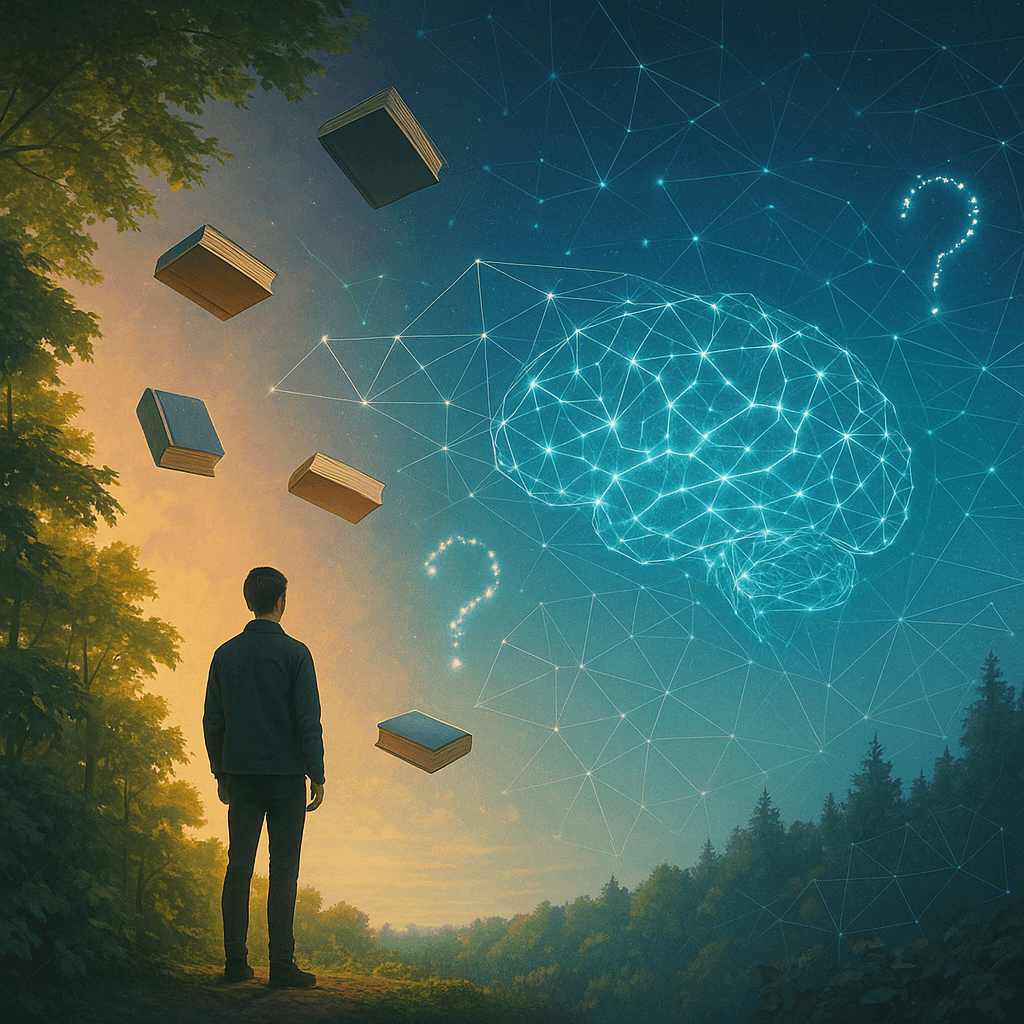
Some people walk into a room and see walls, chairs, and a clock ticking too loudly.
Others walk in and wonder who designed the space, why the lighting feels slightly off, what conversations these walls have absorbed, and whether there’s a better way to arrange everything.
The difference? Intellectual curiosity - often described in psychology as Openness.
If you ask me, Openness is the quiet superpower no one talks about enough. It doesn’t shout. It doesn’t brag. But it changes careers, relationships, and entire life trajectories.
What Is Intellectual Curiosity, Really?
In personality science, Openness is one of the Big Five traits - a core dimension of who someone is. It reflects imagination, creativity, emotional depth, love of ideas, and a hunger for new experiences.
But that definition feels a little... sterile.
In real life, intellectual curiosity looks like this:
- Asking "Why?" even when everyone else nods and moves on.
- Reading articles outside one’s field just because they seem interesting.
- Changing opinions when presented with better evidence.
- Feeling energized by deep conversations rather than drained.
- Experimenting - with ideas, hobbies, perspectives.
Sounds simple, right? It isn’t.
Because curiosity requires humility. It demands admitting there’s more to learn. And that can be uncomfortable.
Why Openness Matters More Than Ever
We live in an era of noise. Endless scrolling. Rapid opinions. Instant certainty.
Intellectual curiosity cuts through that noise like a sharp blade. It says, “Pause. Look deeper.”
1. It Fuels Growth
Openness acts like mental oxygen. Without it, growth suffocates.
Curious individuals don’t just consume information - they explore it. They connect dots others miss. They see patterns. They reframe problems.
In career development, this translates to adaptability. When industries shift - and they always do - curious minds pivot faster. They learn new tools. They reinvent themselves.
Have you ever noticed how some people thrive in change while others freeze? That’s not luck. That’s cognitive flexibility.
2. It Deepens Relationships
Here’s a hot take: the most attractive quality in any conversation is genuine curiosity.
Not charm. Not wit. Curiosity.
When someone asks thoughtful questions and truly listens, connection expands. Openness encourages empathy because it welcomes perspectives that differ from one’s own.
It’s like opening windows in a stuffy room. Fresh air rushes in.
3. It Sparks Creativity
Creativity isn’t lightning striking randomly. It’s cross-pollination.
A curious mind gathers ideas from psychology, art, business, science, culture - then blends them into something new.
Think of intellectual curiosity as mental composting. Everything goes into the pile. Over time, rich insight grows from it.
The Science Behind Openness
Psychologists have studied Openness for decades. Within the widely accepted OCEAN model (Big Five), it consistently predicts:
- Higher creative achievement
- Greater tolerance for ambiguity
- Interest in abstract thinking
- Appreciation for art and beauty
- Willingness to question tradition
But Openness doesn’t operate in isolation. It interacts with values, motivation, emotional intelligence, and communication style.
That’s why platforms like lifematika.com take a broader approach. Instead of reducing someone to a single trait score, it integrates eight psychological frameworks simultaneously - including OCEAN, Jungian typology, DISC, character strengths, motivation theory, core values, and emotional intelligence.
It’s less like glancing in a mirror and more like viewing a full psychological blueprint.
Can Intellectual Curiosity Be Developed?
This is the question people quietly wonder.
Is Openness fixed? Or flexible?
Research suggests personality traits show stability over time, yet they are not carved in stone. Life events, deliberate practice, and intentional exposure shape them.
In other words - there’s room to grow.
Practical Ways to Strengthen Intellectual Curiosity
- Read Outside Comfort Zones
Pick topics that feel slightly intimidating. Philosophy. Neuroscience. Architecture. Stretch the mind. - Ask Better Questions
Instead of “What happened?” try “Why did it happen?” or “What assumptions are we making?” - Engage with Opposing Views
Not to win arguments - but to understand frameworks. - Reflect Regularly
Journaling or assessment tools reveal patterns that often go unnoticed. - Embrace Creative Play
Music, drawing, design thinking - experimentation strengthens flexibility.
Small actions. Big impact.
When Openness Is Low - And Why That’s Not a Flaw
Let’s be honest. Not everyone scores high on intellectual curiosity. And that’s okay.
Lower Openness often correlates with practicality, tradition, and preference for structure. These qualities are essential in many environments.
The world needs explorers.
It also needs stabilizers.
The key is awareness. Knowing where one stands allows intentional decisions rather than unconscious reactions.
Self-Discovery: Measuring What’s Invisible
Here’s the tricky part.
Curiosity often feels subjective. Someone might believe they’re open-minded, yet avoid unfamiliar experiences. Another might underestimate their imaginative depth.
This is where structured psychometric assessment becomes powerful.
Lifematika offers a 95-question evaluation that takes about 15 minutes to complete. No registration. Free to start. Instant results.
But the real value lies in integration.
Instead of isolating Openness, the system analyzes:
- Big Five personality traits
- Jungian cognitive functions
- Behavioral communication style (DISC)
- Character strengths (VIA)
- Intrinsic motivation drivers
- Core human values
- Emotional intelligence
- Motivational levels
That combination creates context. A person might show high Openness but low emotional regulation. Or moderate Openness with strong value-driven exploration.
Insight replaces guesswork.
Openness and Life Decisions
Career changes. Relocation. Relationships. Entrepreneurship.
Major decisions often hinge on how comfortable someone feels with uncertainty.
High Openness tends to embrace ambiguity. It views the unknown as possibility.
Lower Openness prefers predictability. It sees stability as security.
Neither approach is inherently superior. Problems arise when individuals choose paths misaligned with their personality structure.
Imagine someone low in Openness forcing themselves into a chaotic startup environment because it looks glamorous. Stress follows. Burnout creeps in.
Or a highly curious person trapped in rigid routine. Energy fades.
Alignment matters.
The Quiet Courage of Curiosity
Intellectual curiosity requires bravery.
It asks people to admit ignorance. To revise beliefs. To wander without guaranteed answers.
It’s standing at the edge of a forest and choosing to step in - not because the path is clear, but because discovery calls louder than fear.
Honestly, that’s powerful.
And in a world addicted to certainty, the willingness to explore might be the rarest trait of all.
Final Thoughts on Intellectual Curiosity
Openness shapes how someone experiences reality itself.
It colors perception. Influences conversations. Directs ambition.
Some people seek comfort in the familiar. Others chase novelty like oxygen. Most fall somewhere in between.
The real question isn’t “Is curiosity good or bad?”
It’s this:
How does intellectual curiosity operate within a specific personality system - and how can that awareness guide smarter life choices?
Tools grounded in psychological science, such as lifematika.com, offer structured reflection without sacrificing privacy. The platform’s comprehensive report arrives instantly and can be revisited over time, allowing individuals to track change after major life events.
Because personality isn’t static. It evolves.
And understanding one’s level of Openness - clearly, objectively, holistically - might be the first step toward designing a life that actually fits.
Curiosity doesn’t just expand knowledge.
It expands possibility.