The Power of Affirmations for Different Personality Types
 Yaro Pry··5 min read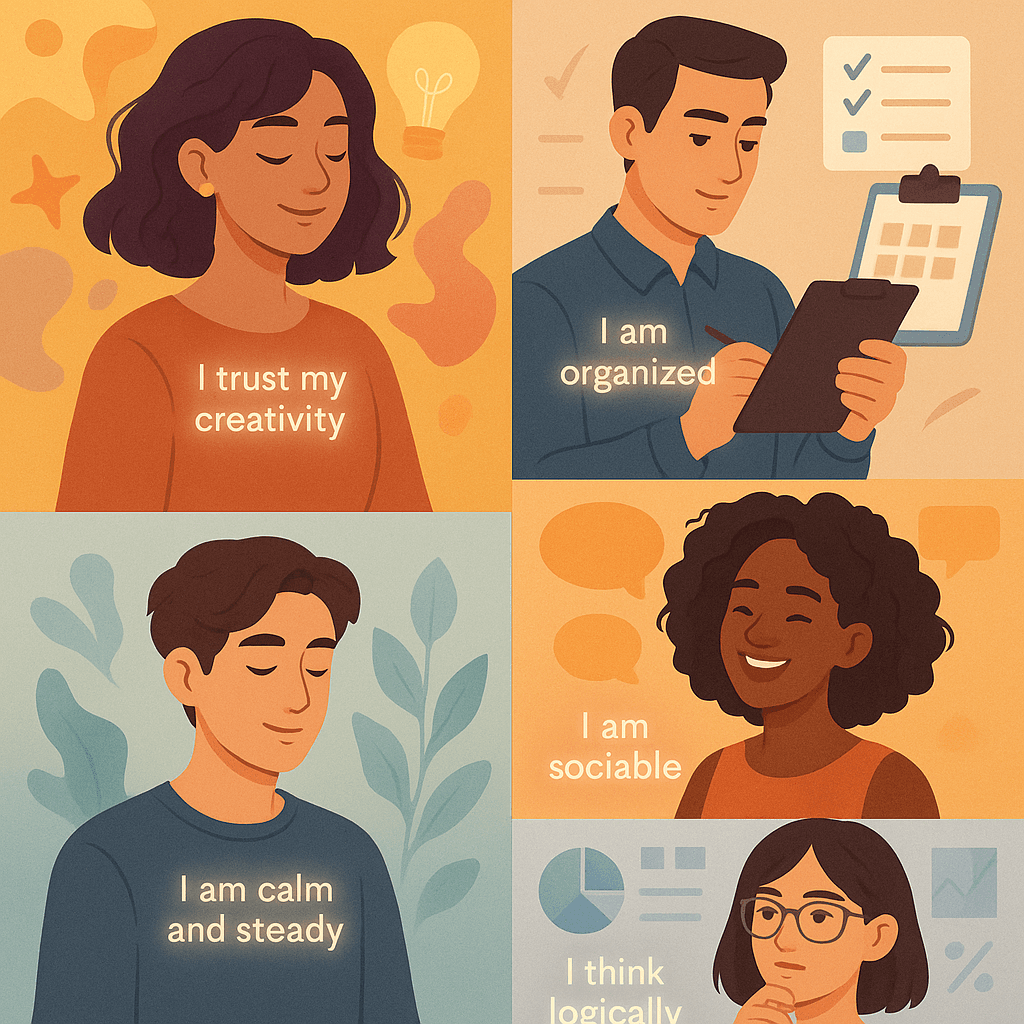
Affirmations get a bad reputation. Some people hear the word and immediately picture someone staring into a mirror whispering, “I am successful, I am confident,” while secretly feeling like a fraud. Others swear by them, claiming those tiny sentences rewired their mindset. So which is it? Honestly, both sides have a point. Affirmations can feel hollow - or they can feel transformative. The difference usually comes down to one thing: personality type. Because here’s the truth most self-help articles skip. A bold, high-energy extrovert won’t respond to the same affirmations as a reflective, analytical introvert. Trying to force one universal script onto every human mind is like giving everyone the same pair of glasses and expecting perfect vision. It just doesn’t work. Let’s break this down properly.
Why Affirmations Work - When They Actually Work
At their core, affirmations are repeated statements designed to influence thought patterns. The brain, wonderfully adaptable and slightly stubborn, builds pathways based on repetition. Say something often enough - and emotionally believe it - and neural wiring begins to shift. But here’s the catch. If an affirmation clashes with someone’s core values, temperament, or cognitive style, the brain rejects it. It feels fake. And when something feels fake, the mind pushes back. That’s where personality science enters the picture. Platforms like lifematika.com take this seriously. Instead of offering generic motivational quotes, they analyze personality through eight psychological models - including OCEAN, Jungian typology, DISC, emotional intelligence, and more. In about 15 minutes, users answer 95 research-based questions and receive a detailed report. No registration required. Instant insights. That matters. Because affirmations should align with who someone actually is - not who social media says they should become.
Affirmations Based on the Big Five Personality Traits
The OCEAN model measures five broad dimensions of personality. Each one responds differently to internal dialogue.
1. High Openness - The Visionary
Creative. Curious. Imaginative. These individuals thrive on possibility. Their affirmations should feel expansive, not rigid. Effective examples: - "My ideas have value and deserve exploration." - "I trust my creativity to guide meaningful change." - "New experiences help me grow in powerful ways." If you ask me, visionary personalities should avoid overly practical affirmations like “I stick to routines every day.” That can feel suffocating. Instead, affirmations should sound like an open window, not a locked door.
2. High Conscientiousness - The Planner
Disciplined. Structured. Goal-oriented. These individuals don’t want fluffy positivity. They want competence. Strong affirmations for them: - "I execute my plans with precision and focus." - "Consistency builds the future I want." - "I am capable of handling complex responsibilities." Short. Direct. Results-focused. Give them something measurable and they’ll run with it.
3. High Extraversion - The Energizer
Outgoing personalities draw power from interaction. Their affirmations should highlight impact and connection. Examples: - "My presence brings energy to every room." - "I communicate my ideas with confidence." - "People respond positively to my enthusiasm." These statements reinforce social momentum. For extroverts, confidence grows louder when it’s spoken outward.
4. High Agreeableness - The Harmonizer
Empathetic. Cooperative. Warm. Here’s a hot take: agreeable individuals often need affirmations about boundaries, not kindness. Try: - "My needs matter as much as anyone else's." - "I can say no with respect and clarity." - "Healthy boundaries strengthen my relationships." See the shift? It balances compassion with self-respect.
5. High Neuroticism - The Sensitive Thinker
Emotionally reactive. Introspective. Sometimes anxious. Generic positivity can backfire here. Instead, grounding statements work better. - "I can handle uncomfortable emotions." - "This feeling will pass." - "I am safe in this moment." Simple. Stabilizing. Real.
Using Jungian Typology for Personalized Affirmations
Carl Jung’s framework looks at cognitive functions and the introversion-extroversion spectrum. It’s less about behavior and more about mental processing. Introverted intuitive types may resonate with affirmations like: - "My inner insights are trustworthy." - "Reflection gives me clarity and direction." Meanwhile, sensing-dominant individuals might prefer: - "I rely on facts and practical steps to move forward." - "Small, steady actions lead to real progress." Different minds. Different language. Trying to give both groups the same phrase is like tuning a radio to the wrong frequency. Static everywhere.
DISC Styles and Communication-Focused Affirmations
The DISC model categorizes behavior into four styles: Dominance, Influence, Steadiness, Conscientiousness. Each style benefits from targeted reinforcement. Dominance types thrive on control and achievement: - "I make decisive choices with confidence." - "Challenges sharpen my leadership." Influence types shine socially: - "My optimism inspires others." - "I express myself freely and clearly." Steadiness types value stability: - "I create calm and consistency." - "My reliability builds trust." Conscientious types focus on precision: - "Accuracy and diligence define my work." - "Thoughtful analysis leads to smart outcomes." Notice how each statement speaks directly to what the personality already values? That alignment is the secret ingredient.
Affirmations Rooted in Core Values
Schwartz’s theory of basic values reminds us that decisions flow from deep motivations - security, achievement, benevolence, autonomy, and more. An autonomy-driven individual might repeat: - "I choose my own path with confidence." Someone who prioritizes security could use: - "I build stability step by step." A benevolence-centered personality may prefer: - "My actions positively impact others." When affirmations reflect values, they feel authentic instead of forced.
The Role of Emotional Intelligence
Emotionally intelligent individuals benefit from affirmations that acknowledge feelings rather than suppress them. - "I understand my emotions without being controlled by them." - "I respond thoughtfully, not impulsively." Low emotional awareness? Start simpler: - "I pause before reacting." - "I can name what I’m feeling." Growth begins with awareness.
How to Create Personality-Based Affirmations
Instead of copying quotes from a random Pinterest board, try this process:
- Understand personality traits through a scientific assessment.
- Identify core strengths and tension points.
- Write statements that reinforce strengths or gently challenge limitations.
- Keep language believable and emotionally grounded.
- Repeat consistently - ideally daily.
A platform like lifematika.com simplifies step one. It combines eight psychological methodologies into one streamlined test. Ninety-five questions. About fifteen minutes. Detailed report instantly. Users can even retake it after major life changes to track shifts in motivation or temperament. That level of insight transforms affirmations from guesswork into strategy.
Common Mistakes People Make
Let’s be honest. Most people sabotage this practice. Here’s what often goes wrong: - Choosing statements that feel unrealistic. - Repeating phrases without emotional engagement. - Ignoring personality differences. - Expecting overnight transformation. Affirmations are more like watering a plant than flipping a switch. Miss a few days? Nothing catastrophic. But neglect it for months, and growth stalls. Consistency wins.
Do Affirmations Really Change Behavior?
Short answer? They can. Longer answer? Only when paired with aligned action. If someone repeats "I am confident in public speaking" but avoids every presentation opportunity, the statement floats in theory. Add small exposure steps, though, and suddenly the affirmation reinforces real-world experience. Think of it like laying bricks. Each repetition is one brick. Each aligned action is another. Over time, a foundation forms. And foundations matter.
Matching Affirmations to Motivation Levels
Self-Determination Theory highlights autonomy, competence, and relatedness as core drivers. Affirmations should support whichever driver feels undernourished. Need autonomy? - "I make choices aligned with my values." Need competence? - "I am developing skills that matter." Need connection? - "I nurture meaningful relationships." When motivation strengthens, behavior follows.
Final Thoughts - Without the Clichés
Affirmations aren’t magic spells. They’re tools. And like any tool, their effectiveness depends on how precisely they’re used. A hammer builds a house when aimed correctly. Swing it blindly and you’ll just make noise. Personality-informed affirmations cut through that noise. They respect individuality. They align with psychological structure. They feel believable. So instead of asking, “Do affirmations work?” A better question might be, “Do these affirmations work for this personality?” That shift changes everything. Because when language reflects identity, repetition becomes reinforcement. Reinforcement becomes belief. And belief, practiced long enough, becomes behavior. That’s the real power here. Quiet. Strategic. Personal. And far more effective than a mirror pep talk ever could be.