Sleep Habits and Personality: Are They Linked?
 Yaro Pry··4 min read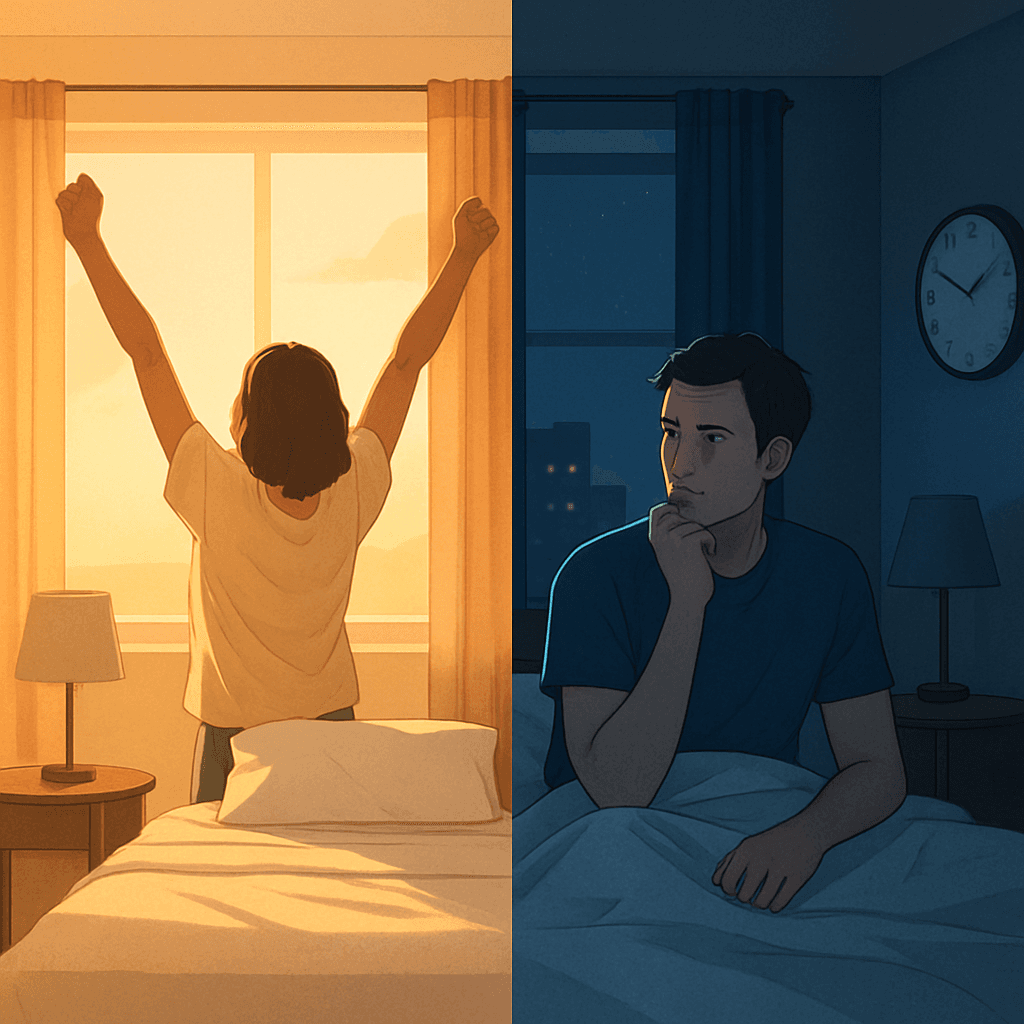
Some people spring out of bed at 5:30 a.m. like toast from a toaster. Others hit snooze with the dedication of a competitive athlete. And then there’s the night owl crowd - alert, creative, wide awake at midnight while the rest of the world fades to black.
Coincidence? Maybe not.
Sleep habits and personality may be more intertwined than most realize. The way someone drifts off, wakes up, dreams, or struggles through insomnia can reflect deeper psychological patterns. It’s not just about being "a morning person." It’s about temperament, motivation, emotional regulation, and even core values.
Sounds like a stretch? Let’s unpack it.
The Psychology Behind Sleep Patterns
Sleep is biological. That’s obvious. Circadian rhythms, hormones, light exposure - all of it plays a role. But psychology slips in quietly and influences the rhythm in powerful ways.
Researchers studying personality traits - particularly through models like the Big Five (OCEAN) - have found consistent links between sleep behavior and core characteristics.
1. Conscientiousness and Sleep Discipline
Highly conscientious individuals tend to:
- Maintain consistent bedtimes
- Avoid late-night distractions
- Prioritize routines
- Experience fewer sleep disruptions
Why? Because conscientiousness is strongly tied to self-regulation. These individuals treat sleep like an investment. They understand the payoff - focus, productivity, emotional stability - and they act accordingly.
On the flip side, low conscientiousness often correlates with irregular patterns. Bed at 1 a.m. one night, 10 p.m. the next. Chaos creeps in.
2. Neuroticism and Nighttime Overthinking
Ever notice how anxious minds seem to get louder after dark?
People scoring high in neuroticism often report:
- Difficulty falling asleep
- Frequent awakenings
- Stress-related insomnia
- Vivid or emotionally intense dreams
The brain becomes a late-night talk show host - replaying conversations, forecasting worst-case scenarios, dissecting small mistakes. Emotional reactivity doesn’t clock out at bedtime.
3. Extraversion vs. Introversion and Chronotypes
Here’s where it gets interesting.
Extraverts often lean toward later bedtimes. Social energy fuels them. Late dinners, events, conversations - they thrive in environments that extend into the evening.
Introverts, however, frequently prefer earlier schedules. Quiet mornings. Calm starts. Less stimulation.
Of course, exceptions exist. Personality is layered. But broad trends appear again and again in data.
Are Night Owls More Creative?
This question refuses to die.
Studies suggest that evening-oriented individuals sometimes score higher on measures of openness to experience - the trait associated with creativity, imagination, and curiosity.
Late hours can feel like mental playgrounds. Fewer interruptions. Softer lighting. The mind wanders.
But here’s the catch - creativity doesn’t require exhaustion. Romanticizing 3 a.m. breakthroughs ignores the cognitive cost of chronic sleep deprivation. Even the most imaginative brain needs restoration.
Think of it like charging a phone. Inspiration might strike at 2 a.m., sure. But eventually, the battery icon turns red.
Sleep Quality and Emotional Intelligence
Emotional intelligence - the ability to recognize, manage, and respond to feelings - is deeply connected to rest.
When someone sleeps poorly, emotional regulation weakens. Patience thins. Empathy shrinks. Small irritations grow teeth.
Research consistently shows that:
- Sleep deprivation increases emotional reactivity.
- Rested individuals interpret social cues more accurately.
- Chronic fatigue reduces resilience under stress.
In other words, sleep acts like an emotional shock absorber. Without it, every bump in the road feels sharper.
Motivation, Values, and Rest Cycles
Here’s a perspective that often gets overlooked - sleep habits can reflect internal drivers.
Consider someone deeply motivated by achievement. They might sacrifice rest to push projects forward. Another person who values harmony and balance may guard their nighttime routine fiercely.
Self-Determination Theory highlights three core needs:
- Autonomy
- Competence
- Relatedness
When these needs feel unmet, sleep frequently suffers. A person lacking autonomy at work might stay up late reclaiming "personal time." Someone feeling socially disconnected may scroll endlessly, chasing connection through screens.
Sleep becomes symbolic - not just biological, but behavioral.
What Your Sleep Habits Might Reveal
Patterns tell stories.
Someone who consistently delays bedtime despite exhaustion might struggle with impulse control or boundary-setting. A rigid 9:30 p.m. lights-out schedule could signal high structure and orderliness. Neither is good or bad. They simply reflect deeper traits.
Questions worth asking:
- Does this person use nighttime to avoid daytime stress?
- Is their irregular schedule tied to creativity or procrastination?
- Do emotional highs and lows mirror sleep fluctuations?
Awareness changes everything. Once patterns become visible, adjustments feel possible.
The Role of Comprehensive Personality Analysis
Surface-level quizzes rarely capture this complexity. Personality isn’t one-dimensional, and neither are sleep behaviors.
Platforms like lifematika.com approach personality from a scientific angle. Instead of relying on a single framework, it integrates eight respected psychological models into one streamlined 95-question assessment. The process takes about 15 minutes. No registration. Instant report.
That matters.
Because understanding traits like:
- OCEAN dimensions
- Jungian cognitive styles
- DISC behavioral patterns
- Character strengths
- Core values
- Emotional intelligence markers
- Motivational levels
provides context for lifestyle habits - including sleep.
For example:
- A dominant DISC profile may sacrifice rest for productivity.
- High openness combined with low conscientiousness could explain late creative bursts.
- Elevated neuroticism might align with restless nights.
Seeing these connections in a structured report transforms vague suspicions into concrete insights. And since the platform allows retakes, users can track changes after major life shifts - career transitions, relationship changes, relocation, stress cycles.
Personality evolves. So do sleep patterns.
Breaking the Myth: One Schedule Fits All
Society loves uniformity. Wake at dawn. Hustle. Lights out by 10. Repeat.
But biology and personality don’t always cooperate.
Chronotypes vary. Some brains genuinely perform better later in the day. Others shine before sunrise. Forcing everyone into a single mold ignores natural differences.
That said - consistency still matters. Even night owls benefit from stable timing. The key lies in alignment, not imitation.
Trying to live against one’s psychological wiring feels like swimming upstream. Exhausting. Frustrating. Unnecessary.
Practical Steps to Align Sleep and Personality
Curious how to bring harmony between temperament and rest? Start here:
1. Identify Core Traits
Use validated tools. Comprehensive assessments provide clarity beyond guesswork.
2. Track Energy Patterns
Notice when focus peaks naturally. Morning? Late afternoon? Midnight?
3. Address Emotional Triggers
If anxiety spikes at bedtime, explore underlying stressors instead of blaming the mattress.
4. Protect Psychological Needs
Ensure daily life supports autonomy, competence, and connection. When these are satisfied, sleep often stabilizes.
5. Build Flexible Structure
Create a routine that respects individual wiring while maintaining healthy boundaries.
Small tweaks compound. Gradually.
So… Are Sleep Habits and Personality Linked?
Evidence says yes. Not perfectly. Not rigidly. But meaningfully.
Sleep reflects more than fatigue. It mirrors discipline, emotional patterns, motivational drives, and even personal values. Ignoring that connection is like reading only half a book and pretending to understand the plot.
Here’s the real takeaway - instead of asking, "How can this person sleep better?" a more powerful question might be, "What does this sleep pattern reveal about who they are?"
Because when personality and rest align, life feels smoother. Clearer. Less forced.
And honestly, who wouldn’t want that?