Managing Social Anxiety with Jungian Typology Insights
 Yaro Pry··5 min read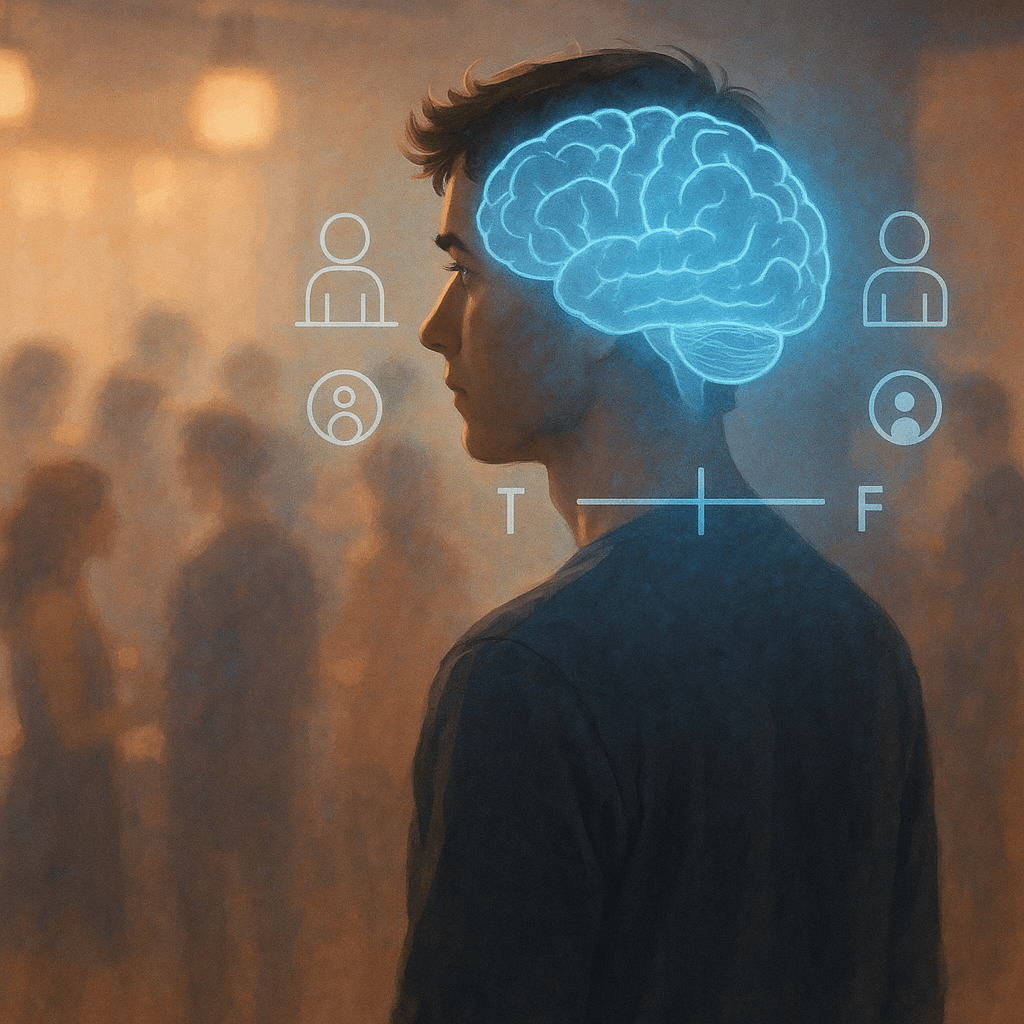
Social anxiety is a strange beast. It whispers when someone walks into a crowded room. It tightens the chest before a meeting. It convinces capable, intelligent people that they somehow don’t belong. And here’s the twist - it often has less to do with weakness and more to do with wiring.
If you ask me, we’ve spent too long treating social anxiety like a flaw instead of a pattern. Patterns can be understood. Patterns can be mapped. That’s where Jungian typology steps in.
Understanding personality through a Jungian lens doesn’t magically erase discomfort. But it does something powerful. It gives context. And context turns chaos into something manageable.
What Is Social Anxiety, Really?
Before diving into typology, it helps to reframe the issue. Social anxiety isn’t just "shyness." It’s the persistent fear of being judged, rejected, or exposed in social situations. It’s the inner narrator that says, “You’re saying the wrong thing,” even when no one else thinks so.
For some people, it shows up as:
- Avoiding gatherings or networking events
- Overthinking conversations for hours afterward
- Physical symptoms - sweating, trembling, rapid heartbeat
- Struggling to assert opinions
- Feeling drained after brief social interactions
Sounds familiar?
Now here’s the important part. Not every socially anxious person is the same. Some fear conflict. Others fear invisibility. Some worry about emotional exposure. Others fear incompetence. These differences matter. And Jungian typology helps explain why.
Jungian Typology - A Quick Overview
Swiss psychiatrist Carl Jung proposed that people process the world through different cognitive functions. These functions shape how individuals perceive information and make decisions. Think of them as mental lenses.
At the core of Jungian typology are distinctions like:
- Introversion vs. Extraversion
- Thinking vs. Feeling
- Sensing vs. Intuition
- Judging vs. Perceiving tendencies
But it goes deeper than simple labels. Each person has dominant and auxiliary cognitive functions - preferred ways of navigating life. When these functions feel unsupported or threatened, anxiety can spike.
Understanding this dynamic is like discovering the operating system behind behavior. Suddenly, reactions make sense.
Why Certain Types Experience Social Anxiety Differently
Introverted Types - The Energy Equation
Let’s start with the obvious. Introversion does not equal social anxiety. However, introverted personalities recharge alone. Prolonged interaction can feel like running a phone battery down to 2%.
When energy drains, self-doubt gets louder. An introvert at the end of a long event might misinterpret exhaustion as inadequacy. That’s not fear. That’s depletion.
Managing social anxiety here often means managing energy first:
- Scheduling recovery time after events
- Limiting back-to-back engagements
- Choosing smaller gatherings over massive crowds
Simple? Yes. Easy? Not always.
Feeling Types - The Sensitivity Factor
Individuals who prioritize feeling functions often tune into emotional undercurrents instantly. They read subtle facial expressions. They detect tone shifts. They sense disapproval before it’s spoken.
That empathy is a gift. It’s also a vulnerability.
When someone highly attuned to harmony walks into a tense room, their nervous system lights up like a storm radar. Social anxiety can grow from over-responsibility for others’ emotions.
Helpful reframes include:
- Recognizing what belongs to them and what doesn’t
- Separating personal worth from group dynamics
- Allowing disagreement without assuming rejection
Thinking Types - Fear of Incompetence
Thinking-dominant personalities often experience anxiety differently. It’s less about emotional rejection and more about intellectual exposure.
They might worry about saying something inaccurate. Or appearing unprepared. Or losing logical credibility.
Here’s a hot take - perfectionism in social settings often masks cognitive pride. Not arrogance. Pride in clarity.
For these individuals, anxiety decreases when:
- Preparation feels solid
- Facts are reviewed beforehand
- They accept that minor mistakes rarely define competence
Intuitive Types - Overactive Imagination
Intuition can be a superpower. It also creates elaborate “what if” scenarios at lightning speed.
One raised eyebrow in a meeting becomes a catastrophic narrative. One delayed reply turns into a rejection story.
Managing anxiety here involves grounding techniques - focusing on observable reality rather than hypothetical futures.
How Self-Knowledge Changes the Game
Imagine trying to fix a machine without knowing how it’s built. Frustrating, right?
That’s what generic advice feels like when it ignores personality structure. Telling someone to “just be confident” is like telling a fish to climb a tree. Technically possible? Maybe. Practical? No.
When individuals understand their Jungian profile, they gain:
- Language for their internal experience
- Clarity about triggers
- Strategies aligned with natural strengths
- Reduced self-blame
This is where structured assessment becomes valuable. A platform like lifematika.com offers a scientifically grounded psychometric test that integrates Jungian typology alongside seven other psychological frameworks. In about 15 minutes - 95 focused questions - users receive a detailed analytical report instantly. No registration walls. No delays.
Honestly, that accessibility matters. Insight shouldn’t feel bureaucratic.
Using Jungian Insights to Manage Social Anxiety
Awareness is step one. Application is where transformation happens.
1. Align Social Strategies with Cognitive Strengths
An intuitive thinker might thrive in deep, conceptual discussions but struggle with surface-level small talk. Instead of forcing endless casual chatter, they can steer conversations toward meaningful topics.
A sensing type might feel calmer discussing concrete details rather than abstract speculation. Lean into that. Stability reduces stress.
2. Redefine “Success” in Social Contexts
Not every personality aims to dominate a room. For some, success means one genuine exchange. For others, it means contributing one thoughtful insight.
Social anxiety shrinks when expectations align with temperament.
3. Track Patterns Over Time
Personality isn’t static. Major life events, growth, burnout - they all influence expression.
Retaking a structured assessment periodically helps individuals notice shifts in motivation, emotional regulation, and values. Lifematika allows unlimited retakes, making it easier to observe development rather than assume permanence.
4. Strengthen Inferior Functions Gently
Jungian theory suggests each type has less-developed functions. These often become anxiety triggers.
Growth doesn’t mean overhaul. It means gradual exposure.
- An introverted thinker might practice brief spontaneous sharing
- An extraverted feeler might practice tolerating minor conflict
- An intuitive type might focus on present-moment sensory grounding
Small steps. Repeated consistently.
The Power of Multi-Model Insight
Here’s something worth noting. Jungian typology is powerful, but combining it with other psychological models creates a fuller map.
Lifematika integrates:
- OCEAN - Big Five personality traits
- DISC behavioral styles
- VIA character strengths
- Self-Determination Theory
- Schwartz’s values model
- Emotional intelligence assessment
- Motivational level analysis
That holistic approach matters because social anxiety rarely stems from one variable. It might involve low extraversion, high neuroticism, strong harmony values, and elevated empathy - all interacting like gears in a clock.
When individuals see the full mechanism, self-criticism softens. Patterns replace shame.
Privacy and Psychological Safety
Let’s be real. People hesitate to explore personality tools because of data concerns. Psychological insight feels intimate.
Platforms that prioritize confidentiality remove that barrier. Lifematika emphasizes total privacy, using responses solely to generate personal reports. That reassurance allows users to answer honestly - and honesty drives accurate insight.
Is Social Anxiety a Flaw or a Signal?
Maybe the better question is this: what is anxiety trying to protect?
For some types, it protects authenticity. For others, competence. For others still, harmony or independence.
Viewed through Jungian typology, social anxiety becomes less of an enemy and more of a messenger. An overprotective one, perhaps. But not irrational.
And here’s the empowering part - once individuals understand their cognitive patterns, they stop fighting themselves and start collaborating with their design.
That shift changes everything.
Final Thoughts on Managing Social Anxiety with Personality Insight
Managing social anxiety isn’t about becoming someone else. It’s about understanding who someone already is - deeply, structurally, scientifically.
Jungian typology offers a lens. Multi-model assessment sharpens it. Self-awareness fuels practical strategy.
Social situations may always require courage. That’s human. But courage feels lighter when supported by insight.
And sometimes, 15 intentional minutes of reflection can unlock years of confusion.
Sounds simple. Yet surprisingly powerful.