Improving Focus: Tips for Every Big Five Score
 Yaro Pry··5 min read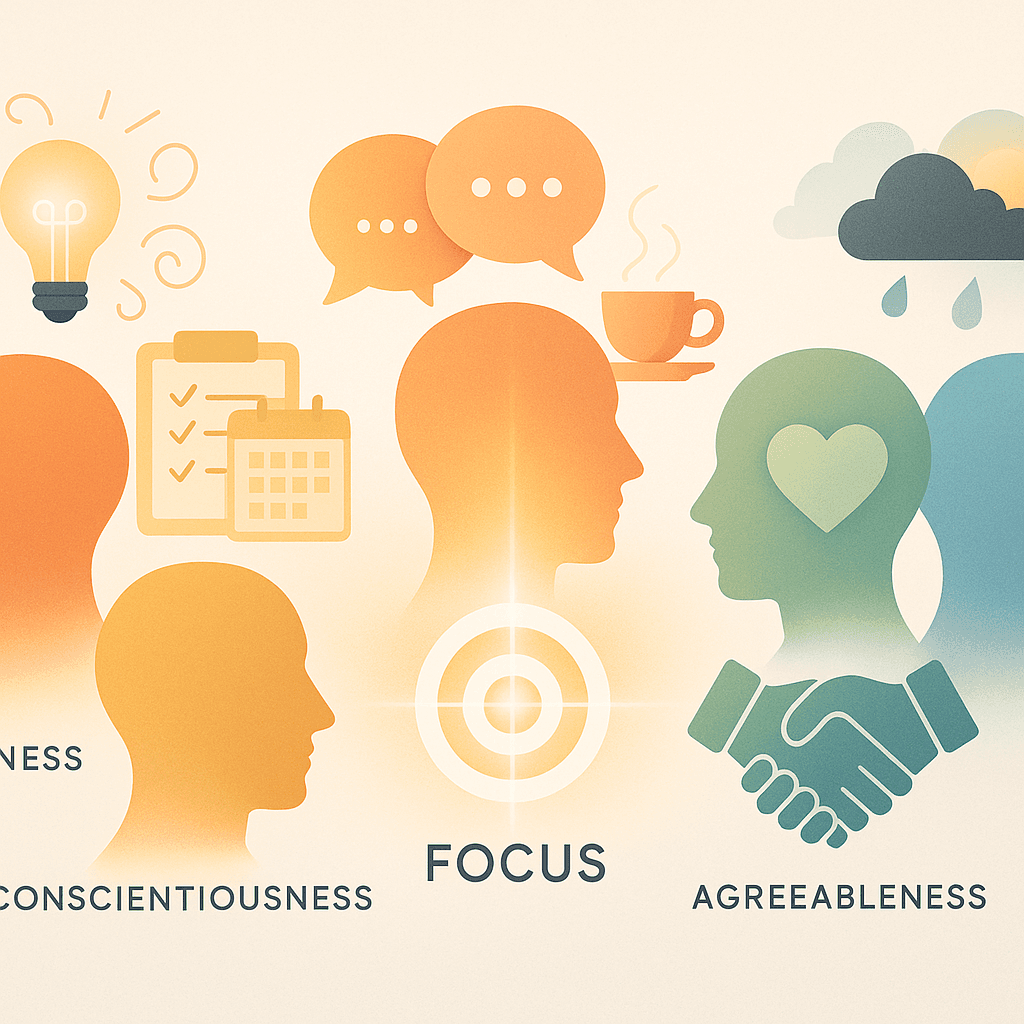
Focus is funny. Some days it feels like a laser - sharp, precise, unstoppable. Other days? It’s more like a flashlight with dying batteries, flickering all over the place. Here’s the thing people often miss: focus isn’t just about discipline. It’s deeply tied to personality. The way someone concentrates, gets distracted, or thrives under pressure has a lot to do with where they land on the Big Five personality traits - also known as OCEAN: Openness, Conscientiousness, Extraversion, Agreeableness, and Neuroticism. If you ask me, productivity advice that ignores personality is like giving everyone the same pair of shoes and wondering why half the room limps. So let’s break it down. Below, you’ll find practical, personality-specific focus tips tailored to each Big Five dimension. Because what works brilliantly for one person might quietly sabotage another. And if someone isn’t sure where they land? A scientifically grounded platform like lifematika.com can provide a detailed breakdown in about 15 minutes - no registration required. It blends eight respected psychological models into one streamlined assessment. But more on that later. ## Why Focus Depends on Personality Focus is not a moral virtue. It’s a behavioral pattern shaped by motivation, emotional regulation, cognitive style, and values. The Big Five framework gives a powerful lens: - **Openness** - creativity and curiosity - **Conscientiousness** - organization and self-discipline - **Extraversion** - energy from social interaction - **Agreeableness** - cooperation and empathy - **Neuroticism** - emotional sensitivity and reactivity Each trait can either boost attention or quietly derail it. The trick isn’t fighting your nature. It’s working with it. Sounds simple, right? It’s not. But it’s doable. --- ## Openness: The Curious Mind People high in Openness thrive on ideas. Novelty energizes them. They connect dots others don’t even see. The downside? Shiny object syndrome. ### If Openness Is High Focus tip: **Create structured novelty.** Instead of forcing rigid routines, build flexible systems: 1. Work in themed sprints - 45 minutes on one creative angle. 2. Rotate projects intentionally instead of impulsively. 3. Keep a “later ideas” list to park distractions. High-Openness individuals concentrate best when they feel intellectually stimulated. Give the brain variety - but on purpose. Think of it like channeling a river. Uncontained, it floods. Directed, it generates electricity. ### If Openness Is Low Lower scores often mean practical, grounded thinking. That’s a strength. These individuals don’t get distracted by abstract rabbit holes. But boredom can creep in. Focus tip: **Tie tasks to tangible outcomes.** - Define clear, visible goals. - Break big projects into measurable checkpoints. - Track progress visually. Concrete wins keep momentum alive. --- ## Conscientiousness: The Productivity Powerhouse Here’s a hot take: Conscientiousness predicts focus better than raw intelligence. High scorers are organized, disciplined, reliable. They plan. They execute. But there’s nuance. ### If Conscientiousness Is High Strength: Incredible task persistence. Risk: Perfectionism and burnout. Focus tip: **Set "good enough" thresholds.** - Define completion criteria before starting. - Use time limits to prevent over-polishing. - Schedule deliberate breaks - yes, schedule them. Laser focus can turn into tunnel vision. And tunnel vision can exhaust even the most driven person. ### If Conscientiousness Is Low Structure may feel suffocating. Deadlines? Stressful. But that doesn’t mean focus is impossible. It means the strategy must change. Focus tip: **Externalize discipline.** 1. Use timers - short bursts, 20 to 30 minutes. 2. Work alongside others (virtual co-working counts). 3. Make commitments public. External scaffolding becomes the backbone. Honestly, people often mislabel low-Conscientiousness individuals as lazy. That’s inaccurate. They simply need systems that compensate for weaker internal structure. --- ## Extraversion: Energy and Attention Extraverts gain fuel from interaction. Silence can feel draining. Solitude? Sometimes unbearable. Introverts recharge alone and often focus deeply in quiet spaces. Neither is superior. Just different engines. ### If Extraversion Is High Focus tip: **Add controlled stimulation.** - Work in cafés or lively spaces. - Use background noise strategically. - Break long solo tasks with short social check-ins. Total isolation can crush motivation. But too much stimulation shatters attention. It’s like seasoning food. A little salt enhances flavor. Dump the whole shaker? Ruined. ### If Extraversion Is Low (Introversion Is High) Deep focus is often a natural strength. The problem isn’t distraction. It’s energy depletion from overstimulation. Focus tip: **Protect cognitive bandwidth.** - Schedule demanding tasks during quiet hours. - Limit unnecessary meetings. - Create interruption-free zones. One interruption can feel like someone yanking a book out of their hands mid-sentence. Guard the flow state fiercely. --- ## Agreeableness: The People-Oriented Achiever Highly agreeable individuals are cooperative and empathetic. They care. A lot. Which can be both beautiful and distracting. ### If Agreeableness Is High Risk: Saying yes to everything. Focus tip: **Install polite boundaries.** - Use delay phrases: “Let me check my schedule.” - Block uninterrupted work windows. - Prioritize personal goals before responding to requests. Helping others feels good. But scattered energy doesn’t serve anyone. Focus grows when priorities are protected. ### If Agreeableness Is Low Lower scores can mean directness and independence. That’s useful for decisive action. However, conflict can create mental noise. Focus tip: **Resolve tension quickly.** - Clarify expectations early. - Address misunderstandings fast. - Separate emotion from task. Unspoken friction lingers like background static. Silence the static. --- ## Neuroticism: Emotion and Concentration This trait measures emotional sensitivity. High scores often correlate with anxiety and stress reactivity. And stress is focus’s worst enemy. ### If Neuroticism Is High Focus tip: **Regulate before you concentrate.** - Practice short breathing resets. - Break work into micro-steps. - Reduce uncertainty by planning next actions. An anxious mind jumps ahead to worst-case scenarios. Structure pulls it back. Think of it like calming a storm before setting sail. ### If Neuroticism Is Low Emotional stability is a superpower. These individuals rarely spiral. But they may underestimate risks. Focus tip: **Create urgency artificially.** - Use deadlines, even self-imposed ones. - Add accountability partners. - Visualize consequences of inaction. Sometimes a little pressure sharpens the blade. --- ## The Power of Knowing Your Score Improving focus without understanding personality is guesswork. That’s where assessment tools matter. lifematika.com offers a 95-question scientific evaluation built on eight psychological models, including: - OCEAN (Big Five) - Jungian Typology - DISC behavioral styles - VIA Character Strengths - Emotional Intelligence metrics - Motivational frameworks - Core values analysis - Self-Determination Theory It takes about 15 minutes. It’s free to start. No registration wall. Users receive an instant report with practical insights. More importantly, the platform allows retakes. Personality evolves. Life events shift priorities. Tracking those changes can reveal why focus feels effortless one season and frustrating the next. Over 1,000 users have already explored their profiles. And everything remains confidential - data is used solely to generate the individual report. --- ## A Simple 3-Step Personality-Based Focus Plan For anyone ready to act, here’s a streamlined approach: ### 1. Identify Your Big Five Pattern Guessing isn’t enough. Use validated tools. ### 2. Match Strategy to Trait Strengths - High Openness? Structured variety. - Low Conscientiousness? External systems. - High Neuroticism? Emotional regulation first. ### 3. Adjust Quarterly Reassess. Refine. Repeat. Focus is dynamic. Personality-aware adjustments keep it aligned. --- ## Final Thoughts on Focus and Personality Focus isn’t about forcing yourself to behave like someone else. It’s about understanding the wiring under the hood. A highly creative thinker shouldn’t mimic a rigid planner. A deeply introverted analyst doesn’t need a bustling office soundtrack. An emotionally sensitive person isn’t broken - they just require stabilization before execution. Personality is not a limitation. It’s a user manual. Once someone reads it carefully, distractions lose some of their power. Strategies feel less random. Progress feels more natural. And that’s when focus stops being a daily battle - and starts becoming a skill that fits. Not perfectly. Not effortlessly. But authentically.