Famous People and Their Likely Big Five Profiles
 Yaro Pry··4 min read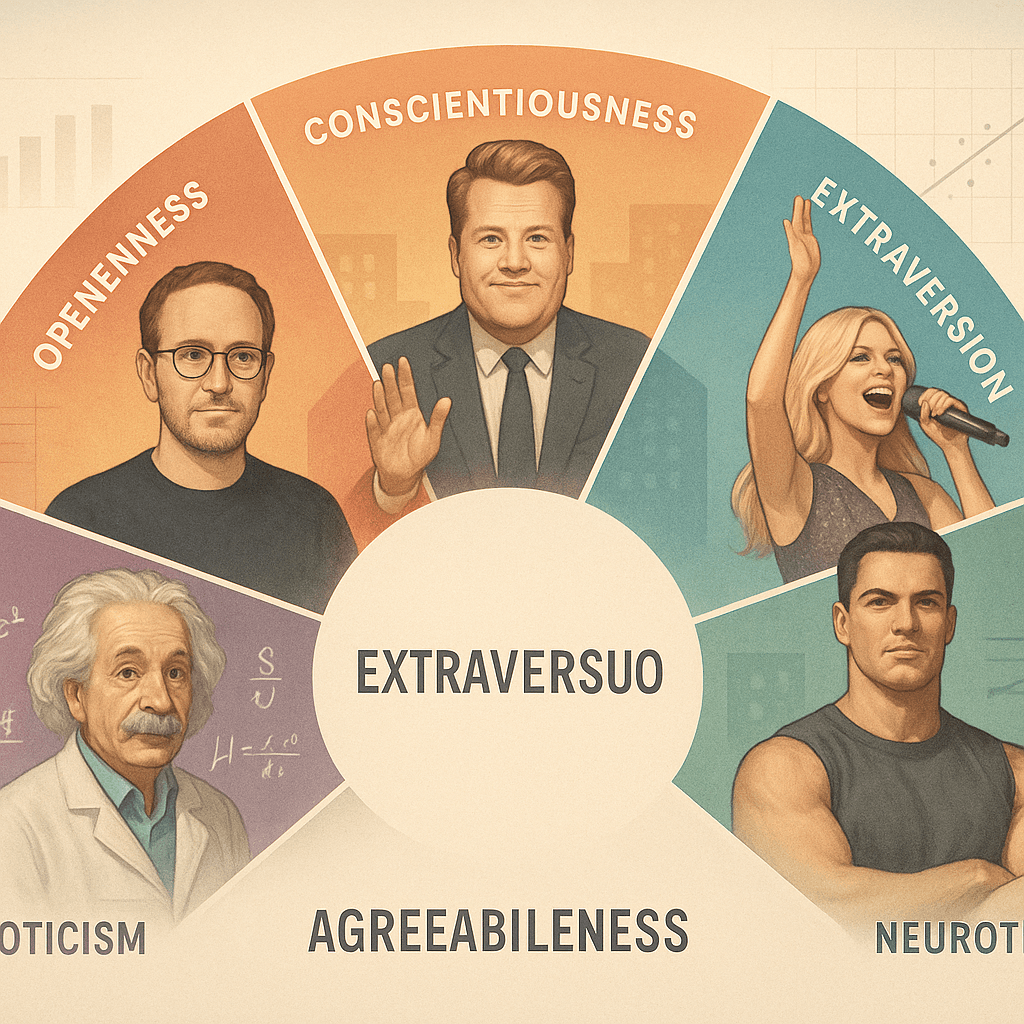
Why are some celebrities magnetic on stage yet quiet off-camera? Why do certain leaders thrive in chaos while others crumble under the spotlight? It often comes down to personality - specifically, the Big Five personality traits. The Big Five model, also known as OCEAN, breaks personality into five broad dimensions: Openness, Conscientiousness, Extraversion, Agreeableness, and Neuroticism. Simple framework. Massive insight. This post explores famous figures through the lens of Big Five personality traits. Not as gossip. Not as armchair psychology. But as a way to understand how personality shapes success, pressure, creativity, and leadership. And if curiosity kicks in halfway through, readers can explore their own profile using a scientific platform like lifematika.com, which combines the Big Five with seven other psychological models into one streamlined assessment. Let’s dig in.
What Are the Big Five Personality Traits?
Before profiling anyone, clarity matters. The Big Five traits include:
- Openness - creativity, curiosity, love of ideas
- Conscientiousness - discipline, organization, reliability
- Extraversion - energy from social interaction
- Agreeableness - empathy, cooperation, warmth
- Neuroticism - emotional sensitivity and reactivity
Think of these traits as five sliders on a mixing board. Nobody is "just" introverted or "just" emotional. It’s a blend. A pattern. Now imagine turning those sliders for some of the most recognizable names in the world.
Elon Musk - High Openness, Sky-High Drive
If Openness were fuel, Elon Musk would run on jet propulsion. He demonstrates:
- Extremely high Openness - bold ideas, futuristic thinking
- High Conscientiousness - relentless work ethic
- Moderate Extraversion - comfortable publicly, selective privately
- Lower Agreeableness - blunt communication style
- Moderate to high Neuroticism - visible intensity under pressure
Innovators often score high on Openness. They connect dots others don’t even see. That trait allows them to imagine electric cars dominating roads or humans colonizing Mars. Here’s the catch: high Openness paired with lower Agreeableness can create friction. Visionaries rarely win popularity contests. They push. They disrupt. They polarize. Sound familiar?
Oprah Winfrey - Extraversion Meets Emotional Intelligence
Oprah’s likely profile tells a different story.
- High Extraversion - natural presence and warmth
- Very high Agreeableness - empathy as a superpower
- High Openness - curiosity about human stories
- High Conscientiousness - decades of consistency
- Low to moderate Neuroticism - emotional depth without volatility
Her success isn’t accidental. It’s structural. When high Agreeableness meets strong Extraversion, you get someone who connects effortlessly and makes others feel seen. That combination builds trust. Trust builds influence. Influence builds empires. Personality, in this case, became architecture.
Albert Einstein - Quiet Genius Energy
Einstein likely ranked:
- Extremely high Openness
- Moderate Conscientiousness
- Low Extraversion - introspective thinker
- Moderate Agreeableness
- Moderate Neuroticism
High Openness often correlates with abstract thinking and imagination. Physics isn’t memorization - it’s mental sculpture. It requires comfort with uncertainty and complexity. Lower Extraversion may have supported long stretches of focused solitude. Some personalities bloom in boardrooms. Others bloom in quiet rooms with chalkboards and messy hair. Neither is better. Just different wiring.
Taylor Swift - Conscientious Creator
Here’s a fascinating blend. Taylor Swift likely combines:
- High Openness - lyrical creativity
- Very high Conscientiousness - strategic career planning
- Moderate Extraversion
- Moderate to high Agreeableness
- Higher Neuroticism - emotional sensitivity fueling art
Creative output often feeds on emotional intensity. Higher Neuroticism doesn’t mean instability. It can mean deeper emotional awareness. That awareness becomes storytelling gold. Add discipline to that emotional depth and you get sustained global dominance rather than a short-lived rise. Talent matters. Structure sustains.
Dwayne "The Rock" Johnson - Discipline in Motion
The Rock’s likely Big Five pattern looks powerful and steady:
- Moderate Openness
- Extremely high Conscientiousness
- High Extraversion
- High Agreeableness
- Low Neuroticism
This mix creates resilience. High Conscientiousness drives relentless training and business expansion. High Agreeableness builds likability. Low Neuroticism keeps emotional storms manageable. He feels solid. Predictable in a good way. Like a well-built bridge. And people trust bridges.
Why Big Five Profiles Matter Beyond Celebrity Curiosity
This isn’t about labeling famous individuals. It’s about recognizing patterns. The Big Five personality model helps explain:
- Why some thrive in chaos
- Why others prefer structure
- Why conflict energizes certain people and drains others
- Why creativity flows differently across individuals
Imagine personality as climate rather than weather. Weather changes daily. Climate shapes the long-term environment. A person high in Conscientiousness will naturally build systems. Someone high in Openness will question those systems. A highly agreeable leader may prioritize harmony over confrontation. None of these are flaws. They’re tendencies. Understanding those tendencies changes decision-making. Careers. Relationships. Even stress management.
How to Discover Your Own Big Five Profile
Reading about celebrities is entertaining. Discovering your own personality blueprint? That’s useful. Modern platforms like lifematika.com take this deeper. Instead of analyzing just the Big Five, the platform integrates eight psychological models simultaneously, including:
- OCEAN - the Big Five framework
- Jungian typology
- DISC behavioral styles
- VIA character strengths
- Emotional intelligence metrics
- Motivational drivers
- Core personal values
- Self-determination dynamics
The assessment includes 95 questions and takes about 15 minutes. No registration wall. No waiting period. Results appear instantly. It’s free to start, fully confidential, and users can retake it over time to track personal evolution after major life events. That last feature matters more than people realize. Personality is stable, yes. But expression shifts with experience. A new career, a breakup, a move across the world - all of it leaves fingerprints. Reassessment provides perspective.
Common Big Five Patterns Among High Achievers
Looking across entrepreneurs, artists, scientists, and athletes, a few patterns tend to emerge:
1. High Conscientiousness Is Common
Discipline beats motivation in the long run. Whether writing novels or building companies, consistent effort wins.
2. Openness Fuels Innovation
Creative leaders typically score high in Openness. They tolerate ambiguity. They experiment.
3. Neuroticism Is Not Always a Weakness
Moderate emotional sensitivity can sharpen awareness and drive preparation. The key is regulation, not elimination.
4. Extraversion Helps - But Isn’t Required
Introverts dominate science and writing. Extroverts shine in public arenas. Both paths work. Personality doesn’t dictate destiny. It shapes strategy.
Final Thoughts - Personality as Strategy, Not Label
Here’s the bigger idea. Famous individuals succeed not because they fit a single personality mold, but because they leverage their natural tendencies strategically. High Openness? Channel it into innovation. High Conscientiousness? Build systems. High Agreeableness? Lead with empathy. Low Neuroticism? Stay calm under fire. Higher Neuroticism? Use emotional depth for creativity. The Big Five model offers a map. Not a cage. And perhaps the most interesting question isn’t "What personality type was Einstein?" or "How agreeable is Oprah?" It’s this: What pattern is quietly shaping your decisions right now? Understanding that pattern can feel like turning on a light in a room you’ve lived in for years. Suddenly, the furniture makes sense.