Attachment Theory vs. Big Five: How They Interact
 Yaro Pry··4 min read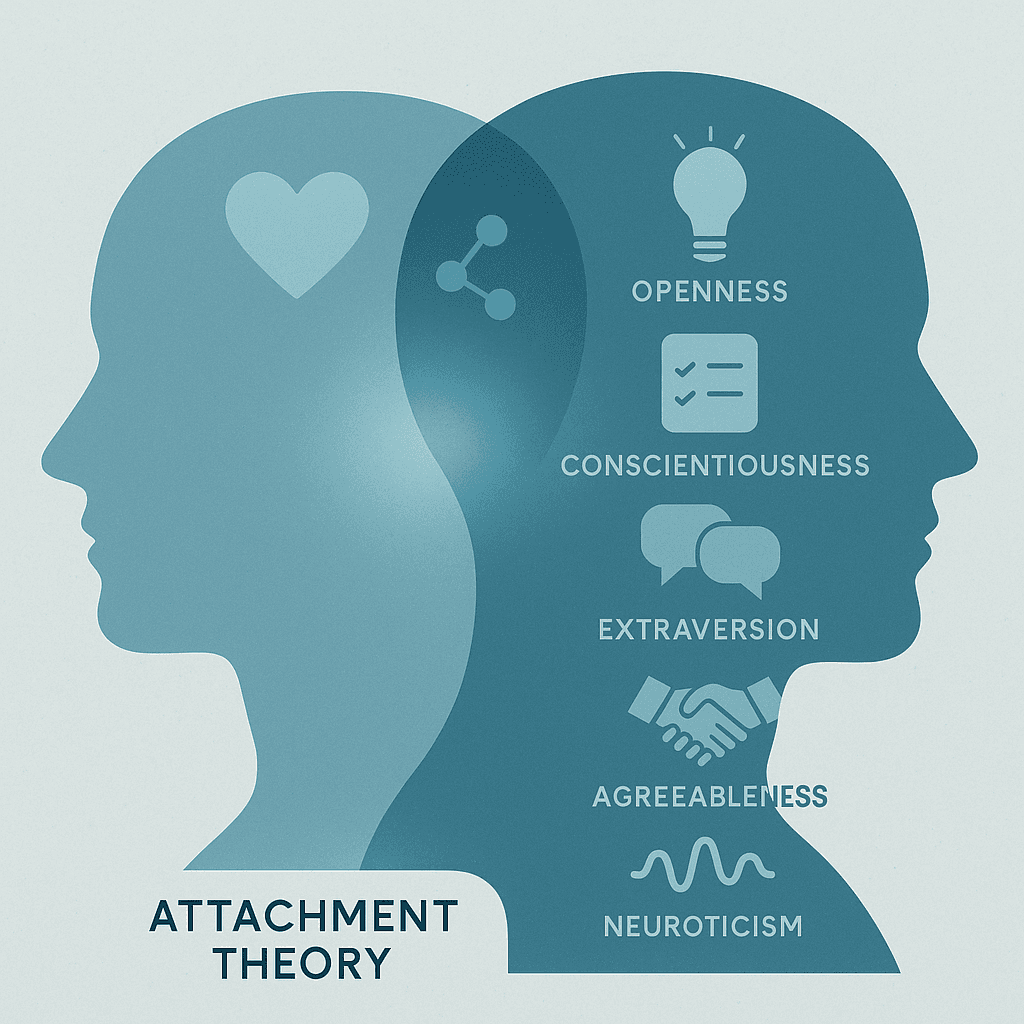
Personality psychology sometimes feels like standing in front of two different maps of the same city. One map shows the roads. The other highlights neighborhoods. Both are accurate. Both are useful. But neither tells the whole story on its own.
That’s exactly what happens when people compare Attachment Theory and the Big Five personality traits. Are they competing frameworks? Complementary tools? Two sides of the same psychological coin?
Here’s the short answer: they measure different layers of human behavior - and when you combine them, the picture becomes sharper, richer, and far more practical.
Let’s unpack this properly.
What Is Attachment Theory, Really?
Attachment Theory explains how people form emotional bonds. It focuses on early relational patterns and how those patterns influence adult relationships.
In simple terms, it asks: How safe do you feel with others?
The Four Core Attachment Styles
- Secure - Comfortable with intimacy and independence.
- Anxious - Craves closeness but fears abandonment.
- Avoidant - Values independence and may resist emotional closeness.
- Fearful-avoidant - Desires connection but fears it at the same time.
Attachment style is relational. It activates most clearly in close partnerships, friendships, and family dynamics. It’s emotional. Instinctive. Often automatic.
Think of it as the "relationship operating system."
What Are the Big Five Personality Traits?
The Big Five, also known as OCEAN, measures five broad personality dimensions:
- Openness - Curiosity and imagination.
- Conscientiousness - Organization and discipline.
- Extraversion - Sociability and energy.
- Agreeableness - Compassion and cooperation.
- Neuroticism - Emotional sensitivity and reactivity.
Unlike attachment theory, the Big Five is not limited to relationships. It predicts workplace behavior, decision-making style, leadership tendencies, and even stress responses.
If attachment theory explains how you bond, the Big Five explains how you generally behave.
See the difference?
Attachment vs. Big Five - Competing or Complementary?
Some people assume these frameworks overlap so much that one makes the other redundant. Honestly, that’s a shallow take.
They overlap in places. But they measure distinct psychological mechanisms.
Here’s a cleaner way to understand it:
- Attachment theory focuses on emotional bonding patterns.
- Big Five focuses on stable personality traits across contexts.
Attachment is situationally activated in intimacy. The Big Five operates all the time.
One is relational wiring. The other is structural temperament.
Where They Interact - The Fascinating Part
This is where things get interesting.
1. Neuroticism and Anxious Attachment
High neuroticism often correlates with anxious attachment. That makes sense, right?
Neuroticism reflects emotional volatility and sensitivity to stress. Anxious attachment involves fear of abandonment and hyper-vigilance in relationships.
But here’s the nuance - not everyone high in neuroticism has anxious attachment. Someone might be emotionally reactive about work performance yet feel secure in romantic relationships.
The trait creates sensitivity. Attachment directs where that sensitivity shows up.
2. Avoidant Attachment and Low Agreeableness
Avoidant individuals sometimes score lower in agreeableness. They may appear distant or less emotionally expressive.
But again, not always.
A person can value harmony and cooperation yet still struggle with deep vulnerability. The internal experience of closeness differs from outward politeness.
That distinction matters.
3. Extraversion Is Not Secure Attachment
This misconception pops up constantly.
Outgoing does not equal emotionally secure.
Someone can be highly extraverted - energized by social settings, talkative, charismatic - and still feel anxious in intimate bonds.
Extraversion measures social energy. Attachment measures emotional safety.
Two different engines under the hood.
Why Understanding Both Changes Everything
Imagine trying to fix a car using only a map of the city. That’s what self-analysis looks like when someone relies on just one framework.
Attachment theory alone explains relationship triggers but ignores broader temperament. The Big Five alone explains traits but misses emotional bonding patterns.
Together? You get clarity.
For example:
- A highly conscientious person with anxious attachment may over-function in relationships.
- A low neuroticism individual with avoidant tendencies might detach calmly instead of reacting dramatically.
- A high openness person with secure attachment may explore relationships with curiosity rather than fear.
See how layered this becomes?
The Scientific Advantage of Combining Models
Modern psychometrics increasingly favors integrative approaches. No single theory captures human complexity.
That’s why platforms like lifematika.com are gaining traction. Instead of forcing users into one psychological box, it integrates eight validated models - including the Big Five - into one comprehensive assessment.
The process is refreshingly straightforward:
- 95 research-based questions
- About 15 minutes
- No registration required
- Instant detailed report
It doesn’t just label traits. It maps strengths, values, emotional intelligence, motivation levels, and behavioral tendencies in one cohesive analysis.
That holistic perspective matters because attachment patterns don’t operate in isolation. They interact with temperament, values, and cognitive style.
Can Attachment Style Change?
Yes. And no.
Attachment patterns are relatively stable, but they are not destiny. Secure relationships, therapy, self-awareness, and major life events can shift them over time.
The Big Five traits are also stable - but they show gradual change across adulthood.
Here’s the key insight: understanding both creates leverage.
You can’t change what you don’t see.
Practical Applications - Real Life Impact
Let’s move from theory to everyday use.
In Relationships
- Recognize whether conflict stems from attachment fear or personality difference.
- Separate emotional triggers from baseline temperament.
- Improve communication by understanding behavioral style.
In Career Decisions
- High conscientiousness plus secure attachment may thrive in leadership.
- High openness with avoidant tendencies might prefer autonomous creative work.
- High neuroticism requires stress-aware environments.
In Personal Growth
Self-awareness becomes strategic instead of abstract.
Instead of saying, “That’s just how I am,” a person can ask:
- Is this my trait profile?
- Or is this my attachment pattern reacting?
That question alone can prevent years of confusion.
The Bigger Picture - Personality Is a System
Humans are not single-theory creatures.
They are systems.
Attachment shapes emotional bonding. Traits shape behavioral consistency. Values guide decisions. Motivation drives action. Emotional intelligence regulates response.
When someone examines only one dimension, it’s like describing an orchestra by listening to just the violins.
Useful. But incomplete.
Final Thoughts on Attachment Theory vs. Big Five
If someone asks which framework is better, the honest answer is: neither.
That’s the wrong question.
The smarter question is how they interact.
Attachment theory explains relational instincts. The Big Five explains enduring personality traits. Together, they reveal patterns that feel almost obvious once seen.
And once people understand those patterns, decisions become cleaner. Relationships become clearer. Personal growth becomes intentional instead of accidental.
Sounds simple. It isn’t.
But it’s worth exploring.