A Comparison of DISC, MBTI, and Big Five
 Yaro Pry··5 min read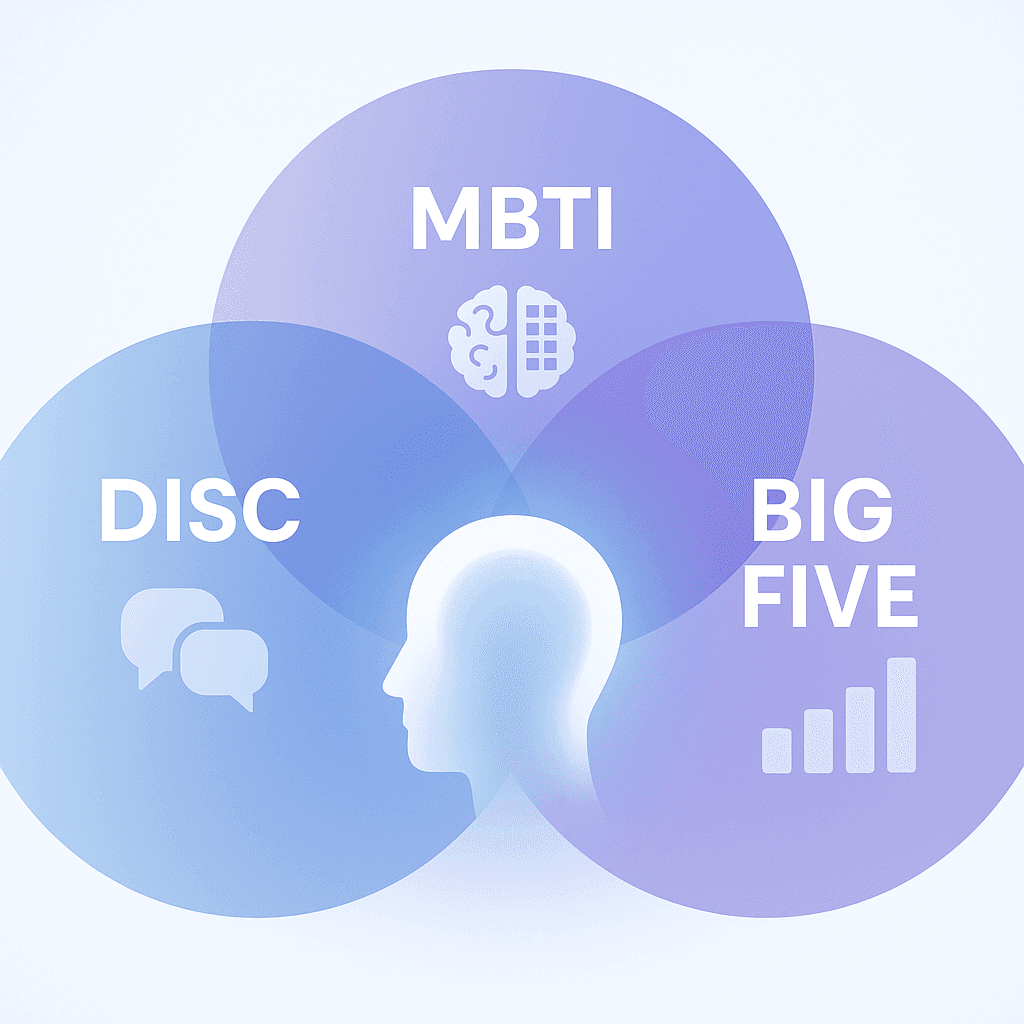
Personality tests are everywhere. In boardrooms. On social media. Even at dinner parties where someone inevitably says, “I’m such an INTJ.” But here’s the real question - what do these assessments actually measure? And more importantly, which one should someone trust when making career or life decisions? DISC, MBTI, and Big Five often get thrown into the same bucket. They’re not the same. Not even close. This breakdown dives into how each framework works, what it’s good at, and where it falls short. No fluff. Just clarity.
Why Personality Frameworks Matter
Think of personality models as different lenses on the same landscape. One lens zooms in on behavior. Another studies internal wiring. A third measures stable traits across time. The landscape doesn’t change. The perspective does. Organizations use personality assessments to improve hiring. Coaches rely on them for self-awareness. Individuals turn to them during big crossroads - career shifts, relationships, identity questions. And yes, the choice of framework matters.
DISC Assessment - The Language of Behavior
DISC is the straight-talker of the trio. It focuses on observable behavior, especially in work and communication contexts. The model breaks personality into four primary dimensions:
- Dominance (D) - Results-oriented, decisive, direct
- Influence (I) - Social, persuasive, enthusiastic
- Steadiness (S) - Supportive, patient, dependable
- Conscientiousness (C) - Analytical, detail-focused, precise
Simple, right? That’s the point.
What DISC Does Well
DISC shines in professional environments. It explains why one colleague jumps into action while another needs structure and data. It clarifies communication friction. It helps teams function. Managers love it because it’s practical. Want to lead a Dominance-heavy team? Be concise. Results first. Working with high Steadiness profiles? Offer reassurance and stability. It’s tactical. Actionable. Immediate.
Where DISC Falls Short
Here’s the hot take - DISC doesn’t go deep enough for major life decisions. It focuses on behavior, not internal motivation or core values. It tells you how someone acts under pressure, but not necessarily why they choose certain paths. That’s a limitation. DISC is like reading someone’s body language. Useful. But incomplete.
MBTI - The Identity Framework
The Myers-Briggs Type Indicator might be the most recognizable personality assessment on the planet. People wear their four-letter types like badges. INFJ. ENTP. ISTP. The model categorizes individuals using four dichotomies:
- Extraversion (E) vs Introversion (I)
- Sensing (S) vs Intuition (N)
- Thinking (T) vs Feeling (F)
- Judging (J) vs Perceiving (P)
Combine them, and you get 16 personality types.
Why MBTI Feels So Personal
MBTI speaks the language of identity. It digs into cognitive preferences - how someone processes information, makes decisions, and interacts with the world. It doesn’t just say, “You’re analytical.” It says, “You prefer structured logic over emotional processing.” That feels deeper. And honestly? It resonates because it describes internal patterns people recognize instantly. Ever read a type description and thought, “Wait… that’s uncomfortably accurate”? That’s MBTI at its best.
The Controversy Around MBTI
Here’s where things get tricky. MBTI places people into categories. You’re either Introverted or Extraverted. Thinking or Feeling. Human personality rarely works in neat boxes. Critics argue that it lacks predictive reliability compared to trait-based models. Some individuals retake the test and receive a different type months later. Does that mean it’s useless? Not at all. It simply means MBTI works better as a reflective tool than a strict scientific measurement. Think of it as a psychological mirror - not a lab instrument.
Big Five - The Scientific Heavyweight
If DISC is practical and MBTI is personal, the Big Five is empirical. Also known as OCEAN, this model measures five broad traits:
- Openness - Creativity and curiosity
- Conscientiousness - Discipline and organization
- Extraversion - Sociability and assertiveness
- Agreeableness - Compassion and cooperation
- Neuroticism - Emotional stability versus reactivity
Unlike MBTI, Big Five doesn’t categorize. It places individuals on a spectrum for each dimension. No boxes. Just gradients.
Why Researchers Trust Big Five
The Big Five is backed by decades of peer-reviewed studies across cultures. It predicts job performance, relationship patterns, even certain health outcomes. That’s serious credibility. Because it measures stable traits rather than labels, it tends to show stronger consistency over time. If someone scores high in Conscientiousness today, odds are they’ll remain relatively structured next year.
Its Limitation? It’s Abstract
Here’s the catch. Big Five gives accurate data, but it can feel clinical. Numbers on a scale don’t always translate into actionable life guidance. Someone might learn they score high in Openness. Great. What now? Without interpretation, trait scores are like raw ingredients sitting on a kitchen counter. Potential is there, but no recipe.
DISC vs MBTI vs Big Five - Side-by-Side Comparison
Let’s simplify it.
- DISC focuses on behavior and communication style.
- MBTI explores cognitive preferences and identity.
- Big Five measures stable personality traits scientifically.
Another way to see it:
- DISC asks: How do you act?
- MBTI asks: How do you think?
- Big Five asks: What patterns define you?
Each answers a different question. So which one is best? That depends on what someone is looking for.
Choosing the Right Personality Assessment
For workplace communication? DISC is efficient and practical. For personal identity exploration? MBTI feels relatable and intuitive. For scientifically grounded insight? Big Five delivers reliability. But here’s something interesting - why choose only one? Modern psychometric platforms have started integrating multiple frameworks into a single assessment. Instead of looking at personality through one narrow lens, they layer models together. That’s where comprehensive tools like lifematika.com stand out.
A Multi-Model Approach - The Smarter Direction
Rather than forcing users into one system, Lifematika combines eight established psychological methodologies in a single 95-question assessment. It takes about 15 minutes. No registration required. Instant detailed report. It incorporates:
- Big Five traits
- Jungian typology principles
- DISC behavioral mapping
- Character strengths analysis
- Motivational frameworks
- Emotional intelligence metrics
- Core value identification
- Self-determination theory insights
That layered design changes everything. Instead of just saying, “You’re high in Extraversion,” it connects that trait to motivation, communication style, strengths, and decision drivers. It feels less like a quiz. More like a psychological blueprint.
Privacy and Practicality Matter
Another factor people overlook? Data security. Personality assessments dig into deeply personal territory. Values. Emotional patterns. Motivations. Lifematika emphasizes confidentiality and uses responses solely to generate the individual report. No intrusive onboarding. No unnecessary barriers. And because it’s fully responsive, it works seamlessly on desktop or mobile. Convenience counts.
The Bigger Question - What Are You Actually Solving?
Before choosing DISC, MBTI, or Big Five, someone should ask one thing: What decision needs clarity? Career change? Team conflict? Personal growth? Relationship patterns? Different tools illuminate different corners. If someone only wants communication insight, DISC may be enough. If they’re wrestling with identity and purpose, MBTI might spark reflection. If they want evidence-backed personality measurement, Big Five provides that foundation. But for those standing at major crossroads - choosing a career path, understanding life direction, mapping long-term development - a holistic approach often works better. Because humans are layered. Behavior, cognition, values, motivation - they all intertwine like threads in a tapestry. Pull one, and the whole design shifts.
Final Thoughts on Personality Models
No single framework owns the truth about personality. Each captures a slice. DISC offers clarity in action. MBTI offers insight into thought patterns. Big Five offers scientific measurement. Used wisely, they’re powerful tools. Used blindly, they become labels. And personality is more than a label. It’s a dynamic system shaped by traits, experiences, and internal drivers. The smartest move? Treat assessments as maps, not destinations. Because at the end of the day, insight only matters if it leads to better decisions. And that’s the real goal, isn’t it?