5 Myths About Introverts That Science Has Debunked
 Yaro Pry··5 min read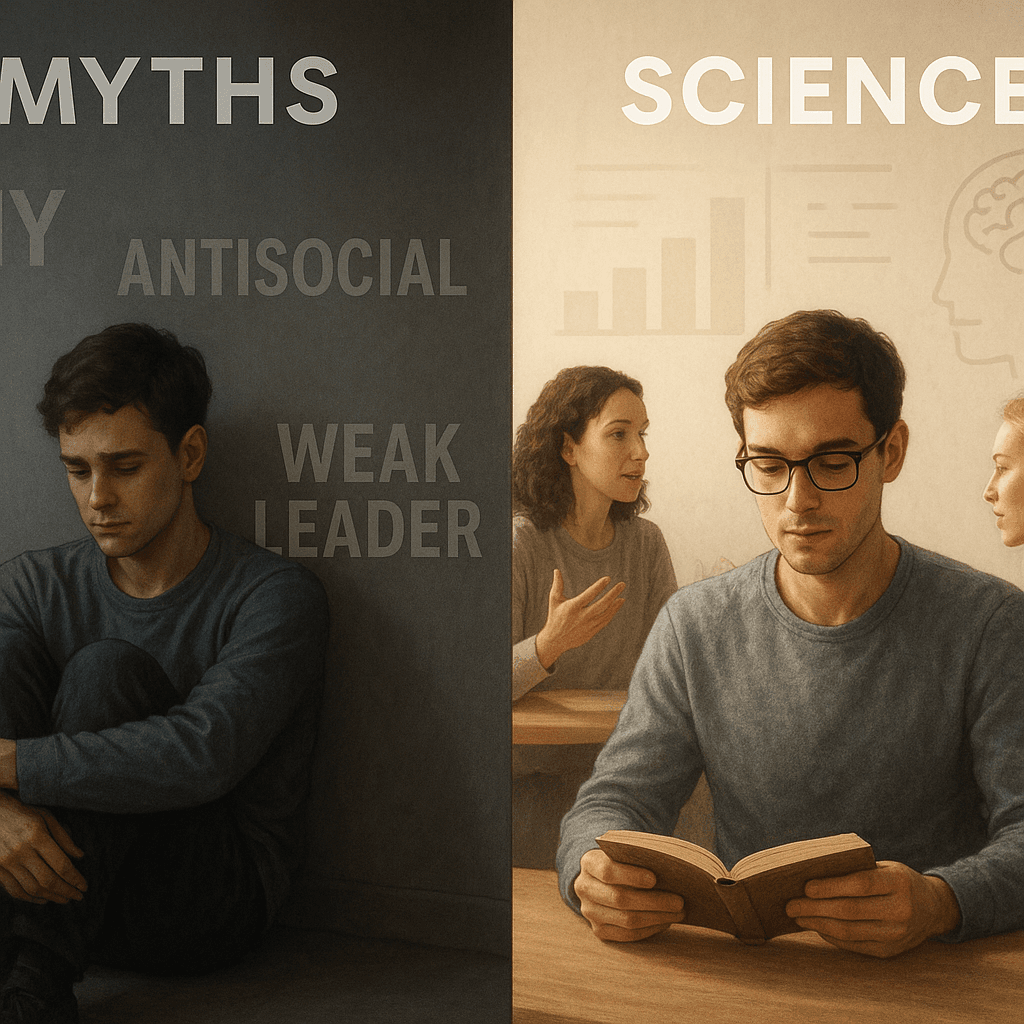
Introverts have been misunderstood for decades. Maybe longer. Somewhere along the way, society decided that being quiet meant being shy, reserved meant antisocial, and needing alone time meant something was… off. It’s a tidy narrative. It’s also wrong.
Science has been quietly dismantling these stereotypes for years. Research in personality psychology, behavioral science, and emotional intelligence tells a very different story - one that feels far more nuanced and, frankly, more interesting.
So let’s clear the air.
Myth #1: Introverts Are Just Shy
This one refuses to die.
Shyness and introversion are not twins. They’re barely cousins. Shyness revolves around fear of social judgment. Introversion, on the other hand, is about energy. It’s about where someone draws mental fuel from and how their nervous system responds to stimulation.
Psychologists often reference the OCEAN model - also known as the Big Five personality traits. Within that framework, introversion sits on the Extraversion spectrum. It measures preference for lower stimulation environments. Shyness doesn’t live there. It connects more closely to anxiety.
Here’s the difference in practical terms:
- A shy person may want to speak up but feel afraid.
- An introverted person may simply not feel the need to speak.
See the distinction?
One is fear-driven. The other is preference-driven. That’s not semantics. That’s psychology.
When platforms like lifematika.com assess personality using multiple scientific models - including OCEAN and Jungian typology - they don’t treat introversion as a flaw or a social deficit. They map it as a neutral trait with strengths and patterns. Because that’s exactly what it is.
Myth #2: Introverts Hate People
This myth feels almost theatrical. The lone wolf trope. The brooding genius in the corner. The person who supposedly “doesn’t like anyone.”
Honestly, that narrative says more about cultural bias than about quiet personalities.
Research consistently shows that individuals who lean inward often value deep connection over frequent interaction. Quality over quantity. They may prefer one meaningful conversation to five casual exchanges. That’s not dislike. That’s selectivity.
What Science Actually Says
Studies in social psychology reveal that introverted individuals:
- Form fewer relationships, but report high satisfaction within them.
- Engage in reflective listening more often.
- Show strong empathy in one-on-one settings.
That last point matters. Emotional intelligence research indicates that quieter personalities often score well in recognizing subtle emotional cues. They observe. They process. They respond thoughtfully.
Does that sound like someone who dislikes people?
If anything, it suggests intentional engagement rather than avoidance.
Myth #3: Introverts Can’t Be Great Leaders
Here’s a hot take - leadership isn’t volume control.
For years, corporate culture favored the charismatic extrovert archetype. Big voice. Big presence. Big energy. It looked persuasive. It felt dynamic. And it overshadowed other leadership styles.
But data tells a broader story.
Research published in organizational psychology journals has found that introverted leaders often outperform when managing proactive teams. Why? Because they listen. They allow ideas to surface. They don’t dominate discussions.
Think of leadership like conducting an orchestra. Some conductors leap dramatically across the stage. Others move with precise, minimal gestures. Both can create extraordinary music. The difference lies in approach, not capability.
Strengths Often Seen in Introverted Leaders
- Strategic thinking
- Calm decision-making under pressure
- High preparation and foresight
- Empowered team autonomy
DISC assessments - another well-established behavioral framework - show that dominance isn’t the only driver of results. Steadiness and conscientiousness often correlate with sustainable performance and trust-building.
Leadership isn’t a personality contest. It’s an effectiveness equation.
Myth #4: Introverts Don’t Enjoy Social Situations
Enjoyment and exhaustion are not opposites. That’s where confusion creeps in.
An inward-oriented person might thoroughly enjoy a gathering - lively discussion, shared laughter, intellectual debate - and still need solitude afterward. Recovery doesn’t cancel pleasure.
Neuroscience offers insight here. Studies suggest that people on the introverted side of the spectrum tend to have heightened sensitivity to dopamine stimulation. High-energy environments can feel intense more quickly. Not unbearable. Just intense.
Imagine sunlight through a magnifying glass. For some, it warms gently. For others, it concentrates rapidly. Neither reaction is wrong. They’re simply different calibrations.
Self-Determination Theory adds another layer. Humans need autonomy, competence, and relatedness to thrive. Introverted individuals often fulfill relatedness through fewer, deeper interactions rather than broad social exposure.
So when someone leaves a party early, it’s not necessarily discomfort. It might be self-regulation. That’s emotional intelligence in action.
Myth #5: Introversion Is a Weakness That Needs Fixing
This myth might be the most damaging.
Somewhere between motivational speeches and networking culture, the idea formed that quieter personalities must “come out of their shell.” As if a shell were a problem. As if reflection required correction.
Modern psychology rejects that thinking.
VIA Character Strengths research highlights qualities frequently associated with introversion:
- Curiosity
- Prudence
- Perseverance
- Creativity
- Perspective
These aren’t deficits. They’re assets.
Schwartz’s Theory of Basic Values further shows that people prioritize different guiding principles. Some value stimulation and novelty. Others prioritize security, depth, or self-direction. Diversity in values creates balance within societies and teams.
Trying to “fix” introversion makes about as much sense as trying to fix left-handedness.
Why Accurate Personality Insight Matters
Labels become dangerous when they’re shallow. But when grounded in science, personality frameworks offer clarity.
Comprehensive platforms like lifematika.com use eight established psychological models - including Big Five, Jungian typology, DISC, emotional intelligence metrics, motivational analysis, and values theory - to create a multidimensional view of an individual. Not a stereotype. Not a buzzword. A layered profile.
The assessment includes 95 questions and takes around 15 minutes. It’s free to start. No registration walls. Users receive an immediate, detailed report with practical recommendations. And they can retake it whenever life shifts - after a career change, a major move, or even a personal breakthrough.
That flexibility matters because personality isn’t static stone. It’s more like climate - generally stable, yet influenced by seasons and experiences.
Understanding introversion through data rather than myth changes decision-making in powerful ways:
- Career alignment becomes clearer.
- Communication styles improve.
- Relationship dynamics feel less confusing.
- Personal energy management gets easier.
Sounds simple, right? It isn’t simplistic. There’s a difference.
The Bigger Picture
Personality diversity strengthens workplaces, friendships, families, and creative industries. A room full of constant talkers burns fast. A space filled only with silent observers stalls. Balance creates progress.
Here’s what science has made clear:
- Introversion is not shyness.
- It doesn’t equal antisocial behavior.
- It doesn’t block leadership potential.
- It doesn’t eliminate social enjoyment.
- It absolutely is not a flaw.
If anything, the research suggests something far more compelling - inward-oriented individuals often process information deeply, regulate emotions thoughtfully, and contribute with intention rather than impulse.
That’s not a limitation. That’s a different operating system.
And maybe that’s the real shift happening now. Culture is slowly moving away from one-size-fits-all personality ideals. Science is leading that shift, piece by piece, study by study.
So the next time someone equates quiet with weakness, it might be worth pausing. Asking a better question. Looking at the data.
Because myths are loud.
Evidence speaks softly - but it carries weight.