10 Surprising Facts About Human Motivation
 Yaro Pry··4 min read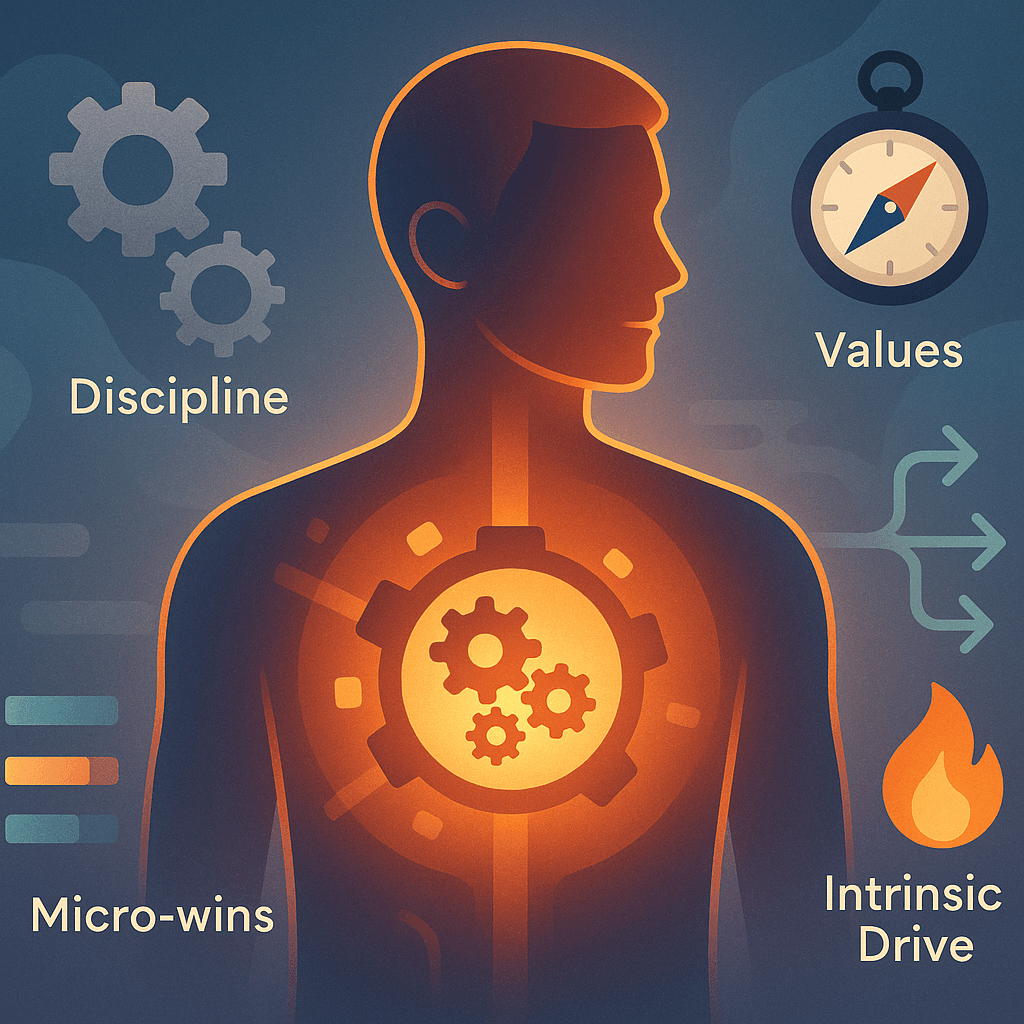
Human motivation is strange. Predictable, yet wildly inconsistent. One day a person wakes up ready to conquer the world. The next? Snooze button. Three times.
What actually drives people to act, persist, quit, or pivot entirely? Is it money? Recognition? Fear? Passion?
Here’s the twist - most people misunderstand motivation completely.
Below are ten surprising, research-backed facts about human motivation that challenge common assumptions. Some may feel counterintuitive. A few might hit close to home.
1. Motivation Is Less About Willpower and More About Alignment
Willpower gets too much credit. Honestly, it’s overrated.
People often assume discipline fuels long-term success. In reality, alignment does. When actions match personal values and strengths, effort feels lighter. Not effortless - just lighter.
This is where tools like lifematika.com become relevant. The platform combines eight psychological models into one streamlined assessment, helping individuals see how their traits, values, and drivers intersect. When someone understands that alignment, motivation stops feeling like a constant uphill climb.
Sounds simple, right? Yet most chase goals that look impressive rather than personally meaningful.
2. External Rewards Can Actually Reduce Drive
Here’s a hot take - paying someone more does not always make them care more.
According to Self-Determination Theory, intrinsic motivation - the internal desire to do something - often weakens when excessive external rewards dominate. Think of a child who loves drawing. Introduce money for every sketch, and suddenly creativity becomes a transaction.
The brain shifts focus. From joy. To payoff.
That subtle shift changes everything.
3. Personality Shapes Motivation More Than People Realize
Have you ever wondered why some people thrive in chaos while others need structure like oxygen?
The Big Five personality traits - often called OCEAN - show that traits like conscientiousness and openness directly affect how someone pursues goals. A highly conscientious person may stay committed through sheer organization. Someone high in openness may chase inspiration instead.
Neither approach is better. They’re different engines.
Understanding those engines matters. Platforms grounded in psychometrics, like Lifematika’s 95-question assessment, map these traits instantly, providing insight without guesswork.
4. Clarity Beats Passion
“Follow your passion” sounds inspiring. It’s also incomplete advice.
Clarity fuels momentum far more reliably than raw enthusiasm. When people know:
- What they value
- Why a goal matters
- How their strengths support it
They act with intention instead of emotional bursts.
Passion flares. Clarity sustains.
5. Emotional Intelligence Is a Hidden Motivational Lever
Most discussions about drive ignore emotional intelligence. That’s a mistake.
People who understand and regulate emotions recover faster from setbacks. They don’t spiral as long. They interpret obstacles as data rather than doom.
Imagine motivation as a campfire. Emotional intelligence acts like wind protection. Without it, even small gusts extinguish the flame.
Assessments that evaluate emotional awareness alongside personality - like those integrating Jungian typology and emotional metrics - offer a fuller picture of why some individuals stay steady under pressure.
6. Values Quietly Run the Show
Schwartz’s Theory of Basic Values suggests that core values guide decisions more than conscious reasoning does.
Achievement. Security. Benevolence. Power. Tradition.
Each person ranks these differently. And that ranking shapes behavior in subtle ways.
Consider two employees offered the same promotion. One sees opportunity. The other sees instability. Same scenario - different motivational filter.
Without understanding values, people misinterpret their own hesitation.
7. Progress Motivates More Than Results
This one surprises many.
Research shows visible progress fuels motivation more effectively than distant rewards. Small wins activate the brain’s reward system repeatedly. Waiting for one massive victory? That’s like trying to stay warm with a single log all winter.
Micro-progress matters.
Tracking personal development over time - especially after major life events - can reinforce that sense of movement. Lifematika allows users to retake its assessment without limits, making it possible to observe personality shifts or motivational changes across different seasons of life.
8. Environment Often Overrides Intention
People love blaming themselves for inconsistency.
But environment plays a massive role.
Workspace layout. Social circle. Digital distractions. Even lighting.
Motivation behaves like water - it flows along the path of least resistance. Change the terrain, and the flow changes too.
This is why behavioral models like DISC, which analyze interaction and communication styles, help individuals design environments that support their natural tendencies instead of fighting them.
9. Autonomy Is Non-Negotiable
Take away choice, and motivation shrinks.
Autonomy sits at the heart of intrinsic drive. When people feel ownership over decisions, engagement rises. When they feel controlled, even exciting opportunities lose their shine.
Have you noticed how advice feels heavier than self-discovery?
That’s not accidental.
Scientific self-assessment tools provide insight without prescribing rigid paths. No registration barriers. No invasive processes. Just reflection. That autonomy keeps the process empowering rather than restrictive.
10. Motivation Evolves - It’s Not a Fixed Trait
Perhaps the most overlooked fact: motivation changes.
After career shifts. After relationships begin or end. After burnout. After success.
Many assume their drive level defines them permanently. It doesn’t.
Motivational layers operate like seasons. Internal drivers adapt as priorities shift. Scientific frameworks that integrate multiple models - from VIA character strengths to motivational levels - reveal these changes with nuance rather than simplistic labels.
That flexibility matters in a world where change is constant.
Why Understanding Human Motivation Matters More Than Ever
Modern life overwhelms attention. Notifications ping. Expectations stack. Comparison never sleeps.
Without understanding personal motivational patterns, people chase productivity hacks instead of insight.
And insight is the real lever.
Comprehensive platforms grounded in peer-reviewed psychology offer something rare - a holistic lens. Lifematika, for example, integrates:
- OCEAN personality traits
- Jungian cognitive functions
- DISC behavioral styles
- VIA character strengths
- Self-Determination Theory drivers
- Schwartz’s value system
- Emotional intelligence metrics
- Motivational level analysis
All within a 15-minute experience. No complicated onboarding. Immediate analytical reporting. Cross-device access.
More than 1,000 users have already explored their profiles. Not because it’s trendy. Because clarity feels powerful.
The Real Takeaway
Motivation isn’t laziness versus discipline.
It’s psychology. Structure. Environment. Values. Emotion. Alignment.
When someone understands how those pieces interlock, effort stops feeling random. Decisions sharpen. Energy becomes intentional.
So the better question isn’t “How do I force myself to try harder?”
It’s this:
“What actually drives me - and why?”
Answer that, and motivation stops being mysterious. It becomes manageable. Even strategic.
And that changes everything.