Understanding the DISC Personality Assessment
 Yaro Pry··3 min read
Ever felt like you and your coworker are speaking two completely different languages, even though you’re both using English? It happens all the time. One person is obsessed with the bottom line and wants the meeting over in five minutes, while the other wants to spend an hour building rapport. That frustration? It usually stems from a mismatch in personality styles. This is exactly where the disc personality assessment steps in to clear the air.
Quick Summary
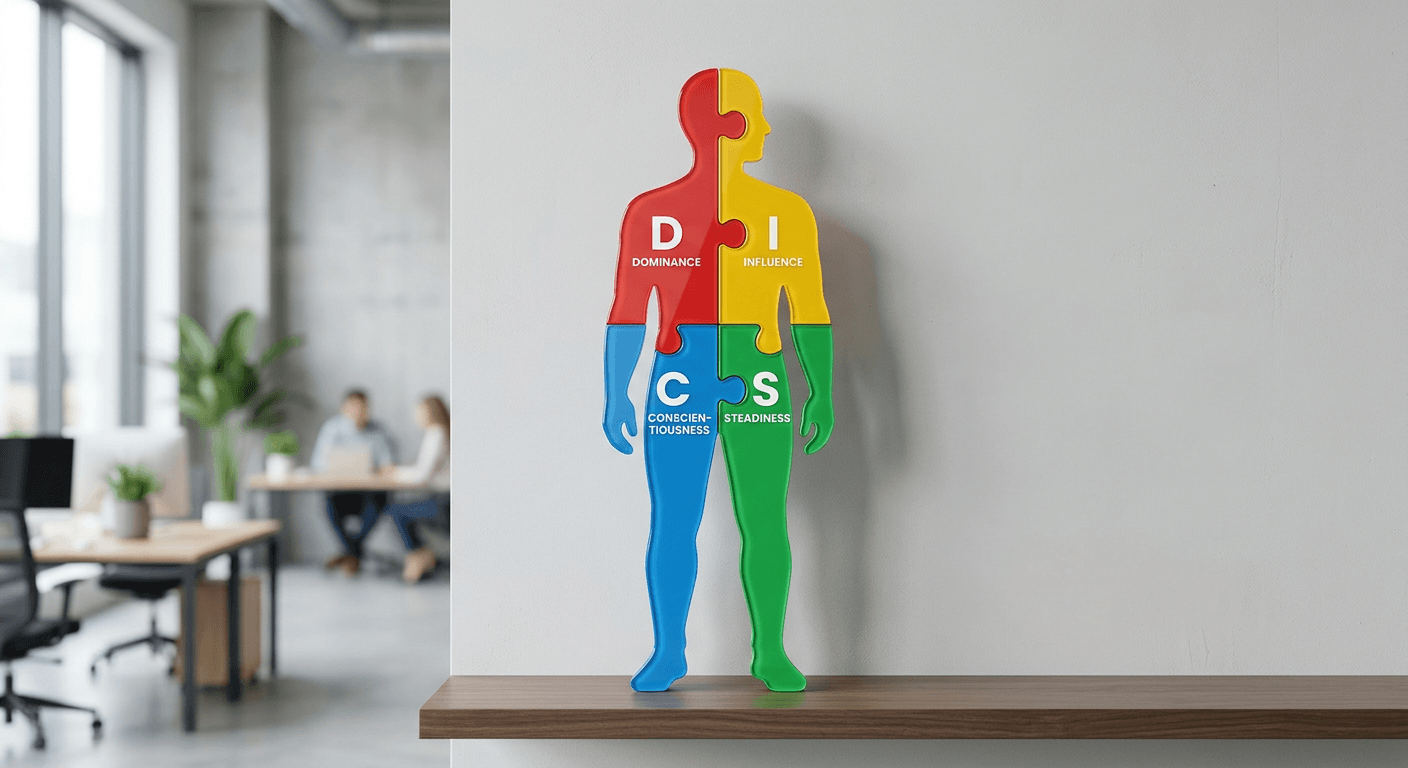
The DISC personality assessment is a behavioral tool used to categorize individuals into four primary styles: Dominance, Influence, Steadiness, and Conscientiousness. It helps improve communication, teamwork, and self-awareness by identifying how people naturally respond to challenges, influence others, maintain pace, and follow rules or procedures.
- Provides a common language for workplace dynamics.
- Identifies communication preferences to reduce interpersonal friction.
- Enhances emotional intelligence through self-discovery.
- Offers actionable insights for leadership and team management.
Table of Contents
- Understanding the DISC Personality Assessment
- Decoding the DISC Personality Test Types
- Dominance and Influence: The Fast-Paced Styles
- Steadiness and Conscientiousness: The Thoughtful Styles
- Why Use a DISC Personality Profile?

Understanding the DISC Personality Assessment
If you ask me, we spend way too much time guessing why people behave the way they do. We label a difficult colleague as 'stubborn' or a quiet one as 'uninterested,' but that's often lazy thinking. The disc personality assessment provides a framework that strips away those biases. Instead of labeling someone, you start to understand their underlying drive. Honestly, I believe most workplace drama could be solved if everyone just took a professional personality assessment to see where they land on the spectrum.
This isn't about boxing you into a corner. It's more like getting a map of your own cognitive terrain. You might be a naturally fast talker who hates details - that's a classic I-style. Or perhaps you're the person who checks every spreadsheet twice for errors. That’s C-style energy. When you see these patterns clearly, you stop taking things personally. You start seeing them as data points instead.
Decoding the DISC Personality Test Types
There are four distinct flavors here. D, I, S, and C. It’s like a personality-driven version of a color wheel. You have your bold, directive types and your detail-oriented, quiet types. If you’re curious about your own configuration, you can explore the latest insights on behavioral psychology to see how your specific blend of these traits manifests in your daily routine.
Dominance and Influence: The Fast-Paced Styles
Dominance (D) is all about results. These people are the 'let’s get it done yesterday' crowd. They don’t want fluff; they want the bullet points. Influence (I) is the opposite side of the coin - high energy, social, and big-picture thinkers. They thrive on human connection. Put a D and an I in a room, and you’ll get a lot of noise and probably a lot of progress, provided someone keeps an eye on the schedule.
Steadiness and Conscientiousness: The Thoughtful Styles
Now, let's talk about the disc personality type s. These folks are the heartbeat of a stable team. They are loyal, patient, and they hate change for the sake of change. If you have an S on your team, cherish them. They are your consistency anchor. Then, you have the C-types. These are the engineers of the personality world. They demand accuracy, quality, and logic. If the S is the glue, the C is the blueprint.
Why Use a DISC Personality Profile?
Sounds simple, right? Just label everyone and watch the magic happen? Well, not exactly. The real power is in the application. When you know someone is a C, you don't walk up to them with a half-baked idea and expect a 'yes.' You walk up with data, facts, and a timeline. That’s how you get buy-in. It’s not manipulation; it’s effective communication. By visiting a resource for self-growth, you can find ways to adapt your own style to meet others where they are.
Here’s a hot take: most people don't actually want to communicate better; they want others to communicate like them. But that’s a recipe for disaster. The most successful teams I’ve seen are the ones that consciously lean into their differences. They treat the disc personality test as a Rosetta Stone for the office. Suddenly, the person who asks too many questions isn't annoying - they’re just showing their C-style need for accuracy. See the difference?
It’s about empathy. When you look at the world through someone else’s lens, your frustration levels drop significantly. We are all just trying to navigate a complex world with the psychological tools we were handed at birth. Why make it harder by refusing to learn the user manual for the people sitting right next to us?