How to Audit Your Life Based on Your VIA Strengths
 Yaro Pry··4 min read
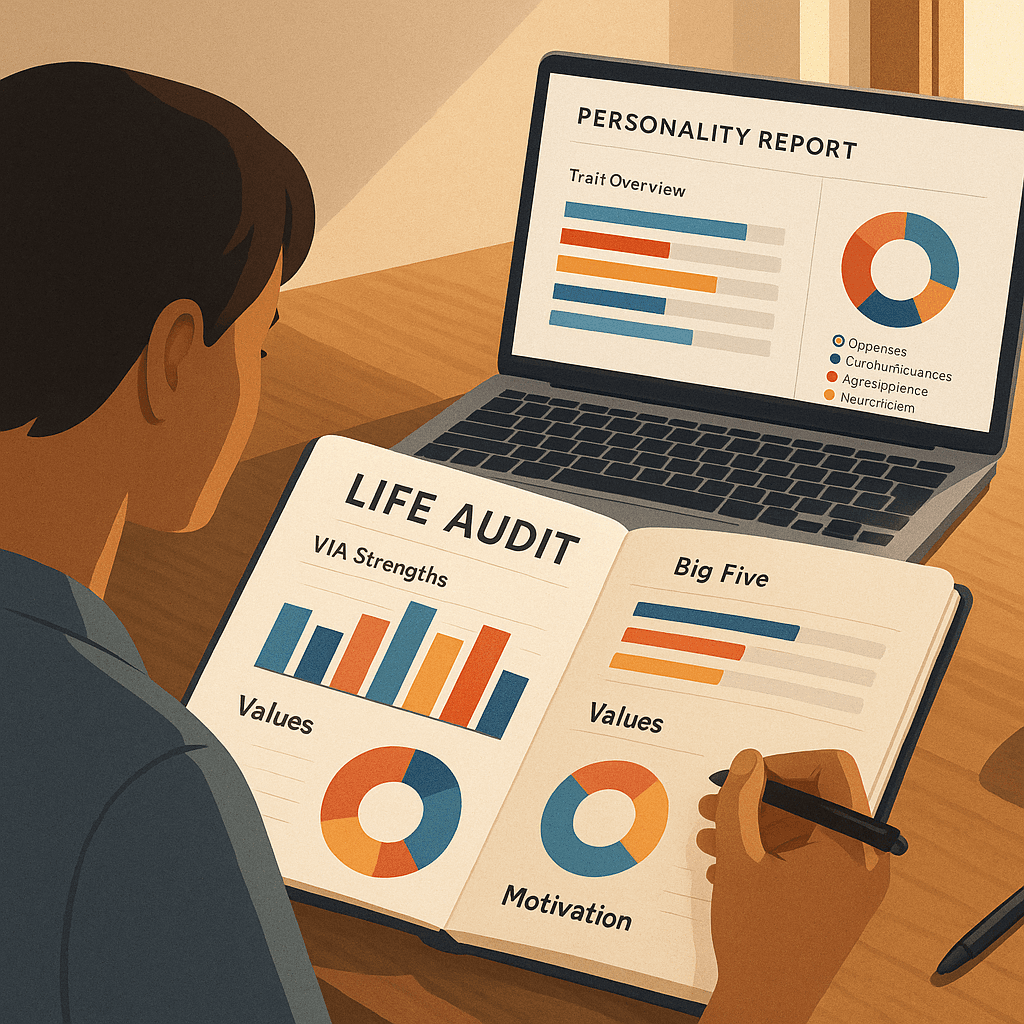
Most people audit their finances. Some audit their time. A few brave souls even audit their closets.
But auditing a life? That sounds dramatic. Intense. Maybe even unnecessary.
Here’s a hot take - it’s one of the smartest things a person can do.
A personal audit isn’t about tearing everything apart. It’s about stepping back and asking a simple, slightly uncomfortable question: Is this life aligned with who I actually am?
That’s where VIA strengths come in. And when paired with a data-driven tool like lifematika.com, the process becomes less guesswork and more clarity.
Let’s break this down.
What Are VIA Strengths - Really?
The VIA Character Strengths framework identifies core virtues that shape how someone thinks, behaves, and makes choices. Think curiosity, perseverance, honesty, kindness, leadership, creativity.
Not fluffy labels. Real psychological constructs backed by research.
If personality traits are the engine of a car, VIA strengths are the way that engine expresses power on the road. Two people can both be high in extraversion, yet one leads with humor while another leads with social intelligence. Same fuel. Different output.
That difference matters.
Why Most People Feel “Off”
Here’s what tends to happen.
People choose careers based on salary. Relationships based on chemistry. Goals based on social pressure. Then years later, they feel friction. Low-grade dissatisfaction. A quiet sense that something doesn’t fit.
It’s like wearing a jacket that technically fits - but it pulls at the shoulders and never quite settles right.
Often, that friction comes from underused strengths.
The Life Audit Framework
An effective life audit based on VIA strengths follows three stages:
- Identify top strengths.
- Map them against current reality.
- Adjust environment or behavior.
Sounds simple, right?
Simple doesn’t mean easy.
Step 1 - Identify Your Core Strengths
You can’t audit what you haven’t defined.
A scientifically grounded assessment makes this part clearer. Platforms like lifematika combine VIA strengths with seven additional psychological models - including Big Five traits, Jungian typology, DISC patterns, emotional intelligence, and motivational drivers.
That layered analysis matters because strengths don’t exist in isolation. Curiosity paired with high openness behaves differently than curiosity paired with strong conscientiousness.
The assessment takes about 15 minutes, includes 95 questions, and generates an instant analytical report. No registration hoops. No waiting period. Just insight.
And yes, it’s free to start.
Step 2 - Conduct a Strength Alignment Audit
Now comes the interesting part.
Break life into domains:
- Career
- Relationships
- Health
- Personal growth
- Community
For each area, ask:
- Where am I actively using my top strengths?
- Where are they ignored?
- Where are they possibly overused?
Yes - overused.
Kindness without boundaries turns into resentment. Leadership without listening becomes control. Creativity without discipline results in chaos.
Strengths are like spices. The right amount elevates a dish. Too much ruins it.
Career Audit Example
If someone scores high in:
- Creativity
- Curiosity
- Love of learning
But works in a rigid environment with repetitive tasks and zero autonomy, friction is inevitable.
On the other hand, a person high in:
- Prudence
- Perseverance
- Conscientiousness
May thrive in structured roles that others find restrictive.
The issue isn’t whether a job is “good.” It’s whether it aligns.
Relationship Audit
Relationships often reflect strengths - or clash with them.
Someone whose top virtue is honesty may struggle in environments where feelings are hidden. A person high in appreciation of beauty may crave shared experiences in art or nature.
Have you ever noticed how certain conversations feel energizing while others feel draining?
That’s strength alignment in action.
Where Lifematika Fits In
A proper audit requires accurate data. Guessing leads to bias.
Lifematika integrates eight psychological methodologies simultaneously:
- OCEAN - Big Five traits
- Jungian cognitive patterns
- DISC behavioral styles
- VIA character strengths
- Self-Determination Theory drivers
- Schwartz values framework
- Emotional intelligence metrics
- Motivational levels analysis
That holistic approach creates depth. Instead of a single lens, users receive a panoramic view of how they operate.
It’s responsive across devices, fully confidential, and reports generate instantly. Users can retake the assessment after major life events - career shifts, breakups, relocations - to track internal changes.
Growth leaves fingerprints. Measuring it matters.
Common Audit Mistakes
1. Confusing Skills with Strengths
Just because someone is good at something doesn’t mean it energizes them.
Skill is competence. Strength is vitality.
One pays bills. The other fuels identity.
2. Ignoring Values
VIA strengths connect closely with values. If a top strength is fairness but someone works in an ethically gray field, tension builds fast.
That tension doesn’t disappear. It compounds.
3. Waiting for Burnout
Many conduct life reviews only after exhaustion hits.
Why wait for a breakdown to justify a breakthrough?
Turning Insight Into Action
An audit without change becomes intellectual entertainment.
Instead, choose one adjustment per domain.
For example:
- Schedule weekly creative time if creativity ranks high.
- Volunteer for mentoring if leadership and kindness dominate.
- Set clearer boundaries if prudence feels suppressed.
Small shifts compound faster than dramatic reinventions.
Think of alignment like adjusting a sail. A slight turn changes the destination miles later.
The Long Game
Personal strengths evolve. Motivation shifts. Priorities reorder themselves after milestones or setbacks.
That’s why periodic reassessment matters.
Lifematika allows unlimited retakes, making it possible to compare reports across time. Patterns emerge. Growth becomes visible. Blind spots shrink.
And when people see progress mapped clearly, confidence rises.
There’s something powerful about objective validation.
Final Reflection Questions
Before closing this tab, consider:
- Which strength feels underused right now?
- Where does energy spike during the week?
- Where does it quietly leak?
- If nothing changed for five years, would that feel acceptable?
Uncomfortable questions. Necessary ones.
Auditing a life isn’t about chasing perfection. It’s about coherence. When strengths, values, motivation, and daily behavior line up, life feels less like resistance and more like momentum.
And momentum is addictive in the best way.
So take fifteen minutes. Run the assessment. Study the report. Map strengths against reality.
Then adjust.
Because a well-aligned life doesn’t happen by accident. It’s designed - one honest audit at a time.



