Are You an Extravert or an Introvert? The Big Five View
 Yaro Pry··4 min read
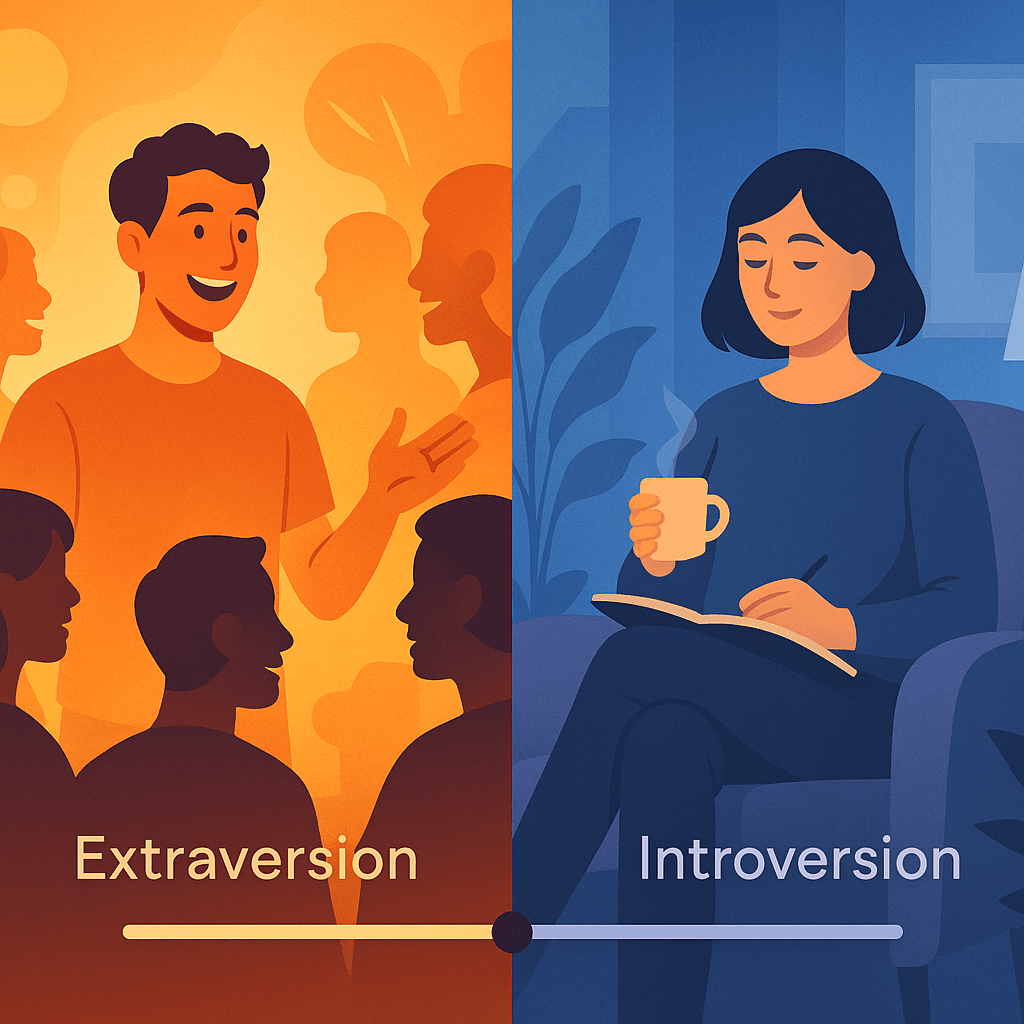
Some people walk into a room and instantly feel charged, like someone flipped on a hidden battery pack. Others walk into that same room and feel their energy slowly draining away, like air slipping from a balloon. So which one are you? Are you an extravert - or an introvert? And more importantly, what does that actually mean beyond party stereotypes and tired memes? The answer, if you ask most psychologists, lives inside something called the Big Five personality model. And it’s far more nuanced than the labels we casually throw around. Let’s dig in.
Understanding Extraversion in the Big Five Model
The Big Five personality model - sometimes called OCEAN - is one of the most scientifically supported frameworks in psychology. It breaks personality into five broad dimensions:
- Openness
- Conscientiousness
- Extraversion
- Agreeableness
- Neuroticism
Today, the spotlight is on extraversion. Here’s the thing most people get wrong: extraversion is not about being "loud" or "quiet." It’s about where someone draws energy from and how they orient toward stimulation.
High Extraversion - What It Really Looks Like
People who score high in extraversion often:
- Feel energized by social interaction
- Seek external stimulation
- Act quickly and decisively
- Enjoy group activities
- Express emotions openly
They tend to think out loud. Processing happens in conversation. Silence can feel awkward. Activity feels natural. Imagine a campfire. Extraverts toss more logs on. More people. More sparks. More stories. That’s where they feel alive. But that doesn’t mean they’re incapable of depth or solitude. It simply means their baseline setting leans outward.
Low Extraversion - The Introvert Side
Now let’s flip it. People lower on the extraversion scale - often labeled introverts - typically:
- Recharge through solitude
- Prefer meaningful one-on-one conversations
- Think before speaking
- Avoid excessive stimulation
- Value reflection
They aren’t anti-social. They’re selective. If extraversion is a campfire, introversion is a candle in a quiet room. Steady. Focused. Intentional. And honestly, both forms of energy are powerful. Just different.
Why Most People Aren’t Fully One or the Other
Here’s a hot take - the world loves binary labels because they’re easy. But personality doesn’t work that way. The Big Five model measures extraversion on a spectrum. That means someone can fall anywhere between high and low. In fact, many people land somewhere in the middle. Psychologists sometimes call this ambiversion. Ever notice how someone can lead a meeting confidently but still crave a quiet evening afterward? Exactly. Human behavior shifts depending on context. Work. Family. Friends. Stress. Culture. All of it matters. That’s why real personality assessment goes beyond a single question like, “Do you like parties?”
The Science Behind Extraversion
Extraversion in the Big Five isn’t a vague concept. It’s backed by decades of research and refined through statistical modeling across cultures. Researchers associate high extraversion with:
- Higher sensitivity to reward systems in the brain
- Greater dopamine responsiveness
- Stronger social engagement patterns
Meanwhile, introversion often correlates with:
- Deeper information processing
- Higher sensitivity to overstimulation
- Stronger internal reflection
Sounds technical, right? But at its core, it’s simple. Some nervous systems light up around people. Others light up in quiet focus. Neither is better. Both are adaptive in different environments.
How Extraversion Shapes Career and Relationships
This is where things get practical. Understanding whether someone leans extraverted or introverted can influence:
- Career satisfaction
- Leadership style
- Communication patterns
- Conflict resolution
- Romantic compatibility
An extravert might thrive in sales, public speaking, or collaborative leadership roles. An introvert may excel in research, design, strategy, or deep analytical work. But let’s be clear - these are tendencies, not limitations. Some of the most effective leaders are quiet. Some brilliant creatives are socially magnetic. Personality shapes preference, not destiny.
Measuring Extraversion Accurately
Here’s where things often go sideways. Online quizzes can be fun, but many lack scientific rigor. A handful of surface-level questions can’t fully capture the complexity of personality traits. A more comprehensive approach uses validated psychometric models. For example, lifematika.com offers a scientifically grounded personality assessment built on eight established psychological methodologies - including the Big Five model. The process includes:
- 95 carefully structured questions
- Completion time of about 15 minutes
- No registration required to begin
- Instant detailed report with actionable insights
- Full confidentiality and data protection
Instead of labeling someone as simply "introvert" or "extravert," the platform analyzes behavioral patterns, motivation drivers, emotional intelligence, values, and communication tendencies. That layered approach matters. Because personality isn’t a sticker you slap on your forehead. It’s a dynamic system.
The Big Five vs. Popular Personality Tests
Let’s address the elephant in the room. Many people are familiar with typology systems that assign four-letter codes. Those can be engaging and insightful. However, the Big Five model differs in one key way - it measures traits on continuous scales rather than fixed types. Why does that matter? Because life rarely fits into boxes. Continuous measurement captures nuance. It allows growth. It reflects change over time. Someone might score moderately high in extraversion today and shift slightly after a major life event. Personality is relatively stable, but not frozen. And that flexibility provides a more realistic self-understanding.
Can You Change Your Level of Extraversion?
Short answer - partially. Core temperament has biological roots. However, behavior can absolutely be adjusted. An introvert can learn public speaking. An extravert can cultivate reflective habits. Growth doesn’t require changing identity. It requires expanding range. Think of personality like a default setting on a smartphone. You start with factory preferences, but you can customize apps, notifications, and habits over time. The key isn’t forcing transformation. It’s building awareness.
Why Self-Knowledge Changes Everything
Understanding extraversion through the Big Five lens does more than satisfy curiosity. It helps people:
- Choose environments aligned with their energy style
- Avoid burnout
- Communicate needs clearly
- Build stronger relationships
- Make intentional career moves
Without awareness, someone might misinterpret exhaustion as weakness - when it’s simply overstimulation. Or mistake restlessness for dissatisfaction - when it’s under-stimulation. See the difference? Labels can limit. Insight liberates.
So… Are You an Extravert or an Introvert?
The real question isn’t which label fits better at a party. It’s this: Where does energy come from? Where does it drain? How does someone prefer to process the world - externally or internally? The Big Five framework offers a scientifically grounded way to answer those questions. Not with vague descriptions, but with measurable traits. And once someone understands their position on the extraversion spectrum, decisions start to feel clearer. More aligned. Less forced. That’s the quiet power of good psychology. Because knowing whether someone leans outward or inward isn’t about social performance. It’s about designing a life that actually fits. And that? That changes everything.