Why You Feel Burnt Out: An SDT Perspective
 Yaro Pry··4 min read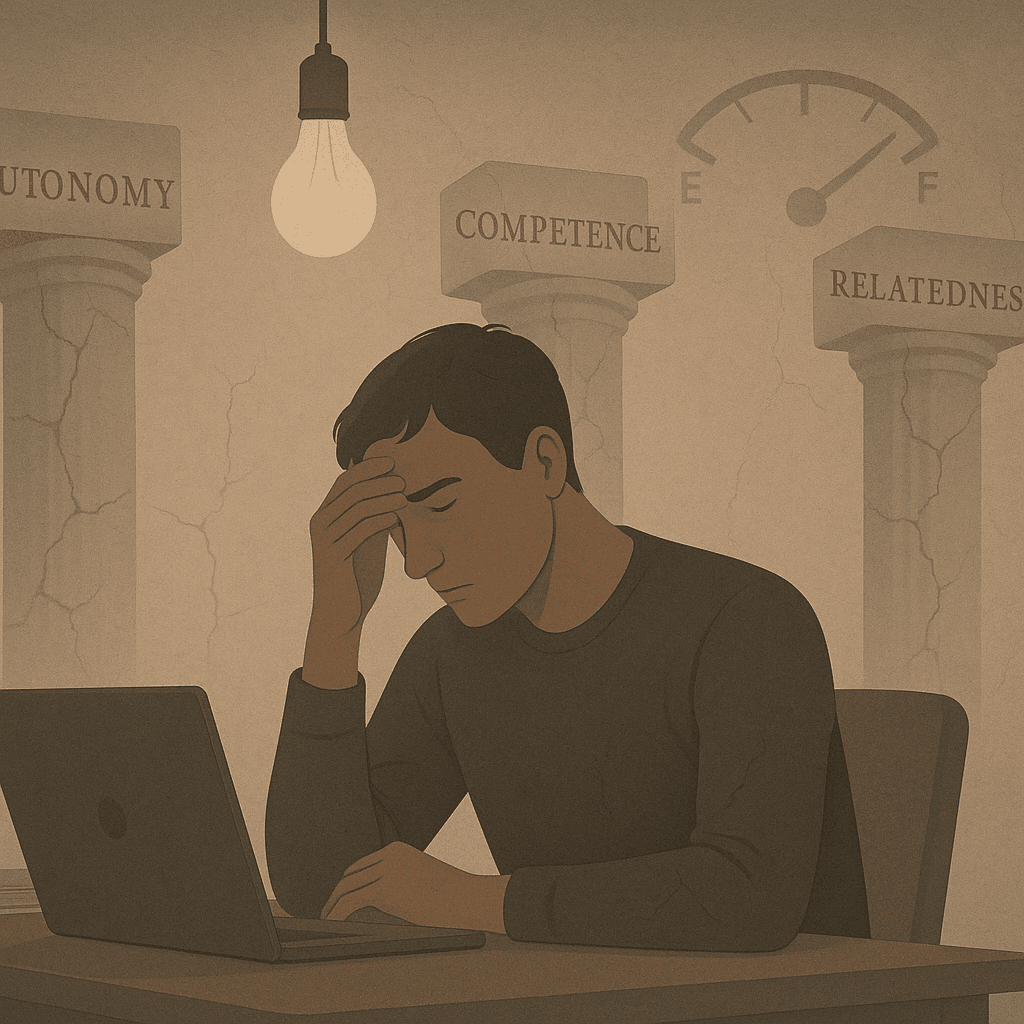
Burnout doesn’t always crash into someone’s life like a dramatic storm. Sometimes it creeps in quietly. A little less motivation here. A bit more irritability there. Coffee stops working. Weekends don’t recharge. Even success feels strangely empty. Sound familiar? Most people blame workload. Or poor time management. Or maybe they assume they’re just "bad at handling stress." But from the lens of Self-Determination Theory - often called SDT - burnout isn’t about weakness. It’s about unmet psychological needs. And that changes everything.
What Is Self-Determination Theory (SDT)?
Self-Determination Theory is one of the most respected frameworks in modern psychology. At its core, it argues something deceptively simple: humans have three basic psychological needs. When those needs are met, people thrive. When they’re blocked, people deteriorate. The three needs are:
- Autonomy - the feeling of control over one’s choices.
- Competence - the sense of mastery and progress.
- Relatedness - meaningful connection with others.
If even one of these pillars weakens, motivation begins to wobble. If all three erode? Burnout isn’t far behind. Think of it like a three-legged stool. Remove one leg and things get unstable. Remove two, and collapse becomes inevitable.
Burnout Is Not Just "Too Much Work"
Here’s a hot take: people don’t burn out simply because they work long hours. They burn out because their psychological fuel tank is empty. Someone can work 70 hours a week on a project they care about and still feel energized. Another person can work 35 hours in a rigid, micromanaged role and feel utterly drained. The difference? SDT needs. Let’s break it down.
1. Autonomy - The Freedom Deficit
Autonomy doesn’t mean total independence. It means feeling like one’s actions are self-endorsed. When autonomy is missing, work feels forced. Obligatory. Heavy. Signs autonomy is lacking:
- Constant micromanagement
- Little say in decisions
- Rigid rules with no flexibility
- Pressure-based motivation - rewards or threats
Without autonomy, motivation shifts from intrinsic to extrinsic. In plain terms? A person stops doing things because they want to and starts doing them because they have to. And "have to" is exhausting. Over time, the internal dialogue changes: "I should." "I must." "I have no choice." That language alone signals danger.
2. Competence - The Erosion of Confidence
Competence is the need to feel effective. Not perfect. Not flawless. Just capable and growing. Burnout often shows up when someone feels stuck or chronically inadequate. Maybe expectations are unrealistic. Maybe feedback is vague. Maybe progress goes unnoticed. Imagine running on a treadmill set slightly too fast. Day after day. You’re moving, but you’re never quite keeping up. That’s what low competence feels like. Common competence drains include:
- Unclear goals
- Constant criticism without guidance
- No opportunity to build skills
- Tasks that don’t match strengths
When effort no longer leads to improvement, motivation collapses. The brain quietly decides: "Why try?" That’s not laziness. That’s psychological self-protection.
3. Relatedness - The Isolation Trap
Humans are wired for connection. Even the most introverted individual needs a sense of belonging. Workplaces that prioritize output over people often neglect this entirely. Disconnected environments tend to feature:
- Surface-level interactions
- Lack of recognition
- Competitive tension
- No psychological safety
When relatedness suffers, work begins to feel transactional. Cold. Mechanical. And here’s the subtle twist - remote work didn’t create this problem. It simply exposed it. Without genuine connection, effort feels invisible. And invisible effort drains faster than physical labor.
The Hidden Shift From Intrinsic to Extrinsic Motivation
SDT makes a sharp distinction between intrinsic and extrinsic motivation. Intrinsic motivation is driven by curiosity, interest, satisfaction. Extrinsic motivation is driven by reward, pressure, or fear. Burnout often signals a motivational shift. At first, someone might love what they do. Over time, metrics replace meaning. Bonuses replace growth. Deadlines replace creativity. Slowly, the "why" disappears. Have you ever noticed how children can spend hours absorbed in play, yet adults struggle to focus for twenty minutes? That’s intrinsic motivation at work. Pure engagement. When autonomy, competence, and relatedness shrink, intrinsic motivation suffocates. And burnout steps in.
Why Rest Alone Doesn’t Fix It
Many people try to solve burnout with vacations. And yes, rest helps. But if the environment still blocks psychological needs, exhaustion returns quickly. It’s like patching a leaking roof with tape during a rainstorm. Temporary relief. Structural problem remains. Real recovery requires restoring:
- Choice
- Mastery
- Connection
Without those, rest becomes a brief pause before the next wave hits.
How to Rebuild Psychological Fuel
Burnout recovery isn’t about grand gestures. It’s about strategic adjustments. Here’s where SDT becomes practical.
Reclaim Autonomy
Small changes matter:
- Redesign daily routines
- Set personal goals alongside external ones
- Negotiate flexibility where possible
- Choose how tasks are completed
Even subtle control restores energy.
Strengthen Competence
Progress fuels motivation. Consider:
- Seeking skill-based learning
- Requesting clear performance criteria
- Tracking small wins
- Aligning responsibilities with strengths
Growth doesn’t have to be dramatic. It just has to be visible.
Deepen Relatedness
Connection doesn’t require grand team retreats. Sometimes it’s as simple as:
- Honest conversations
- Expressing appreciation
- Collaborative projects
- Finding shared purpose
Belonging restores resilience faster than most productivity hacks ever will.
Understanding Your Burnout Pattern
Here’s something people often overlook - burnout is deeply personal. One person’s autonomy deficit might be another’s competence crisis. Two employees in the same office can experience completely different motivational breakdowns. That’s why self-awareness matters. Platforms like lifematika.com approach burnout through a broader scientific lens. Instead of offering surface-level advice, the platform integrates eight psychological models - including Self-Determination Theory - into one 95-question assessment that takes about 15 minutes. No registration. Free to start. Instant analytical report. It evaluates:
- Big Five personality traits
- Jungian cognitive styles
- DISC behavior patterns
- Character strengths
- Core values
- Emotional intelligence
- Motivational drivers
- And SDT-based psychological needs
Why does that matter? Because burnout rarely has a single cause. It’s usually a pattern - a mix of values misalignment, emotional overload, weakened autonomy, or stalled growth. Data clarifies what emotion alone cannot. And clarity reduces helplessness.
The Bigger Picture
Burnout isn’t a personal flaw. It’s feedback. From an SDT perspective, it signals that one or more psychological nutrients are missing. Just as the body weakens without vitamins, the mind deteriorates without autonomy, competence, and relatedness. Ignore those needs, and exhaustion becomes chronic. Restore them, and energy often returns faster than expected. The real question isn’t "Why am I so tired?" It’s this: Which psychological need is starving? Once that answer becomes clear, solutions stop feeling random. They become targeted. Intentional. And that’s where recovery begins. Not with hustle. Not with guilt. But with understanding. Burnout, viewed through Self-Determination Theory, isn’t the end of motivation. It’s a signal flare. The sooner someone reads it correctly, the sooner the fire starts working for them again instead of against them.