Why DISC is More Useful than MBTI for Sales
 Yaro Pry··4 min read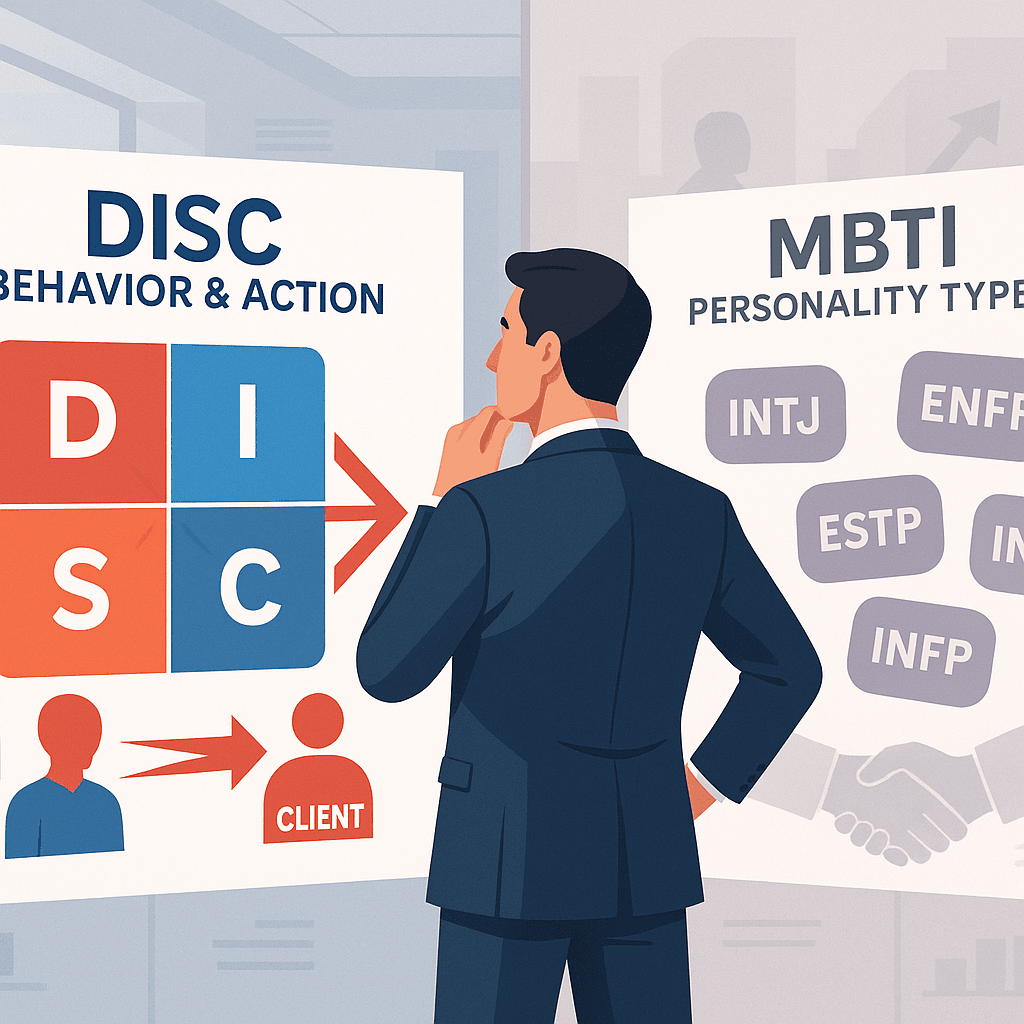
Sales is not therapy. It is not self-expression hour. And it is definitely not a personality fan club.
Sales is influence. Communication. Timing. Pressure. Objection handling. Reading the room before the room reads you.
So here’s the hot take - when it comes to sales performance, DISC is simply more useful than MBTI.
That doesn’t mean MBTI is useless. It’s fascinating. It sparks conversations. It gives people language for identity. But in a revenue-driven environment? DISC wins. And it’s not even close.
Let’s break this down properly.
The Core Difference: Identity vs Behavior
MBTI focuses on internal preferences. Introversion versus extraversion. Thinking versus feeling. Intuition versus sensing. It tells someone how they tend to process information.
DISC, on the other hand, focuses on observable behavior. How someone communicates. How they respond to pressure. How they approach tasks and people.
See the difference?
MBTI says, “This is how you’re wired.”
DISC says, “This is how you act in specific environments.”
Sales managers don’t need philosophical reflections about cognitive functions. They need answers to practical questions:
- Will this person push through rejection?
- Can they adapt to different buyer personalities?
- Do they move fast or stall?
- How do they handle conflict?
DISC speaks that language fluently.
Why DISC Fits the Sales Environment
Sales is dynamic. Conversations shift. Objections appear out of nowhere. Decision makers change their mind at the last minute.
A tool that measures real-world behavioral tendencies under stress is far more actionable than one that categorizes psychological preferences.
1. It Maps Directly to Buyer Interaction
DISC revolves around four behavioral styles:
- Dominance - decisive, results-driven, competitive
- Influence - persuasive, enthusiastic, relationship-oriented
- Steadiness - patient, consistent, supportive
- Conscientiousness - analytical, detail-focused, cautious
Now imagine a sales rep walking into a meeting.
If the client is high Dominance, they want speed. Bottom line. No fluff.
If the client leans Conscientiousness, they want data. Proof. Risk mitigation.
DISC helps salespeople adjust communication in real time. It’s like having a behavioral GPS system. Not perfect - but incredibly practical.
2. It’s Built for Performance Conversations
Managers can use DISC language to coach without attacking identity.
Instead of saying, “You’re too introverted,” they can say, “In high-pressure negotiations, your Steadiness rises and you avoid pushing for commitment.”
That’s specific. Actionable. Fixable.
MBTI types are often treated like fixed labels. ENTJ. ISFP. INTP. Once someone adopts that identity, it can feel permanent.
DISC profiles feel more fluid. Behavior can flex depending on context. And that flexibility matters in sales.
MBTI in Sales - Where It Falls Short
Let’s be fair. MBTI has strengths. It helps teams understand cognitive diversity. It improves internal communication. It sparks self-awareness.
But in frontline selling?
It gets abstract.
It Doesn’t Predict Selling Behavior Clearly
An ENFP can be an amazing salesperson. Or terrible.
An ISTJ can struggle in prospecting. Or dominate enterprise accounts.
MBTI doesn’t directly measure assertiveness under pressure, persuasion style, or tolerance for rejection.
DISC does.
It’s Harder to Translate into Coaching
Try telling a rep: “Your auxiliary cognitive function may be interfering with closing energy.”
Good luck.
Now compare that with: “Your Conscientiousness spikes when price objections appear, and you shift into over-explaining instead of closing.”
That hits home.
Behavior Beats Theory in Revenue Teams
Sales floors are ecosystems. Fast. Loud. Competitive. Sometimes chaotic.
DISC thrives in that environment because it simplifies complexity into patterns you can actually see.
Think of MBTI as a detailed personality novel.
DISC? A tactical field manual.
Both have value. But when targets are due Friday, the manual wins.
DISC and Adaptability - The Real Sales Superpower
Top sellers are behavioral chameleons.
They don’t sell the same way to everyone. They mirror energy. They shift tone. They know when to push and when to pause.
DISC makes this adaptability measurable.
For example:
- A high Dominance rep may close fast but lose relationship depth.
- A high Influence rep may build rapport but avoid hard conversations.
- A high Steadiness rep may nurture accounts but struggle with urgency.
- A high Conscientiousness rep may master technical details but hesitate under pressure.
When these patterns are visible, teams can balance strengths intentionally instead of guessing.
Data-Driven Personality Insight Matters
Here’s something many organizations overlook - not all assessments are created equal.
Surface-level quizzes floating around online? Fun, sure. Reliable? Not always.
Serious sales development requires scientific grounding. Ideally, multiple psychological frameworks working together.
That’s where platforms like lifematika.com come in.
Lifematika doesn’t rely on a single model. It integrates eight established methodologies - including DISC, OCEAN Big Five, Jungian typology, emotional intelligence, motivational drivers, values theory, and more - into one streamlined 95-question assessment.
It takes about 15 minutes. No registration wall. Instant analytical report.
For sales professionals, that kind of multidimensional view is powerful. DISC gives behavioral clarity. Big Five adds trait stability. Emotional intelligence reveals interpersonal blind spots. Motivational frameworks explain what actually drives performance.
Instead of guessing why a rep stalls at negotiation stage, leaders get structured insight.
And yes - privacy matters. Lifematika keeps user data confidential and uses it solely to generate personal reports. That trust is critical when working with psychological analysis.
Why Modern Sales Teams Need Behavioral Precision
Markets are louder than ever. Buyers are skeptical. Attention spans are shrinking.
In that environment, vague personality labels don’t cut it.
Teams need:
- Clear communication frameworks
- Language for feedback that reduces defensiveness
- Tools for hiring alignment
- Insight into stress responses
- Understanding of intrinsic motivation
DISC integrates seamlessly into each of these areas.
MBTI can support team bonding exercises. DISC drives performance conversations.
Recruiting - Where DISC Quietly Dominates
Hiring for sales is expensive. A bad hire drains pipeline momentum and team morale.
DISC provides predictive clues about:
- Prospecting resilience
- Closing assertiveness
- Detail management
- Relationship sustainability
Does it guarantee success? Of course not.
But it dramatically improves clarity.
Think of it like switching from blurry vision to high definition. The landscape was always there. Now you can see the edges.
So Is MBTI Irrelevant?
Not at all.
MBTI shines in self-exploration. It encourages reflection. It helps individuals understand cognitive diversity within teams.
But when leadership asks, “Why are close rates dropping?” - DISC answers faster.
When a rep needs to improve objection handling - DISC gives vocabulary.
When training sessions focus on communication agility - DISC offers structure.
The Bottom Line for Sales Leaders
If the goal is performance, behavioral insight beats personality identity.
DISC translates directly into daily activity. Calls. Meetings. Negotiations. Follow-ups.
MBTI describes internal landscapes. DISC maps battlefield movement.
And sales, whether people like it or not, is a competitive arena.
Organizations that combine DISC with broader scientific frameworks - like those available through lifematika.com - gain even deeper clarity. Not just how someone behaves, but why.
That combination? That’s where development accelerates.
Because at the end of the quarter, revenue does not care about four-letter personality codes.
It cares about behavior.
Adaptable. Measurable. Trainable behavior.
And that’s exactly where DISC earns its edge.