What is the Big Five (OCEAN) Personality Test?
 Yaro Pry··4 min read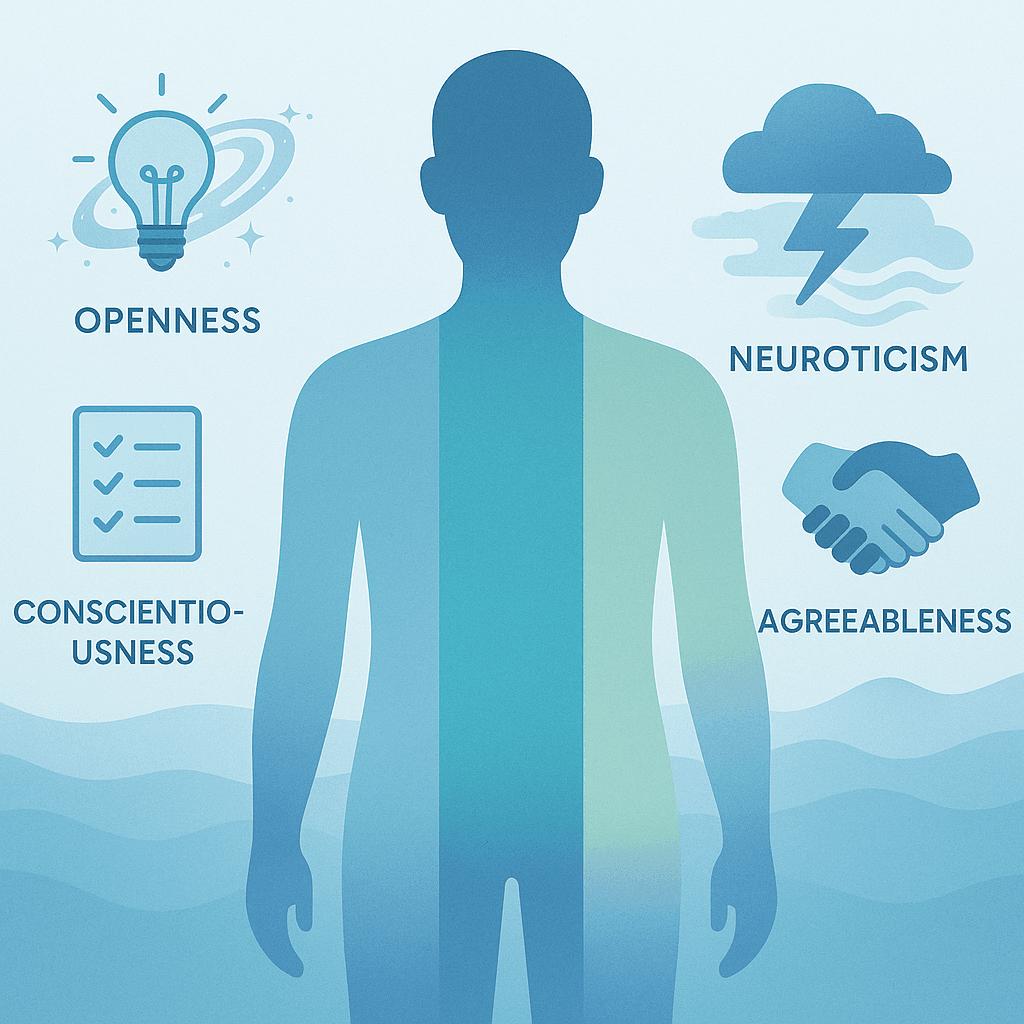
Personality tests are everywhere. In job applications. On social media. Even slipped into first dates as a casual question - “So… are you an introvert?”
But beneath the buzzwords and viral quizzes, one model keeps popping up in serious psychological research: the Big Five personality test, often called OCEAN.
Sounds simple, right? Five traits. A tidy acronym. Done.
Not quite.
The Big Five personality framework is less like a horoscope and more like a psychological map. It doesn’t box people in. It measures where they naturally lean across five broad dimensions of personality. Think of it as a spectrum, not a label machine.
What Does OCEAN Stand For?
OCEAN is an acronym representing five core personality traits identified through decades of research. These traits show up consistently across cultures, languages, and age groups.
1. Openness to Experience
This trait reflects imagination, curiosity, and willingness to explore new ideas.
- High openness - creative, adventurous, abstract thinkers
- Low openness - practical, routine-oriented, grounded in tradition
Someone high in openness might thrive brainstorming bold concepts. Someone lower might prefer proven methods. Neither is better. They simply operate differently.
2. Conscientiousness
Discipline. Structure. Follow-through.
- High conscientiousness - organized, reliable, goal-driven
- Low conscientiousness - flexible, spontaneous, adaptable
If openness is about ideas, conscientiousness is about execution. It predicts everything from academic success to punctuality.
3. Extraversion
Energy direction matters.
- High extraversion - outgoing, expressive, energized by social settings
- Low extraversion - reflective, reserved, recharge alone
Here’s a hot take - extraversion is often over-glorified in modern culture. Quiet strength rarely trends on social feeds, yet it drives deep thinking and careful decisions.
4. Agreeableness
This measures cooperation and empathy.
- High agreeableness - compassionate, trusting, collaborative
- Low agreeableness - direct, skeptical, competitive
In leadership, balance matters. Too agreeable? Boundaries blur. Too low? Friction rises.
5. Neuroticism
Sometimes reframed as emotional stability.
- High neuroticism - sensitive to stress, emotionally reactive
- Low neuroticism - calm, resilient, steady under pressure
This trait often gets misunderstood. Sensitivity isn’t weakness. It can mean heightened awareness. The key lies in emotional regulation.
Why the Big Five Personality Test Matters
Plenty of personality systems exist. Some divide people into neat categories. Others assign four-letter codes. The Big Five stands apart because it’s evidence-based. Researchers didn’t invent it in a brainstorming session. They discovered it by analyzing patterns in language and behavior across thousands of participants.
In short - it emerged from data.
Organizations use the Big Five for hiring insights. Therapists apply it to understand behavioral patterns. Individuals use it for self-discovery.
And honestly, that last part might be the most powerful.
How the Big Five Shapes Real-Life Decisions
Personality isn’t just trivia. It influences:
- Career satisfaction
- Relationship compatibility
- Stress management
- Leadership style
- Motivation patterns
Imagine someone high in openness but low in conscientiousness. They might generate brilliant ideas yet struggle with deadlines. Another person high in conscientiousness and low in neuroticism could thrive in high-pressure environments.
Understanding these dynamics changes the game. Instead of asking, “What’s wrong with me?” the better question becomes, “How am I wired - and how can I work with it?”
The Science Behind the Big Five
The Big Five model is rooted in decades of peer-reviewed psychological research. It connects with trait theory, statistical analysis, and cross-cultural studies.
Researchers consistently found that personality descriptions cluster into five broad factors. Not three. Not seven. Five.
It’s a bit like discovering the primary colors behind a complex painting. Mix them differently, and you get endless variation - but the base components remain stable.
That’s why psychologists respect the OCEAN model. It’s not trendy. It’s durable.
Taking a Big Five Personality Test Online
Here’s where things get interesting.
Many online quizzes claim to measure OCEAN traits. Some do it well. Others? Let’s just say they oversimplify.
A scientifically grounded platform makes all the difference. That’s where lifematika.com stands out.
Lifematika integrates the Big Five model within a broader psychometric system built on eight leading psychological methodologies. Instead of isolating OCEAN, it combines:
- Jungian typology
- DISC behavioral mapping
- VIA character strengths
- Self-Determination Theory
- Schwartz’s value framework
- Emotional intelligence metrics
- Motivational level analysis
The result? A layered personality profile, not a flat score sheet.
The assessment takes around 15 minutes and includes 95 structured questions. No registration required. Free to start. Immediate detailed report. And yes, users can retake it to track changes after major life events.
That retake feature matters more than people realize. Personality is relatively stable, but self-awareness evolves. Context shifts. Priorities change.
Growth deserves measurement.
Common Misconceptions About the Big Five
“It labels people.”
No - it measures tendencies on a spectrum. Labels freeze identity. Spectrums allow nuance.
“It predicts destiny.”
Not even close. Traits influence behavior, but they don’t eliminate choice. High neuroticism doesn’t doom someone to anxiety. It signals sensitivity that can be managed.
“It’s just for psychologists.”
Self-knowledge shouldn’t be gatekept. Understanding personality equips individuals to navigate life more strategically.
Big Five vs Other Personality Models
Ever wondered why some tests give you a four-letter code while others present percentile scores?
Type-based systems categorize. Trait-based systems measure degree.
The Big Five falls into the second category. It recognizes that personality traits exist on a sliding scale. That subtle difference makes it more flexible and, many argue, more accurate.
It’s the difference between saying someone is “tall” versus knowing they’re 6'1". Precision changes perspective.
How to Use Big Five Results for Personal Growth
Reading results is one thing. Applying them? That’s where transformation begins.
Here’s a practical approach:
- Identify strengths. High conscientiousness? Leverage it for long-term goals.
- Notice friction points. High neuroticism? Build stress-management routines.
- Align environment with traits. Introverted? Design recharge time intentionally.
- Track evolution. Reassess after major life transitions.
Personality insight without action is like owning a map but never leaving home.
Is the Big Five Personality Test Accurate?
Short answer - yes, when properly administered.
Its reliability and validity are widely supported in academic literature. That said, context matters. Honest responses matter. Quality interpretation matters.
A rushed quiz taken while multitasking won’t reveal much. A focused, reflective assessment? That can uncover patterns someone has sensed for years but never articulated.
There’s something oddly validating about seeing traits quantified. It turns vague self-perception into structured insight.
The Bigger Picture of Self-Discovery
The Big Five personality test isn’t a crystal ball. It won’t dictate career moves or relationship choices.
What it does offer is clarity.
Clarity reduces guesswork. Clarity sharpens decisions. Clarity builds confidence.
When combined with broader frameworks - like the integrated approach used by lifematika.com - personality assessment becomes less about curiosity and more about direction.
And maybe that’s the real value here.
Understanding personality isn’t about fitting into categories. It’s about recognizing patterns, owning strengths, and navigating weaknesses with intention.
Five traits. Endless combinations. A deeper understanding of how people think, act, and respond.
Not bad for a model built on careful research and a surprisingly simple acronym.