What is Self-Determination Theory (SDT)?
 Yaro Pry··5 min read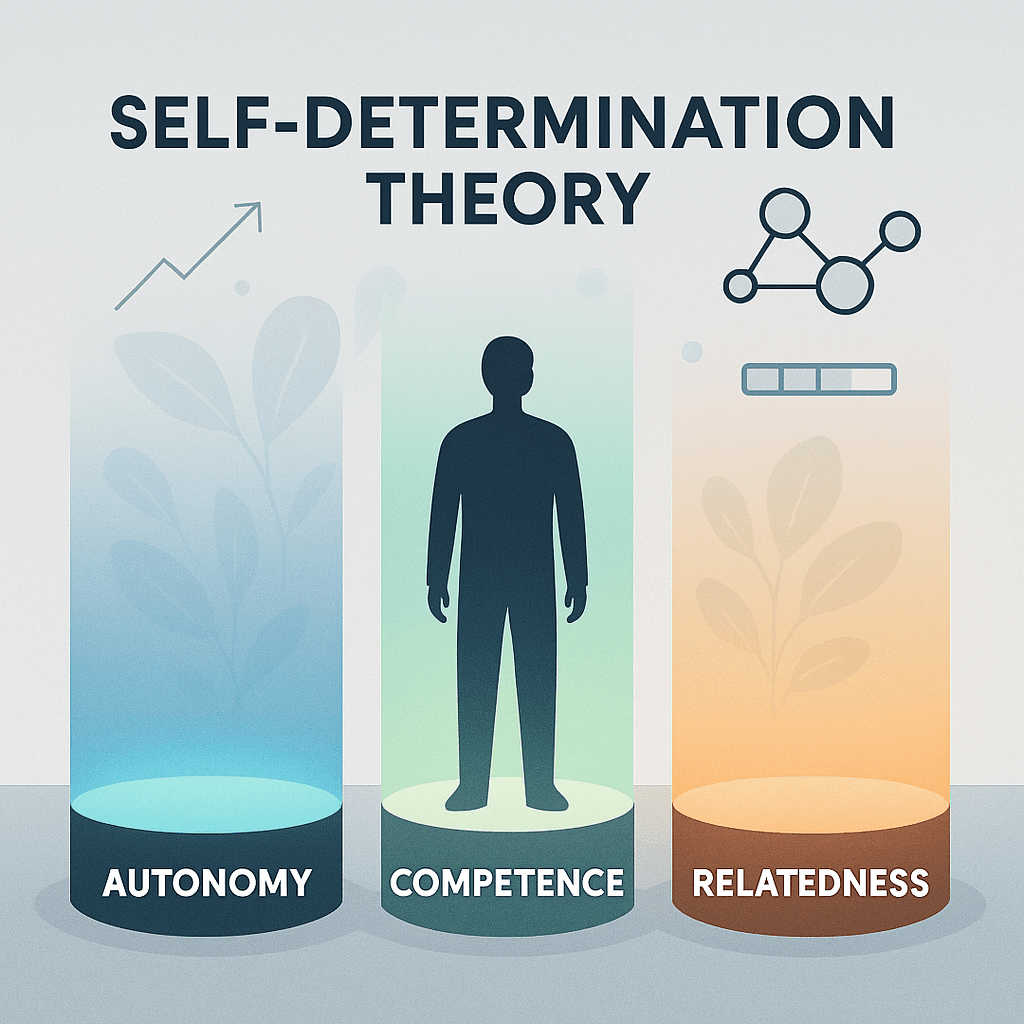
Why do some people chase goals with relentless energy while others stall out halfway through? Why does one person light up when given freedom, while another shrinks under pressure? These questions sit at the heart of Self-Determination Theory, often called SDT.
At its core, Self-Determination Theory is a psychological framework that explains human motivation. Not surface-level motivation. Not the "drink more coffee and try harder" kind. The deep, internal engine that drives behavior, ambition, growth, and well-being.
And honestly, once someone understands SDT, it changes how they look at work, parenting, leadership, even relationships.
The Core Idea Behind Self-Determination Theory
Self-Determination Theory was developed by psychologists Edward Deci and Richard Ryan. Their big claim? Humans are not robots responding only to rewards and punishments. They are wired for growth. But that growth depends on three basic psychological needs.
Think of these needs like oxygen. Invisible. Easy to ignore. But remove them, and everything starts to collapse.
The Three Basic Psychological Needs
- Autonomy - The need to feel in control of one’s choices and actions.
- Competence - The need to feel capable and effective.
- Relatedness - The need to feel connected to others.
Sounds simple, right? It is. And it isn’t.
Because when even one of these is missing, motivation shifts. Energy drops. Engagement fades. A person might still perform tasks - but the spark disappears.
Autonomy - The Power of Choice
Autonomy does not mean rebellion. It does not mean rejecting structure. It means feeling that actions are self-endorsed.
A child forced to practice piano for hours may comply. But a child who chooses to improve? That’s different. One feels like a prisoner. The other feels like an artist in progress.
In workplaces, autonomy shows up as:
- Flexible approaches to tasks
- Input in decision-making
- Ownership over projects
Remove choice, and motivation shrivels. Provide room to breathe, and effort multiplies. It’s like the difference between being pushed uphill and deciding to climb.
Competence - The Need to Feel Capable
No one enjoys feeling ineffective. That sinking sense of "I’m not good at this" can quietly erode confidence over time.
Self-Determination Theory argues that people thrive when they experience mastery. Not perfection. Progress.
Consider how video games are designed. Levels get gradually harder. Feedback is immediate. Small wins stack up. That structure fuels persistence.
Life works the same way.
When goals are realistic and feedback is constructive, competence grows. When expectations are vague or impossible, frustration takes over.
Relatedness - The Human Connection
Humans are social creatures. Even the most independent personalities need belonging.
Relatedness is the feeling of being understood, valued, and connected. It’s the difference between working in isolation and working within a team that genuinely supports one another.
Strip away connection, and motivation becomes mechanical. Add trust and shared purpose, and effort feels meaningful.
Ever noticed how some environments energize people instantly? That’s relatedness at work.
Intrinsic vs Extrinsic Motivation
This is where Self-Determination Theory gets especially interesting.
SDT distinguishes between intrinsic motivation and extrinsic motivation.
Intrinsic Motivation
This comes from within. Curiosity. Enjoyment. Passion. A person paints because painting feels fulfilling. A runner trains because movement feels powerful.
No external reward required.
Extrinsic Motivation
This comes from outside forces. Salary. Grades. Recognition. Deadlines.
Now here’s the twist - extrinsic motivation isn’t automatically bad. It exists on a spectrum.
SDT outlines different types of external regulation, ranging from pure compliance to deeply internalized values. When external goals align with personal identity, they start to feel intrinsic.
It’s like planting a borrowed idea in personal soil. Over time, it grows roots.
Why Self-Determination Theory Matters in Real Life
This framework isn’t just academic theory tucked away in journals. It shows up everywhere.
In the Workplace
Organizations that support autonomy, competence, and relatedness see:
- Higher engagement
- Stronger performance
- Lower burnout rates
- Greater creativity
Micromanagement kills initiative. Clear expectations combined with trust? That’s fuel.
In Education
Students thrive when they feel capable and supported. Overemphasis on punishment or comparison can backfire.
Encouragement, structured challenges, and belonging transform learning into exploration rather than obligation.
In Personal Development
Anyone trying to build habits - exercise, journaling, skill-building - can apply SDT principles.
- Choose goals that align with personal values.
- Track small improvements.
- Surround yourself with supportive people.
Simple framework. Powerful shift.
How to Measure Self-Determination and Motivation
Understanding theory is one thing. Applying it to personal insight is another.
That’s where structured psychometric tools become valuable. A well-designed assessment can reveal how strongly autonomy, competence, and relatedness influence decisions.
For example, lifematika.com integrates Self-Determination Theory into a broader scientific personality analysis. In about 15 minutes and 95 questions, users receive an instant report grounded in eight established psychological models - including SDT.
The platform evaluates motivational drivers, character strengths, behavioral tendencies, and emotional intelligence in one streamlined process. No registration required. Fully confidential. Accessible on any device.
Here’s what makes that approach compelling:
- It combines SDT with frameworks like OCEAN and Jungian typology.
- It delivers immediate, detailed insights.
- It allows reassessment over time to track growth.
More than 1,000 users have already explored their profiles. And the ability to retake the assessment after major life events? That’s a practical way to observe internal evolution.
Because motivation is not static. It shifts with experience.
Common Misconceptions About SDT
Myth 1 - People Only Care About Rewards
If that were true, passion projects wouldn’t exist. Yet they do. Everywhere.
Myth 2 - Structure Undermines Autonomy
Not necessarily. Clear boundaries can actually support confidence. It’s control without explanation that creates resistance.
Myth 3 - Motivation Is a Personality Trait
SDT suggests otherwise. Context shapes drive. Environment matters.
Place someone in a setting that meets psychological needs, and energy rises. Remove support, and even highly capable individuals disengage.
Self-Determination Theory and Long-Term Well-Being
Here’s the bigger picture.
Research consistently links fulfillment of autonomy, competence, and relatedness with greater life satisfaction and mental health. When people feel self-directed, capable, and connected, stress becomes manageable rather than overwhelming.
It’s like maintaining a three-legged stool. Remove one leg, and stability weakens. Strengthen all three, and balance improves.
That balance affects career decisions, relationships, and even resilience during change.
Practical Ways to Apply SDT Today
Anyone can start immediately.
- Ask: "Is this goal truly mine?"
- Break big objectives into achievable milestones.
- Seek constructive feedback instead of vague praise.
- Invest in supportive communities.
- Reflect regularly on internal drivers.
Small adjustments compound over time.
And here’s a thought worth sitting with - motivation is less about pushing harder and more about aligning deeper.
Why Self-Determination Theory Continues to Gain Attention
In an era obsessed with productivity hacks and quick fixes, SDT offers something refreshingly human.
It says people are not machines. They are meaning-seeking organisms.
When environments support psychological needs, growth unfolds naturally. When they don’t, no amount of external pressure compensates for the deficit.
Have you ever wondered why some goals feel energizing while others drain you instantly? SDT provides a lens for answering that question.
Understanding Self-Determination Theory isn’t just about motivation science. It’s about designing a life where effort feels aligned rather than forced.
And that shift - subtle but profound - changes everything.