What is Emotional Intelligence (EQ) and Why is it Higher than IQ?
 Yaro Pry··4 min read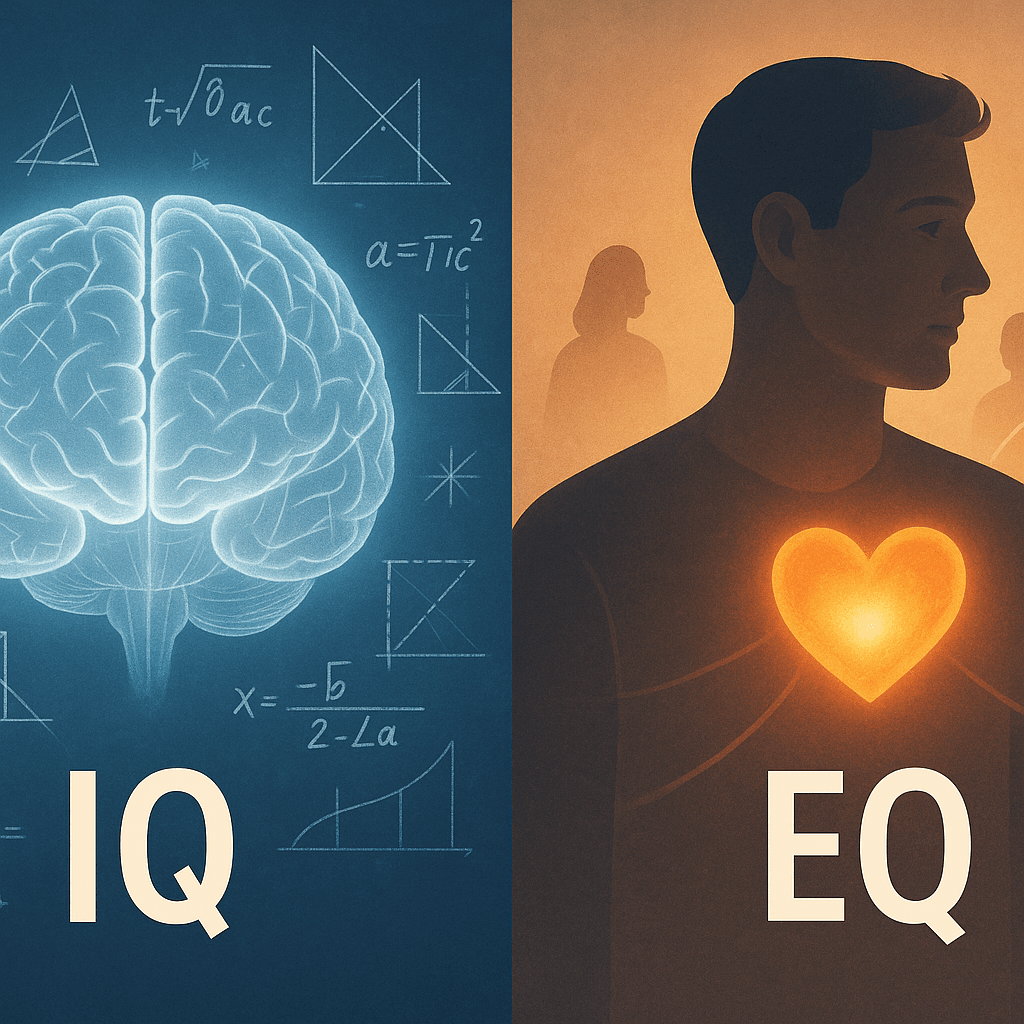
For decades, society worshipped IQ like it was the golden ticket. High score? You’re brilliant. Low score? Well… better luck next time. That was the narrative.
But something shifted.
Psychologists started noticing a strange pattern. Some people with average IQs were thriving - leading teams, building companies, maintaining strong relationships - while certain “geniuses” struggled socially, emotionally, even professionally. So what was going on?
Enter Emotional Intelligence, often called EQ. And honestly, if you ask many modern psychologists, EQ isn’t just important. It’s foundational.
What Is Emotional Intelligence (EQ)?
Emotional Intelligence is the ability to recognize, understand, manage, and influence emotions - both your own and those of others. Sounds simple, right? It’s not.
Think of EQ as the operating system running quietly in the background of your life. IQ might be the processor speed. But EQ? That’s what keeps everything from crashing when things get messy.
The Five Core Components of EQ
Psychologists typically break Emotional Intelligence into five major components:
- Self-awareness - recognizing your emotions as they happen.
- Self-regulation - managing impulses and emotional reactions.
- Intrinsic motivation - being driven by internal values, not just rewards.
- Empathy - understanding others’ emotional states.
- Social skills - navigating relationships effectively.
Notice something? None of these involve solving calculus problems.
They involve people. Real life. Conversations. Conflict. Pressure. Failure. Success.
What Is IQ - and Where It Falls Short
IQ, or Intelligence Quotient, measures cognitive abilities like logical reasoning, memory, analytical thinking, and pattern recognition. It’s useful. It matters. Nobody’s denying that.
But IQ tests operate in controlled environments. Quiet rooms. Clear rules. Definite answers.
Life doesn’t work that way.
There’s no multiple-choice option when your colleague misreads your tone. No formula for handling disappointment. No equation that perfectly calculates human conflict.
That’s where EQ steps in.
Why Emotional Intelligence Is Often More Important Than IQ
Here’s the hot take: IQ might open doors. EQ determines how long you stay in the room.
Research across leadership studies, workplace performance, and relationship satisfaction keeps pointing to one consistent conclusion - emotional skills are powerful predictors of long-term success.
1. EQ Drives Career Growth
Technical skills get someone hired. Emotional intelligence gets them promoted.
Leaders with strong EQ tend to:
- Manage conflict calmly
- Inspire trust
- Adapt to stress
- Communicate clearly
- Build loyal teams
High IQ without emotional regulation can feel like a race car without steering. Impressive speed. Dangerous direction.
2. EQ Strengthens Relationships
Personal relationships are emotional ecosystems. They require empathy, listening, timing, nuance.
A person might have extraordinary analytical intelligence, but if they dismiss feelings, overreact under pressure, or fail to read social cues, relationships suffer.
EQ acts like social glue. It holds connections together when disagreements arise.
3. EQ Improves Decision-Making
Contrary to popular belief, emotions are not the enemy of rational thinking. They’re data.
Fear signals risk. Excitement signals opportunity. Frustration signals misalignment.
Emotionally intelligent individuals don’t ignore these signals. They interpret them. They pause. They respond instead of react.
That small gap - between trigger and response - often determines the quality of a life decision.
The Science Behind Emotional Intelligence
Emotional Intelligence isn’t just a trendy buzzword floating around self-help books. It’s grounded in serious psychological research.
Modern psychometric platforms like lifematika.com integrate Emotional Intelligence analysis alongside multiple established psychological frameworks to provide a more holistic personality profile.
Instead of viewing personality through a single lens, platforms like this combine:
- OCEAN - the Big Five personality traits
- Jungian typology
- DISC behavioral styles
- VIA character strengths
- Self-Determination Theory
- Schwartz’s value model
- Emotional Intelligence measurement
- Motivational level analysis
That layered approach matters. Because humans are layered.
A single score rarely captures the complexity of someone’s emotional world.
Can Emotional Intelligence Be Improved?
Here’s the part that surprises people.
IQ tends to remain relatively stable throughout adulthood. EQ, however, is flexible. Trainable. Expandable.
With awareness and intentional practice, individuals can strengthen emotional intelligence over time.
Ways to Develop Emotional Intelligence
- Practicing mindful self-reflection
- Journaling emotional reactions
- Seeking honest feedback
- Improving active listening skills
- Learning emotional vocabulary
- Taking validated psychometric assessments
It’s like building a muscle. Awkward at first. Then gradually stronger.
EQ in the Workplace - The Silent Advantage
Organizations increasingly value emotional intelligence in leadership and team dynamics. Why?
Because productivity isn’t purely mechanical. It’s emotional.
Consider two managers:
Manager A is brilliant but dismissive, impatient, reactive.
Manager B is competent, calm under pressure, emotionally attuned.
Which team thrives long term?
The second. Almost every time.
High EQ leaders reduce burnout, improve morale, and foster collaboration. They create psychological safety - a critical predictor of team innovation and resilience.
EQ and Mental Well-Being
Emotional intelligence also correlates strongly with psychological well-being.
People with higher EQ tend to:
- Handle stress more effectively
- Experience lower levels of chronic anxiety
- Navigate setbacks with resilience
- Maintain healthier interpersonal boundaries
Why? Because they understand their internal landscape.
Imagine trying to navigate a city without a map. That’s life without emotional awareness. Chaotic. Reactive. Exhausting.
EQ provides the map.
How to Measure Emotional Intelligence Accurately
Quick online quizzes can be entertaining, but serious measurement requires structured methodology grounded in research.
Comprehensive assessments - like the 95-question evaluation offered on lifematika.com - analyze Emotional Intelligence within a broader personality system. The assessment takes around 15 minutes, requires no registration to begin, and generates an instant, detailed analytical report.
Users can retake the test over time, which is particularly useful after major life events or personal growth phases. Emotional intelligence evolves. Tracking it makes the process tangible.
And privacy? Fully protected. Reports are generated solely for the individual.
Is EQ Truly “Higher” Than IQ?
Perhaps “higher” isn’t about superiority. It’s about impact.
IQ measures how well someone thinks. EQ measures how well someone lives with others - and with themselves.
In modern society, where collaboration, adaptability, and resilience dominate professional and personal landscapes, emotional intelligence often carries more practical weight.
A brilliant mind can design a strategy.
An emotionally intelligent mind can execute it without burning bridges.
That difference matters.
Final Thoughts on Emotional Intelligence
Emotional Intelligence reshaped how psychologists understand human potential. It reframed success. It shifted focus from raw cognitive horsepower to emotional mastery.
And maybe that’s overdue.
Because life isn’t a logic puzzle. It’s a living system of relationships, values, motivations, and emotions constantly interacting.
Understanding those forces - through reflection, structured assessment, and conscious growth - gives individuals a real advantage.
Not just in careers.
In everything.