Understanding Type A B C D Personality and How They Influence Stress and Behavior
 Yaro Pry··5 min read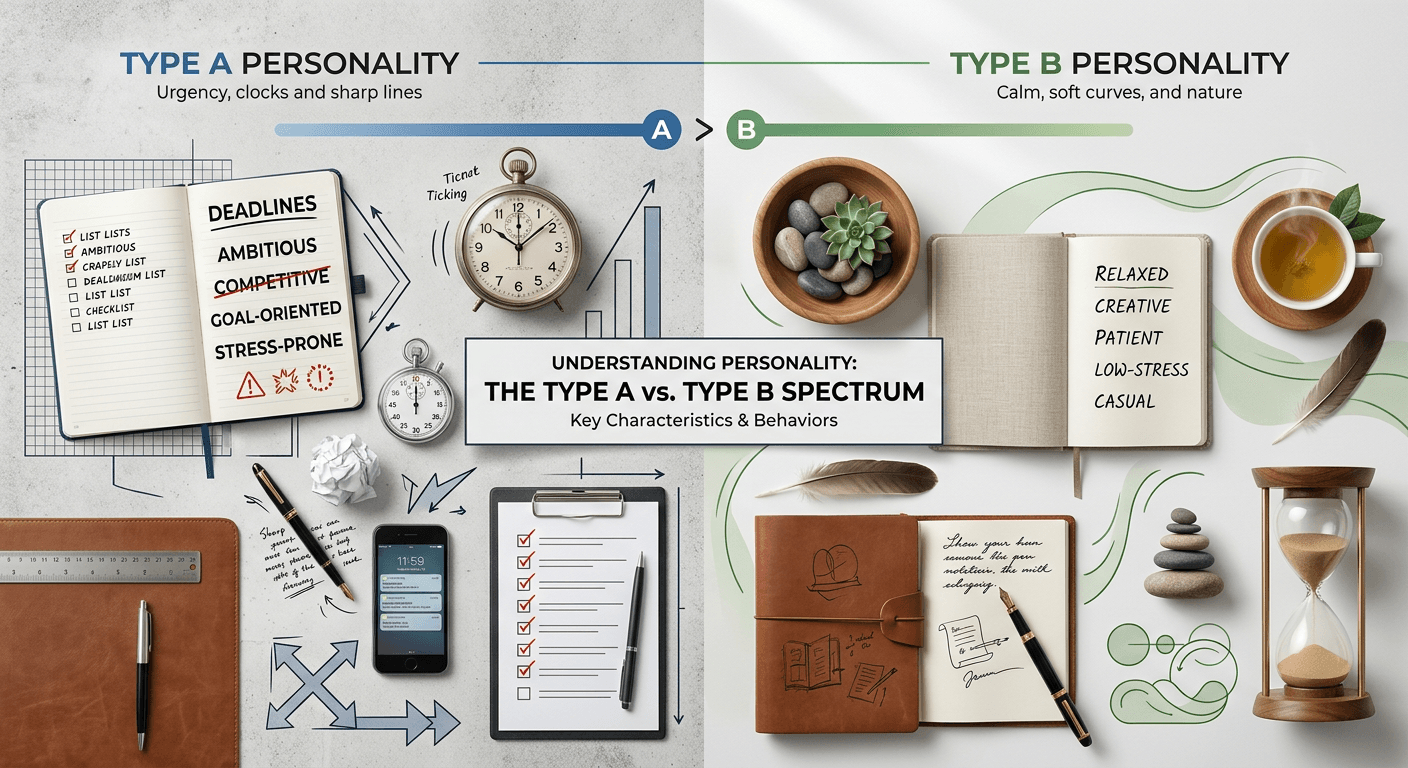
Understanding the spectrum of human behavior often begins with identifying core temperament patterns, such as the type a b c d personality framework. While originally developed to analyze cardiovascular health risks, these classifications have evolved into a broader psychological tool for understanding how individuals process stress, manage time, and interact within their environments. By categorizing these traits, researchers and individuals can better navigate personal and professional challenges.
Quick Summary
Type A and B personality types represent two ends of a behavioral spectrum characterized by how individuals handle urgency, competition, and stress. Type A individuals are typically driven, impatient, and achievement-oriented, while Type B personalities exhibit a more relaxed, reflective, and patient demeanor in both personal and professional settings.
- Type A traits include chronic competitiveness, urgency, and multitasking.
- Type B traits focus on patience, flexibility, and a lower overall stress response.
- Personality classification helps in identifying personal triggers and lifestyle stressors.
- Understanding your dominant style supports more effective emotional and career management.
Table of Contents
- Quick Summary
- Defining Type A and B Personality Types
- The Type A Personality Meaning and Mechanics
- Characteristics of Type B Personalities
- The Extended Spectrum: Types C and D
- The Intersection of Personality and Stress
- Practical Applications for Personal Development
- FAQ
- Recommended Reads

Defining Type A and B Personality Types
The conceptualization of type a and b personality types emerged in the mid-20th century, initially intended to link behavior patterns to heart health. Cardiologists noticed that certain patients exhibited a specific set of aggressive and impatient behaviors that seemed to correlate with higher rates of physical exhaustion and cardiovascular issues. This observation laid the groundwork for modern psychometric assessments that explore how behavioral traits influence long-term well-being.
At its core, this dichotomy is not about labeling people as "good" or "bad," but rather identifying inherent tendencies in reactivity. By utilizing a scientific psychometric platform to understand these baseline behaviors, individuals can gain clarity on why they react to deadlines, conflict, or downtime in specific ways. While most people fall somewhere along a continuum rather than existing at the absolute polar ends, identifying these dominant styles provides a practical framework for self-awareness.
The Type A Personality Meaning and Mechanics
The type a personality definition revolves around a persistent sense of time urgency and a high level of competitiveness. A classic type a personality example involves a professional who feels physically uncomfortable when stuck in slow-moving traffic or when waiting for others to finish their sentences. These individuals are often "high achievers" who thrive on complex projects but may struggle to delegate or step away from work-related tasks.
Mechanically, Type A behavior is driven by a constant internal alarm. This chronic state of heightened physiological arousal can lead to significant stress if not managed through healthy coping mechanisms. The focus on results often comes at the expense of process-oriented thinking, which can sometimes lead to overlooking nuance in favor of speed. If you are interested in how deep self-discovery impacts your decision-making, exploring professional resources can offer insight into balancing these high-energy traits.
Characteristics of Type B Personalities
In contrast, the Type B personality is characterized by a more laid-back, reflective approach to life. These individuals tend to handle stress with greater resilience and rarely experience the "hurry sickness" that defines the Type A profile. They are often creative, patient, and able to enjoy leisure activities without feeling the internal pressure to be "productive" at every waking moment.
It is important to note that Type B does not imply a lack of ambition. Instead, it suggests a different engine for motivation. While Type A individuals are pushed by the fear of falling behind or the desire to win, Type B individuals are often fueled by internal curiosity and the process of engagement itself. They tend to be better at conflict resolution because they are less inclined to perceive every interaction as a competitive scenario.
The Extended Spectrum: Types C and D
Beyond the familiar A and B labels, the type a b c d personality framework introduces two additional categories that address social and emotional nuance. Type C individuals are often described as detail-oriented, perfectionistic, and prone to suppressing their own emotional needs in favor of harmony. They often excel in technical or specialized roles but may struggle with high-stress situations where they feel their control is being undermined.
Type D, or "distressed" personality, is defined by a tendency toward negative affect and social inhibition. Individuals with these traits may experience high levels of worry, irritability, and a reluctance to share their struggles with others. Understanding these categories is essential for mental health hobbyists and psychology students alike, as recognizing these patterns can be the first step in seeking appropriate strategies for emotional regulation and social connectivity.
The Intersection of Personality and Stress
The impact of these personality styles on one's lifestyle cannot be overstated. A Type A individual may find themselves in a constant loop of stress, even when the environment does not demand it, leading to burnout. Conversely, a Type D individual might experience significant internal stress that remains invisible to others, making the management of that stress a private, often lonely, journey.
Pro Tip: Managing your stress response requires identifying your dominant temperament. If you lean toward Type A, focus on deliberate "downtime" practices. If you lean toward Type D, focus on building social support systems to break the cycle of inhibition.
By leveraging data-driven insights into these behavioral styles, one can learn to navigate environments that might otherwise trigger negative stress responses. It is not about changing your personality, but rather adapting your approach to your unique needs.
Practical Applications for Personal Development
Applying knowledge of these personality types facilitates better career planning and interpersonal relationships. For instance, a manager who understands that their team consists of varying personalities can better assign tasks; giving a research project to a detail-oriented Type C or a high-pressure sales goal to a competitive Type A can optimize performance and reduce friction.
Self-improvement enthusiasts can use this knowledge to assess their own blind spots. If you know you are prone to Type A time urgency, you might consciously schedule 15-minute buffers between meetings to lower your internal alarm. Understanding these models allows for a shift from reactive behavior to proactive life design, ensuring that your lifestyle choices align with your actual psychological needs rather than perceived external pressures.
FAQ
Can a person change from a Type A to a Type B personality? While core personality traits are relatively stable, behavioral patterns are highly adaptable. Through cognitive restructuring and mindfulness, Type A individuals can develop Type B traits to manage stress effectively.
Are these personality types scientifically absolute? No. Personality is a spectrum. Most people are a hybrid, exhibiting different traits depending on the situation, though they may have a dominant inclination.
How does Type D personality differ from simple shyness? Type D involves chronic, pervasive negative affect and social inhibition that often leads to physiological stress, which is more complex than the situational social anxiety associated with shyness.
Which personality type is the most successful? Success is subjective. Type A individuals often excel in high-pressure leadership roles, while Type B individuals may thrive in collaborative, creative, or long-term analytical environments.