Understanding the True Colors Test and Personality Lenses
 Yaro Pry··4 min read
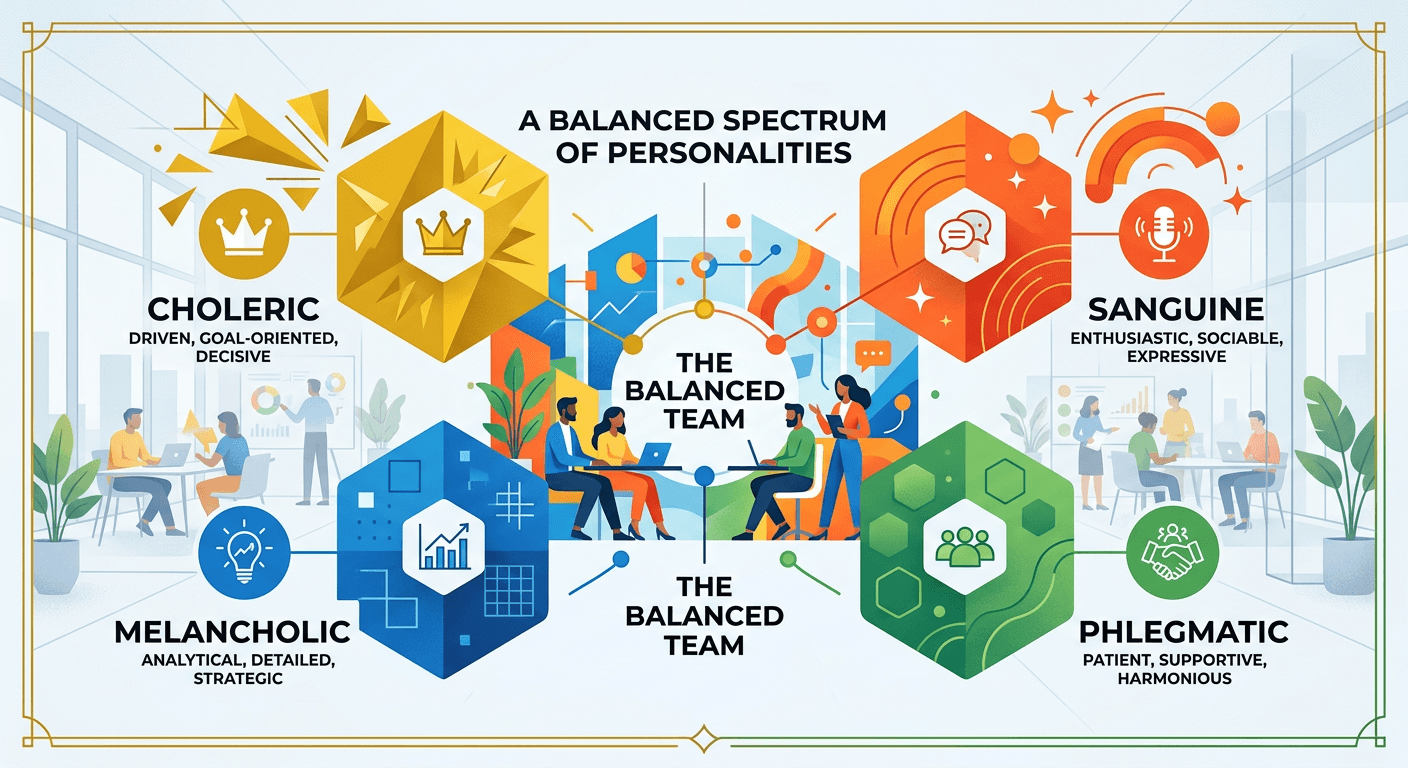
The True Colors test serves as a foundational framework for understanding behavioral preferences and communication styles through a simplified, color-coded psychological lens. By categorizing individual tendencies into four distinct temperaments, this methodology helps people identify their core motivations, potential stressors, and natural ways of interacting with others in professional and personal settings.

Quick Summary
The True Colors test is a personality temperament model that uses four distinct color-coded groups to categorize human behavior and communication preferences. It is widely used to improve interpersonal relationships and team dynamics by highlighting the diverse ways individuals process information and approach their social environments.
- Categorizes personality into Gold, Orange, Blue, and Green temperaments.
- Enhances empathy by explaining the "why" behind behavioral differences.
- Improves team communication through improved awareness of conflicting needs.
- Facilitates self-discovery by mapping personal strengths to specific color traits.
Table of Contents
- Foundations of the True Colors Personality Types
- The Four Lenses Personality Test: A Breakdown
- Mechanics of the Color Temperament Model
- Practical Applications in Group Dynamics
- Limitations and Scientific Context
- FAQ
- Recommended Reads
Foundations of the True Colors Personality Types
The True Colors personality types are rooted in the earlier work of personality theorists who sought to identify core temperaments that dictate human behavior. By simplifying complex psychological traits into four intuitive buckets, the model provides a language for individuals to express their internal drives. Unlike more clinical assessments, this approach focuses on the observation of outward behaviors to infer the underlying internal states that drive them.
In practice, this framework is often utilized to reduce friction in workplace communication. When individuals understand that their colleagues may operate from a different "color" perspective, they can adjust their delivery style to better align with the recipient. This does not imply that an individual belongs strictly to one category, but rather that they possess a unique blend of these color-coded traits, with one or two often being more dominant than the others.
The Four Lenses Personality Test: A Breakdown
When navigating the 4 lenses personality test, participants are typically introduced to four primary colors, each representing a distinct value set. Understanding these specific lenses is critical for grasping how the system functions in real-world scenarios.
Gold: The Structure-Seeker
Individuals with dominant Gold traits are organized, reliable, and value tradition. They are the planners of the world, focusing on security, duty, and follow-through. In a team, they ensure that projects remain on schedule and that rules are followed.
Orange: The Action-Oriented
Orange temperaments are driven by excitement, spontaneity, and immediate results. They thrive in dynamic environments and are often natural problem solvers who prefer a hands-on approach to static planning.
Blue: The Relational-Focused
Those who lead with Blue traits prioritize harmony, emotional connection, and personal authenticity. They are natural mediators who are highly sensitive to the needs and feelings of others within a group setting.
Green: The Visionary-Thinker
Green types are characterized by an analytical, intellectual, and curious nature. They are driven by competence, systemic logic, and the pursuit of knowledge. They often excel in strategic roles that require objective problem solving.
Mechanics of the Color Temperament Model
The model relies on the idea that every individual possesses a "spectrum" of these four colors. The assessment process typically involves ranking clusters of descriptors that correspond to these color categories. By calculating the results, the user receives a profile that highlights their primary, secondary, and least-used temperaments.
Pro Tip: When analyzing your results, focus on the "blended" nature of your personality. Most people exhibit a primary color that dictates their work style, while their secondary color provides the nuance in how they manage relationships or handle conflict.
These mechanics are designed to be accessible, allowing people without a background in psychology to quickly grasp how their personality functions in a team. By visualizing these traits as a hierarchy of preferences, the model empowers users to consciously tap into their "least used" colors when a situation demands a different approach.
Practical Applications in Group Dynamics
In a professional or educational environment, applying the True Colors methodology can significantly mitigate interpersonal conflict. Conflict often arises not from malice, but from a fundamental mismatch in temperaments. For instance, a Gold-dominant manager who demands strict adherence to procedures may clash with an Orange-dominant employee who prioritizes flexibility and quick action.
By facilitating workshops where members share their color profiles, teams can establish a shared language. This allows a team member to say, "I am feeling overwhelmed by the lack of structure here, which is my Gold side needing more stability." This reframes the conversation from a personal attack to a discussion about operational needs and professional preferences, encouraging a more objective approach to collaboration.
Limitations and Scientific Context
While the True Colors test is popular for its simplicity, it is important to distinguish it from high-stakes clinical psychometric tools. It serves as an excellent "icebreaker" and diagnostic tool for soft-skill development, but it does not carry the same heavy empirical weight as psychometric models based on the Five-Factor Model or advanced personality trait research.
Individuals seeking deeper insights into their character strengths may find that the Lifematika - Scientific Self-Discovery Platform provides a more rigorous, data-driven alternative. Whereas the 4-color model is useful for quick team-building, comprehensive self-discovery often requires looking at how different psychological frameworks, such as emotional intelligence and motivational levels, intersect to form a complete picture of an individual's character.
FAQ
Can my True Colors results change over time?
Yes, while core temperaments are relatively stable, your "color" usage can shift as you adapt to different roles, life experiences, or developmental stages.
Is the True Colors test scientifically validated?
It is considered a practical behavioral model for communication and team building, rather than a clinical psychological diagnostic tool. It is often contrasted with more robust models like the Big Five.
How is this different from other personality tests?
The primary difference lies in its focus on color-coded metaphors to simplify personality, making it highly accessible for quick application in workshops or team settings compared to more complex academic models.
Can I use these results to choose a career?
It can certainly help you identify the types of environments where you thrive, such as identifying if you prefer the analytical structure favored by "Green" roles or the community-focused nature of "Blue" roles.