Understanding the DISC Model: A Beginner’s Guide
 Yaro Pry··5 min read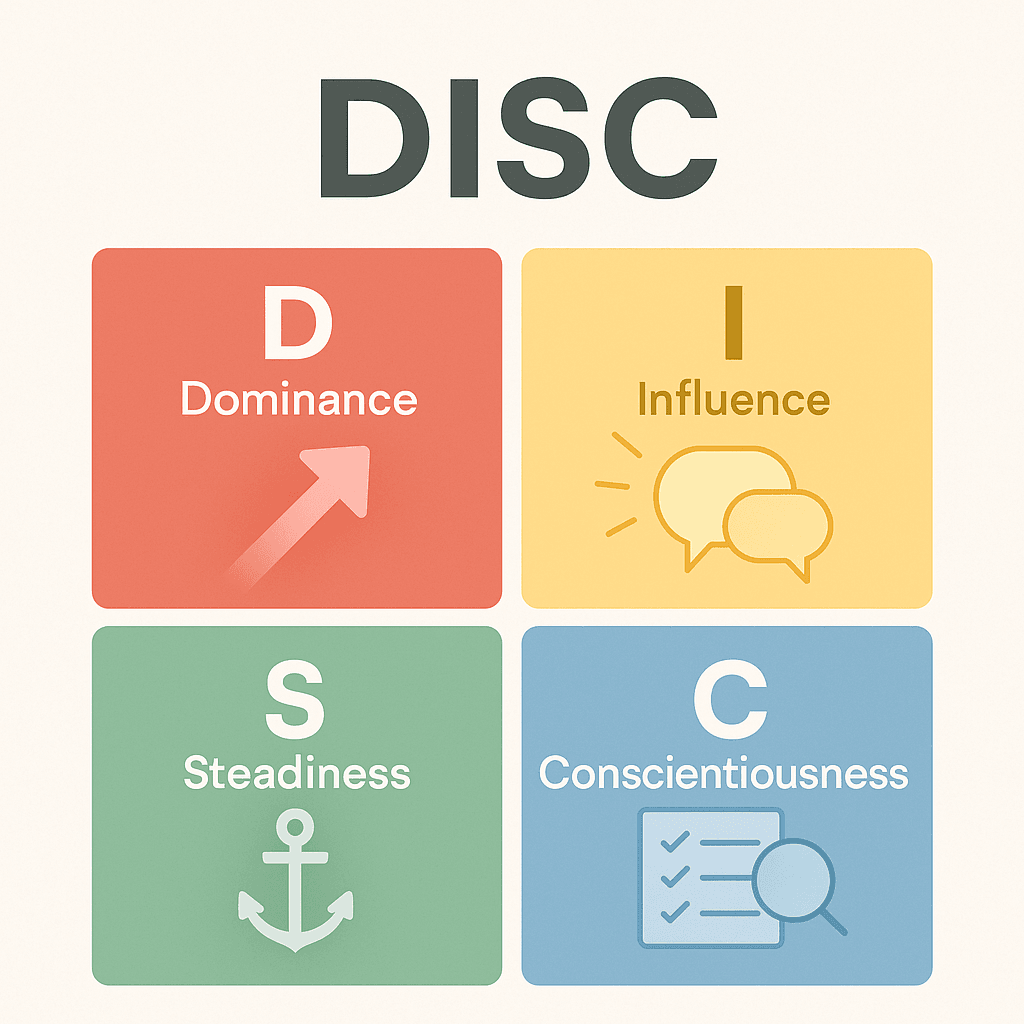
Personality tests are everywhere. Scroll for five minutes and you’ll see quizzes promising to reveal your inner genius, your hidden villain, or which houseplant matches your vibe. Fun? Sure. Useful? Not always.
But the DISC model is different.
It isn’t built for entertainment. It’s built for clarity. For workplaces. For leadership. For real conversations that actually move the needle. And if someone has ever wondered why certain colleagues drain them while others just click - this model explains a lot.
Let’s break it down in plain English.
What Is the DISC Model?
The DISC model is a behavioral assessment framework that categorizes personality into four primary styles:
- D - Dominance
- I - Influence
- S - Steadiness
- C - Conscientiousness
Simple structure. Big implications.
Originally developed from psychologist William Moulton Marston’s work in the early 20th century, DISC doesn’t measure intelligence. It doesn’t label someone as good or bad. Instead, it focuses on observable behavior - how people respond to challenges, influence others, pace their environment, and approach rules.
Think of it like a behavioral compass. Not destiny. Not a box. Just direction.
Why DISC Still Matters Today
Some personality theories feel abstract, almost philosophical. DISC feels practical. It’s used in hiring, leadership coaching, team development, and conflict resolution because it answers one pressing question:
How does this person operate under pressure?
That question alone can save months of frustration.
And here’s the hot take - most workplace tension isn’t about competence. It’s about style mismatch. One person wants speed. Another wants precision. One prefers collaboration. Another prefers control. DISC makes those invisible tensions visible.
The Four DISC Personality Types Explained
Let’s zoom in.
D - Dominance
Dominance types are driven, direct, and decisive. They like results. Fast.
They often:
- Take charge naturally
- Focus on goals over feelings
- Prefer action instead of lengthy discussion
- Thrive in competitive environments
If a workplace were a battlefield, D types would be at the front line. They push. They challenge. They don’t wait for permission.
Strengths? Efficiency. Courage. Momentum.
Blind spots? Impatience. Overlooking emotional nuance.
Sounds intense? It can be. But when a crisis hits, these are often the people everyone looks toward.
I - Influence
Influence personalities are social, expressive, and persuasive. They bring energy into a room like someone just opened the windows on a spring morning.
They tend to:
- Communicate enthusiastically
- Build connections quickly
- Motivate others with optimism
- Prefer collaboration over isolation
Their superpower is inspiration. They sell ideas. They rally teams. They make projects feel exciting.
The downside? Sometimes details get lost. Follow-through can slip if structure isn’t present.
But morale? Off the charts.
S - Steadiness
Steadiness types are calm, supportive, and reliable. They are the glue. The quiet backbone of many teams.
Common traits include:
- Patience
- Loyalty
- Consistency
- A preference for harmony
While others chase spotlight moments, S personalities ensure stability. They dislike sudden change and abrupt conflict, not because they’re weak, but because they value security and cooperation.
In chaotic environments, they feel like an anchor.
However, they may avoid confrontation or struggle to assert boundaries when pushed too far.
C - Conscientiousness
C types are analytical, detail-oriented, and systematic. If accuracy were a sport, they’d compete professionally.
They often:
- Value logic over emotion
- Focus on quality and precision
- Prefer data before decisions
- Follow rules carefully
Imagine someone examining every brick before building the house. That’s C energy.
Their strength is excellence. Their challenge? Overanalysis. Perfectionism. Sometimes paralysis by analysis.
How DISC Types Interact in Real Life
Here’s where things get interesting.
A D personality might see an S colleague as slow. The S colleague might see the D as aggressive. An I might overwhelm a C with spontaneous brainstorming, while the C silently wishes for a structured agenda.
No one is wrong.
They’re just speaking different behavioral languages.
Understanding DISC is like being handed subtitles during a heated conversation. Suddenly, motives make sense. Reactions feel predictable. Friction decreases.
DISC Is About Tendencies, Not Labels
Here’s something many beginners misunderstand: people are rarely pure types.
Most individuals show a blend. A high D with secondary I. A strong C with moderate S. Human behavior is layered, not flat.
And context matters.
Someone might show dominance at work and steadiness at home. Personality adapts. It flexes. DISC simply identifies dominant patterns under typical conditions.
How to Discover Your DISC Style
There are countless DISC tests online, but quality varies wildly. Some are simplified to the point of caricature.
For those wanting a broader, scientifically grounded view, platforms like lifematika.com take assessment further. Instead of isolating one framework, it integrates DISC alongside seven additional psychological models - including OCEAN, Jungian typology, Emotional Intelligence, and more - into one streamlined 95-question evaluation.
It takes about 15 minutes. No registration wall. Results appear instantly.
And here’s the smart part - it doesn’t just assign a type. It provides practical recommendations. Strengths. Development areas. Behavioral insights. All grounded in peer-reviewed research.
More than 1,000 users have already explored it, and because it’s reusable, individuals can retake the assessment after career shifts or major life events to track changes over time.
Personality isn’t static. Why should the test be?
Using DISC for Career and Leadership Growth
Understanding one’s DISC profile can transform professional development. Here’s how:
1. Communication Adjustment
A leader with high Dominance might learn to slow down when speaking with Steadiness-oriented team members. Meanwhile, a Conscientious manager might practice simplifying complex explanations for Influence-driven colleagues.
2. Conflict Reduction
When behavior is interpreted as style rather than attack, tension cools. Fast.
3. Smarter Role Alignment
High I personalities often thrive in marketing or client-facing roles. Strong C types may excel in analytics, finance, or quality control. That doesn’t limit anyone - it highlights natural energy zones.
4. Personal Development Strategy
Instead of vague self-improvement goals, DISC pinpoints specific growth edges. A D might work on empathy. An S might practice assertiveness. A C might aim for flexibility.
Clarity beats guesswork.
DISC vs. Other Personality Models
How does DISC compare to frameworks like the Big Five or Jungian typology?
The Big Five measures deep personality traits. Jungian systems explore cognitive preferences. DISC focuses on outward behavior - the visible layer.
If personality theory were an iceberg, DISC examines what floats above water. Observable. Practical. Immediate.
That’s why many organizations pair it with broader tools for a holistic picture. Again, integrated systems like lifematika.com do exactly that - combining eight methodologies into a unified analysis.
Common Myths About the DISC Assessment
- Myth 1: One type is better than others.
Reality - each style has strengths and limitations. - Myth 2: DISC predicts success.
Reality - it predicts behavioral preference, not outcome. - Myth 3: People can’t change types.
Reality - growth and context influence expression.
Personality frameworks are maps, not prisons.
Why Self-Awareness Changes Everything
Self-awareness sounds trendy, but it’s deeply practical.
When someone understands their behavioral wiring, they stop fighting themselves. They design environments that fit. They collaborate smarter. They choose growth areas strategically instead of randomly.
Imagine trying to drive north without a compass. You might get there. Eventually. With detours.
DISC hands over the compass.
And when paired with broader psychological insight - like emotional intelligence, motivational drivers, and core values - the picture sharpens even further.
Final Thoughts on the DISC Model
The DISC model isn’t flashy. It doesn’t promise to reveal a secret superpower overnight.
What it offers is more useful.
Clarity about behavior. Insight into tension. A language for understanding differences.
For beginners, it’s one of the most accessible entry points into personality psychology. For professionals, it’s a powerful lens for leadership and teamwork.
And for anyone curious about how their style fits into a bigger psychological framework, exploring an integrated scientific assessment can take that understanding deeper.
Because at the end of the day, better awareness leads to better decisions.
And who doesn’t want that?