Understanding Enneagram Type 8: Dynamics of the Challenger Personality
 Yaro Pry··5 min read
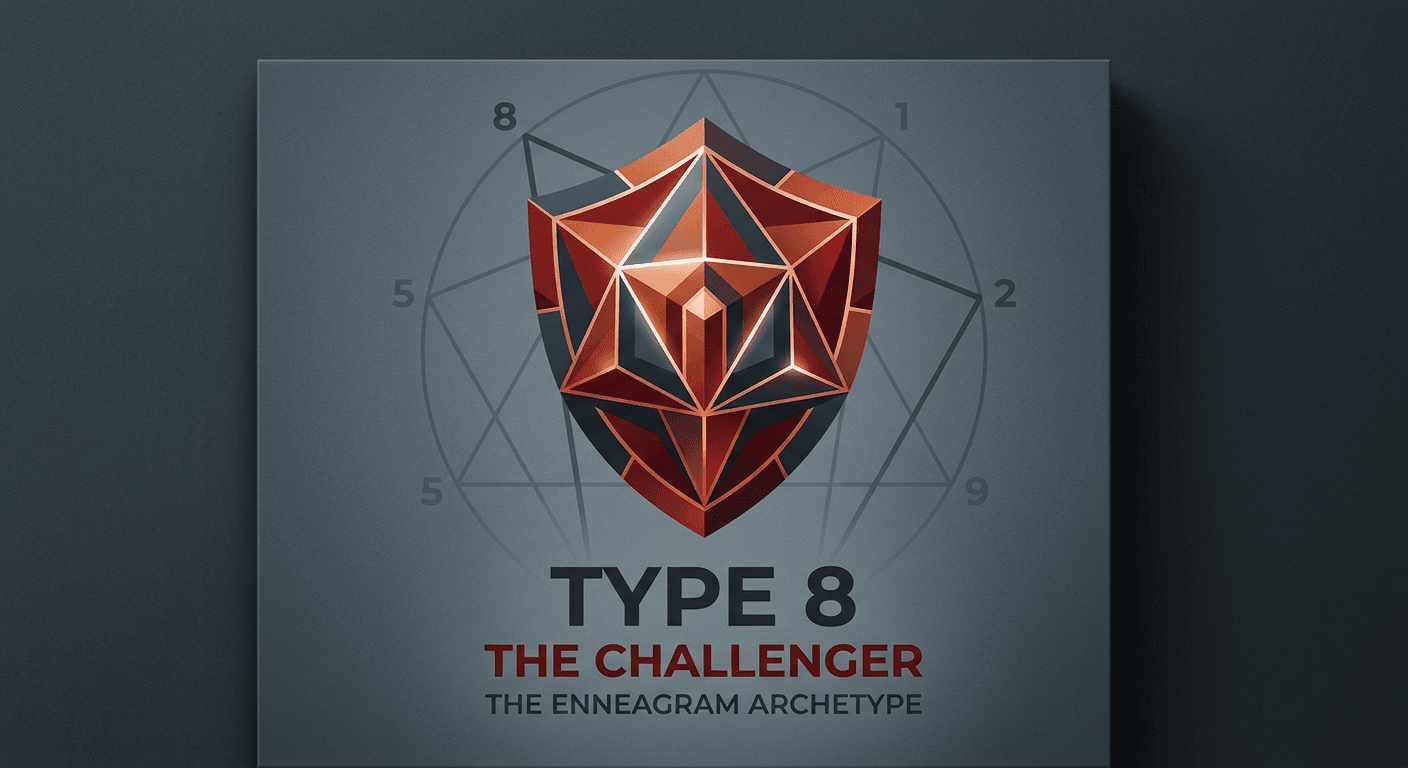
The Enneagram Type 8, often referred to as the Challenger, represents a profile defined by intensity, assertiveness, and a profound drive for autonomy. Individuals identifying with this type operate from a position of strength, utilizing their natural leadership qualities to navigate environments while maintaining a protective stance over themselves and their inner circle. Understanding this personality requires looking beyond the surface-level display of power to the underlying motivations of justice and self-reliance.
Quick Summary
Enneagram Type 8 is a personality archetype characterized by a need for control, a desire to avoid vulnerability, and a strong sense of protective justice. These individuals are often seen as natural leaders who prioritize directness and action over diplomacy.
- Primary motivation is to remain in control of one's destiny.
- Values independence and personal autonomy above external approval.
- Often acts as a protector for the marginalized or vulnerable.
- Struggles with the perception of weakness, both in themselves and others.
Table of Contents
- Foundational Characteristics of the Enneagram Type 8
- Core Motivations and Psychological Drivers
- The Nuances of Enneagram 8 Subtypes
- Developmental Paths and Growth Opportunities
- Comparative Dynamics and Integration
- Practical Applications for Personal Development
- FAQ
- Recommended Reads

Foundational Characteristics of the Enneagram Type 8
At its core, the enneagram type 8 is defined by a refusal to be controlled or intimidated. These individuals possess a high energy level and an innate ability to cut through noise to reach the essence of a situation. Whether in a boardroom or a personal relationship, the Type 8 is rarely a passive participant. They express themselves through direct communication, often favoring conflict resolution that involves facing an issue head-on rather than skirting around the edges of a problem.
While this boldness is a major asset, it can also manifest as an intimidating presence. For those who do not understand the motivation behind their intensity, an enneagram personality 8 might appear abrasive or overly demanding. However, this armor is rarely intended to harm; instead, it serves as a barrier against the threat of betrayal or manipulation. You can explore how personality frameworks influence professional growth by looking at resources like the scientific psychometric platform to better understand these behavioral patterns.
Core Motivations and Psychological Drivers
To truly understand the enneagram type eight, one must look at their fundamental fear: being harmed or controlled by others. This fear drives the Type 8 to create a life where they hold the reins. Their need for autonomy is not merely about power; it is about self-preservation. When a Type 8 feels they have the agency to determine their own outcome, they are at their most magnanimous and protective.
Pro Tip: When communicating with a Type 8, prioritize transparency and brevity. They value authentic engagement and typically lose patience with ambiguity or perceived "games" in conversation.
Their desire for justice is equally compelling. Many Type 8s possess a natural affinity for the underdog. When they perceive an imbalance of power, they are often the first to intervene. This drive stems from a desire to create a world where they, and those they care about, cannot be taken advantage of or victimized by external forces.
The Nuances of Enneagram 8 Subtypes
Like all archetypes, the enneagram 8 manifests differently based on the instinctual variant. These subtypes offer a more granular look at how the Type 8 interacts with their environment. The Self-Preservation 8, for instance, is highly focused on securing resources and physical stability. They are the most pragmatic of the three, often building "fortresses" around their work and finances to ensure they remain independent of outside assistance.
In contrast, the Social 8 is more focused on justice and group protection. They may use their influence to challenge systems or organizations that they deem corrupt or unfair. Finally, the Sexual (or Intimate) 8 is characterized by an intense focus on deep, one-on-one connections. They are not necessarily looking for romantic intensity in a generic sense, but rather a "no-holds-barred" honesty in their closest relationships. Engaging with comprehensive self-assessment tools can often help individuals identify which instinctual drives are most prominent in their own unique profile.
Developmental Paths and Growth Opportunities
Growth for the Type 8 involves moving away from the need for total control and toward a state of vulnerability and emotional openness. As these individuals evolve, they begin to realize that true strength does not require force. They learn to listen to the perspectives of others and appreciate that "weakness" is often a necessary component of human connection and intimacy.
When a Type 8 moves toward health, they integrate traits of the Type 2 (the Helper). This transition allows them to channel their vast energy into genuine care and support for others without the demand for reciprocation. Learning to soften their edges allows them to become powerful mentors and leaders who inspire loyalty through compassion rather than through the exertion of willpower.
Comparative Dynamics and Integration
While the enneagram institute type 8 research provides a framework for these dynamics, it is helpful to contrast them with neighboring types. Unlike the Type 7, who seeks to escape pain through distraction, the Type 8 faces pain directly, wanting to conquer it. Unlike the Type 1, who seeks moral perfection, the Type 8 seeks the preservation of their own reality and autonomy.
Understanding these differences is crucial for conflict resolution in team settings. When an 8 interacts with a 1, for example, the conflict often arises from the 1's need for rules versus the 8's desire for personal discretion. Recognizing that both are motivated by a desire to bring order to chaos can turn a source of friction into a collaborative opportunity for growth and strategic alignment.
Practical Applications for Personal Development
For those who identify as an 8, personal development often centers on the practice of "stopping." Because they are action-oriented, the most effective tool for self-improvement is to intentionally pause before reacting. This practice of mindfulness helps the Type 8 differentiate between a genuine threat and an imagined slight, allowing them to respond rather than react.
Developing emotional literacy is another key growth area. Type 8s often process the world through a binary lens-strong or weak. Learning to identify the nuance in between - such as uncertainty, sadness, or fatigue - allows them to communicate more effectively with others. This emotional expansion leads to deeper, more sustainable relationships that are built on shared humanity rather than shared objectives alone.
FAQ
- Are all Type 8s aggressive? No. While they are assertive, aggression is often a stress response. A healthy Type 8 is protective, decisive, and highly supportive of those around them.
- How does a Type 8 handle failure? They typically handle failure by doubling down on their efforts. They view obstacles as challenges to be overcome rather than reasons to stop.
- Can a Type 8 become more empathetic? Yes. By integrating the healthy aspects of Type 2, they naturally develop a stronger capacity for empathy and service to others.
- What is the biggest challenge for an Enneagram 8? The greatest challenge is admitting vulnerability, as they fear that being open will lead to being controlled by others.