Understanding Agreeableness: The Pros and Cons of Being "Nice"
 Yaro Pry··5 min read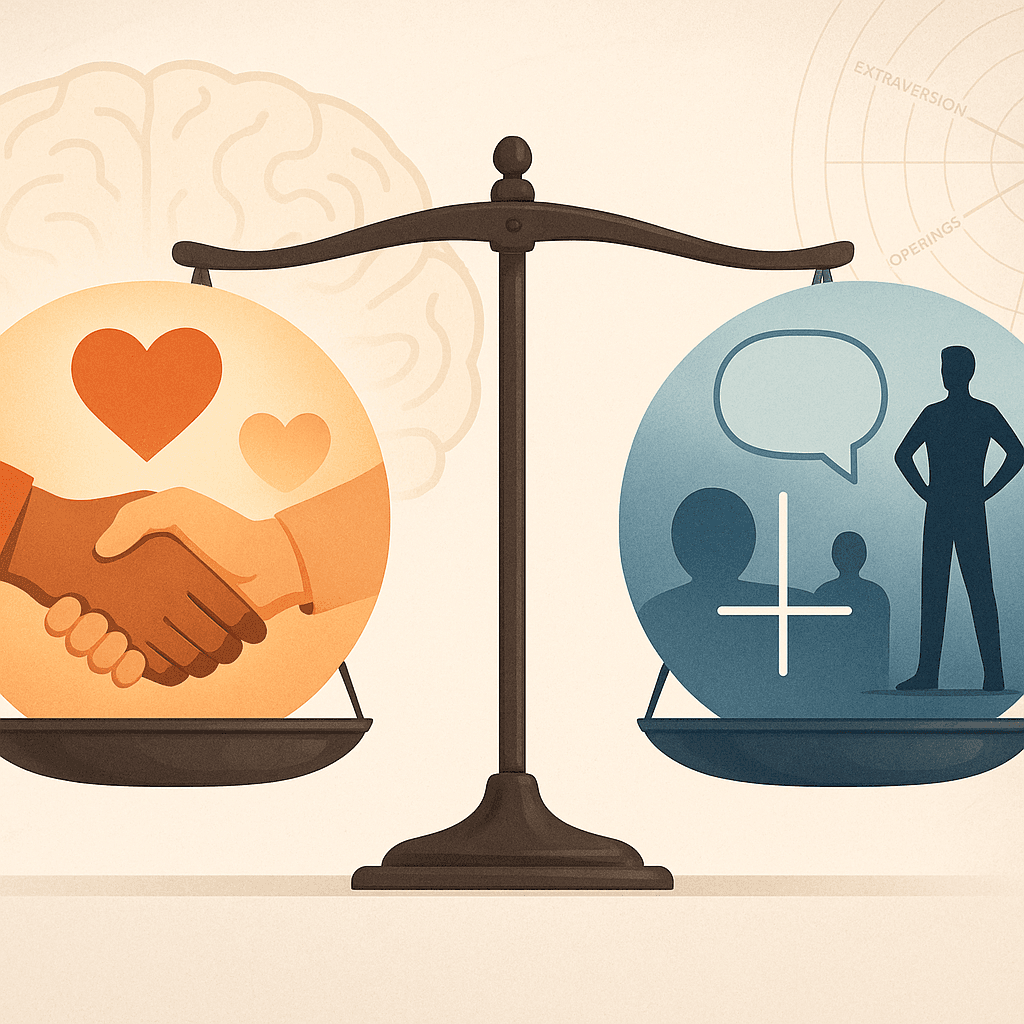
What does it really mean to be "nice"? Is it smiling through frustration, saying yes when it would be easier to say no, or always trying to keep the peace at any cost? In psychology, that easygoing, cooperative energy has a name - agreeableness. And while society tends to treat it like a gold star personality trait, the reality is far more layered. Some people wear kindness like a well-tailored jacket. It fits. It feels natural. Others carry it like an overstuffed backpack. Heavy. Draining. Complicated. Let’s unpack what agreeableness actually is, why it matters, and where it can quietly sabotage growth if left unchecked.
What Is Agreeableness in Psychology?
Agreeableness is one of the Big Five personality traits - often referred to as OCEAN in modern psychology. It measures how cooperative, compassionate, and trusting someone tends to be in social interactions. Highly agreeable individuals often:
- Prioritize harmony over conflict
- Show empathy quickly
- Offer help without being asked
- Give others the benefit of the doubt
- Value collaboration over competition
On the flip side, those lower in this trait may come across as blunt, skeptical, or fiercely independent. Neither end of the spectrum is inherently better. That’s where nuance enters the picture.
The Upside of Being Agreeable
If you ask many managers, agreeable team members are a dream. They smooth tension. They listen. They adapt. In relationships, they tend to nurture trust and emotional safety. Here’s where this trait shines.
1. Stronger Relationships
Warmth builds bridges. People who score high in cooperativeness often create environments where others feel heard and respected. That emotional accessibility becomes social glue. Arguments de-escalate faster. Misunderstandings get resolved instead of buried. Sounds simple, right? It isn’t. Many conflicts spiral because neither side wants to bend. An agreeable personality often provides that flexibility.
2. High Emotional Intelligence
Agreeable individuals frequently display strong emotional awareness. They pick up on subtle cues - tone shifts, posture changes, pauses in speech. It’s like having social radar turned up a notch. That sensitivity helps them:
- Navigate workplace dynamics
- Respond thoughtfully instead of reactively
- Build long-term trust
3. Team-Oriented Leadership
Contrary to popular belief, kindness doesn’t equal weakness. Some of the most effective leaders combine empathy with clear direction. They motivate through encouragement rather than fear. Think less "command and control" and more "guide and support." That difference changes everything.
The Hidden Downsides of Always Being "Nice"
Now for the part people avoid talking about. Extreme agreeableness can quietly erode confidence, boundaries, and even ambition. Here’s the uncomfortable truth: saying yes too often can cost more than saying no.
1. Difficulty Setting Boundaries
When someone constantly prioritizes others’ comfort, personal needs slide into the background. Over time, resentment builds like steam in a sealed kettle. They may struggle to:
- Decline extra work
- Express disagreement openly
- Advocate for fair pay
- Protect personal time
The intention is peace. The result? Exhaustion.
2. Conflict Avoidance
Avoiding tension might feel productive in the short term, but unresolved issues don’t disappear. They linger. They grow roots. A person high in agreeableness may smile through frustration instead of addressing it directly. That habit can damage relationships more than honest disagreement ever would.
3. Vulnerability to Manipulation
Not everyone operates with good intentions. Excessive trust can invite exploitation. A highly cooperative individual may assume others share their values. Unfortunately, that assumption isn’t always accurate. Kindness without discernment is like leaving the front door unlocked in a busy city.
Agreeableness in Career and Success
Here’s a hot take: extreme agreeableness can sometimes limit professional growth. Research consistently shows that those who negotiate assertively tend to earn more. Individuals who challenge ideas often drive innovation. Being cooperative is valuable - but being overly accommodating can mute ambition. In competitive environments, balance becomes crucial. That doesn’t mean adopting aggression. It means blending warmth with backbone. A powerful professional presence often looks like this:
- Empathy paired with clarity
- Kindness backed by boundaries
- Collaboration supported by conviction
Think of it as steel wrapped in velvet.
Can Agreeableness Change Over Time?
Absolutely. Personality traits aren’t cement statues. They’re more like clay - shaped by experiences, environment, and conscious effort. Major life events, career shifts, parenthood, loss, or therapy can all recalibrate how someone shows up socially. That’s why structured self-discovery tools matter. Platforms like lifematika.com offer a scientifically grounded personality assessment based on eight respected psychological models, including the Big Five, Jungian typology, DISC, emotional intelligence frameworks, and more. In about 15 minutes, users complete 95 questions and receive an in-depth report instantly - no registration required. The analysis highlights strengths, behavioral tendencies, motivational drivers, and decision-making patterns. Why does that matter? Because awareness precedes change. When someone understands how agreeable tendencies shape their choices - whether in friendships, partnerships, or negotiations - they can adjust consciously rather than react automatically.
How to Balance Kindness with Assertiveness
Being agreeable doesn’t require abandoning authenticity. It simply means refining it. Here are practical strategies to maintain warmth without self-sacrifice:
1. Practice Strategic Disagreement
Disagree early. Calmly. Respectfully. Small honest conversations prevent large emotional explosions later.
2. Use Clear, Neutral Language
Instead of over-apologizing, try direct phrasing:
- "That timeline won’t work for me."
- "I see it differently."
- "I need more time to consider."
No hostility. No excessive cushioning.
3. Separate Kindness from Compliance
Agreeableness reflects compassion, not automatic agreement. Those two are often confused. One can understand someone’s perspective without endorsing it.
4. Monitor Energy Levels
If social interactions consistently leave someone drained, it may signal overextension. Tracking patterns can reveal where boundaries need reinforcement. Retaking structured assessments over time - such as those available through lifematika - can help individuals observe shifts in assertiveness, motivation, and emotional resilience after major life changes. Growth becomes measurable instead of abstract.
Is Being "Too Nice" Really a Problem?
Here’s the honest answer: it depends. In nurturing roles, high agreeableness can be a superpower. In high-stakes negotiations, unchecked compliance may become a liability. Context shapes impact. Imagine personality traits as sliders on a mixing board. Too low, and relationships feel cold. Too high, and self-respect may suffer. The goal isn’t perfection. It’s calibration. And calibration requires awareness.
The Bigger Picture
Agreeableness reflects something beautiful - a desire for connection. A preference for cooperation over conflict. A belief that empathy matters. The world needs that energy. It also needs individuals who can say no without guilt. Who can challenge flawed ideas. Who can protect their own wellbeing while still extending compassion. Balance doesn’t erase kindness. It strengthens it. So the next time someone labels themselves as "just too nice," maybe the better question is this: are they truly kind, or simply uncomfortable with friction? There’s a difference. Understanding where someone stands on that spectrum can unlock healthier relationships, clearer decisions, and stronger self-trust. Tools grounded in psychological science - like the multi-model assessment offered by lifematika.com - provide a structured path toward that clarity. Because personality isn’t a life sentence. It’s a starting point. And being agreeable? That’s not weakness. It’s potential - waiting for direction.