The Three Pillars of Motivation: Autonomy, Competence, and Relatedness
 Yaro Pry··4 min read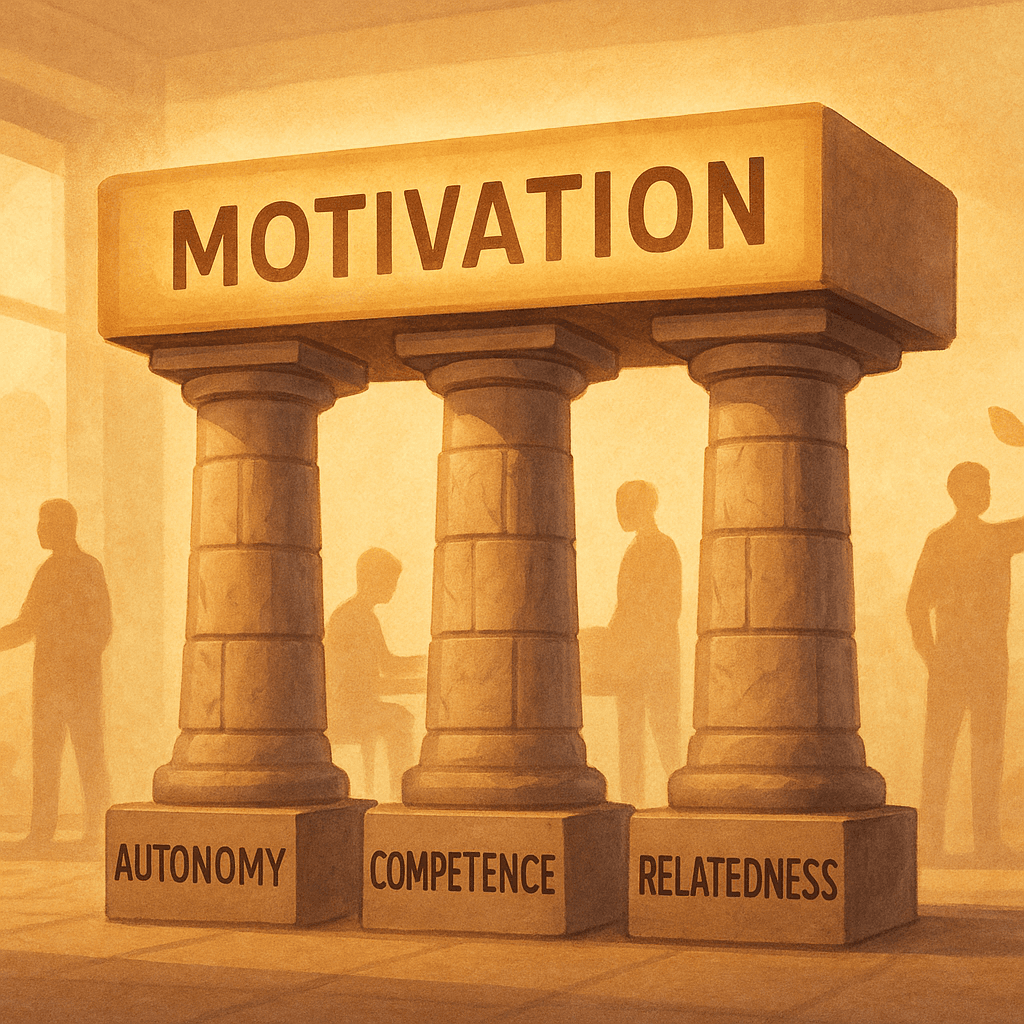
Why do some people wake up energized, ready to tackle the day, while others drag themselves from task to task like they’re hauling a backpack full of bricks?
Motivation is not magic. It’s not luck. And it’s definitely not just about willpower.
If you ask me, motivation is more like a three-legged stool. Remove one leg and the whole thing wobbles. Knock out two and it collapses. Those three legs? Autonomy, Competence, and Relatedness - the core principles behind Self-Determination Theory, one of the most respected frameworks in modern psychology.
When these pillars are strong, people thrive. When they’re neglected, burnout creeps in quietly, like fog rolling over a city.
Let’s break it down.
What Is Self-Determination Theory, Really?
Developed by psychologists Edward Deci and Richard Ryan, Self-Determination Theory argues that human motivation isn’t just about rewards or punishment. It’s about fulfilling three deep psychological needs:
- Autonomy - feeling in control of your choices
- Competence - feeling capable and effective
- Relatedness - feeling connected to others
Sounds simple, right?
Here’s the twist: most people chase motivation backward. They look for productivity hacks, louder alarms, stronger coffee. But without these three pillars in place, motivation becomes fragile - temporary - forced.
Think of it like trying to build a house on sand.
Pillar One: Autonomy - The Power of Choice
Autonomy is the feeling that I am choosing this.
Not because someone pressured you. Not because you’re afraid of consequences. But because the decision aligns with your values and intentions.
Humans resist control instinctively. Even subtle pressure can drain energy. Ever notice how a hobby becomes less fun the moment it turns into an obligation? That’s autonomy slipping away.
Why Autonomy Fuels Motivation
When people experience autonomy:
- They persist longer on difficult tasks
- They feel more creative
- They experience lower stress levels
- Their satisfaction increases
In contrast, constant micromanagement or rigid structures create compliance - not commitment.
And compliance is a weak fuel. It burns fast.
How to Strengthen Autonomy
- Offer choices whenever possible - even small ones.
- Connect tasks to personal values.
- Replace "have to" with "choose to."
- Reflect on long-term goals before making decisions.
Honestly, even shifting language changes internal perception. Words matter more than most people realize.
Pillar Two: Competence - The Need to Feel Capable
No one enjoys feeling incompetent. It’s uncomfortable. Frustrating. Sometimes humiliating.
Competence is about believing, deep down, that you can handle challenges. It doesn’t mean perfection. It means progress.
Picture learning a new skill. At first, it’s awkward - like trying to write with your non-dominant hand. But with practice, something shifts. Movements smooth out. Confidence grows. That shift? That’s competence taking root.
Why Competence Drives Action
When people feel capable, they:
- Take initiative
- Embrace feedback
- Recover faster from setbacks
- Push beyond comfort zones
Without competence, motivation stalls. Doubt creeps in. Procrastination follows.
Here’s a hot take: many productivity struggles aren’t laziness. They’re quiet insecurity.
How to Build Competence
- Break large goals into manageable milestones.
- Track small wins consistently.
- Seek constructive feedback - not vague praise.
- Focus on growth, not comparison.
Growth is personal. Comparing someone’s chapter ten to your chapter one? That’s a recipe for discouragement.
Pillar Three: Relatedness - The Human Connection
Humans are wired for connection. Even the most introverted individuals need belonging. Relatedness is the sense that you matter to others - and that others matter to you.
Isolation drains motivation faster than failure ever could.
Think about collaborative environments where ideas flow naturally. Energy rises. People contribute more freely. Now contrast that with environments where individuals feel invisible. The difference is stark.
Why Relatedness Matters So Much
When relatedness is fulfilled:
- Engagement increases
- Emotional resilience strengthens
- Trust deepens
- Long-term commitment grows
Connection acts like emotional insulation. It protects motivation during setbacks.
Ways to Strengthen Relatedness
- Encourage open communication.
- Create shared goals.
- Recognize contributions publicly.
- Invest in meaningful conversations.
And no - surface-level interaction doesn’t count. People sense authenticity instantly.
How the Three Pillars Work Together
Autonomy without competence feels reckless.
Competence without relatedness feels empty.
Relatedness without autonomy feels suffocating.
They’re interconnected. Like gears in a machine. When one stalls, the others strain.
This is why motivation isn’t a one-size-fits-all formula. It’s a dynamic system.
Understanding Your Own Motivation Blueprint
Here’s where things get interesting.
Not everyone experiences these pillars equally. Some individuals crave independence intensely. Others draw energy primarily from relationships. Some feel driven by mastery above all else.
Understanding your unique psychological makeup can clarify which pillar needs attention.
Platforms like lifematika.com provide a scientific way to explore this. The platform uses eight established psychological models - including Self-Determination Theory - to generate a comprehensive personality analysis in about 15 minutes.
No registration. Instant report. Fully confidential.
It evaluates motivation drivers, emotional intelligence, values, behavioral patterns, and more. Over 1,000 users have already used it to gain deeper clarity about their internal drivers.
And here’s something powerful: the assessment can be retaken over time. After major life events. Career shifts. Personal growth phases. Motivation evolves - and so should self-understanding.
Why External Rewards Don’t Sustain Motivation
Bonuses. Praise. Titles. Incentives.
They work - temporarily.
But external rewards are like sugar highs. Quick spike. Sudden crash.
When autonomy, competence, and relatedness are fulfilled, motivation becomes intrinsic. It comes from within. That kind of drive doesn’t rely on constant external validation.
Ask yourself: would you still pursue your goal if no one applauded?
If the answer is yes, intrinsic motivation is at play.
Signs One Pillar Is Weak
Sometimes the issue isn’t obvious. Here are subtle indicators:
Low Autonomy
- Feeling trapped or resentful
- Frequent procrastination
- Lack of initiative
Low Competence
- Fear of starting new tasks
- Avoiding feedback
- Imposter syndrome
Low Relatedness
- Emotional detachment
- Minimal collaboration
- Low engagement in group settings
Recognizing these patterns is the first step toward recalibration.
Motivation Is a System, Not a Switch
People often treat motivation like a light switch. On or off.
Reality check - it’s more like a garden.
It requires consistent care. Attention. Adjustment. Ignore one area, and weeds creep in.
Autonomy gives the space to grow. Competence strengthens the roots. Relatedness provides the sunlight.
Neglect any one of them and growth slows.
The Takeaway
Motivation isn’t about forcing discipline through sheer will. It’s about designing environments - internal and external - that support autonomy, competence, and relatedness.
When these three pillars stand firm, productivity becomes natural. Engagement deepens. Well-being improves.
And perhaps most importantly, people feel aligned.
Isn’t that what everyone is really searching for?
Alignment between who they are and what they do.
Strengthen the pillars. The rest follows.