The Future of Personal Development: Data-Driven Growth
 Yaro Pry··4 min read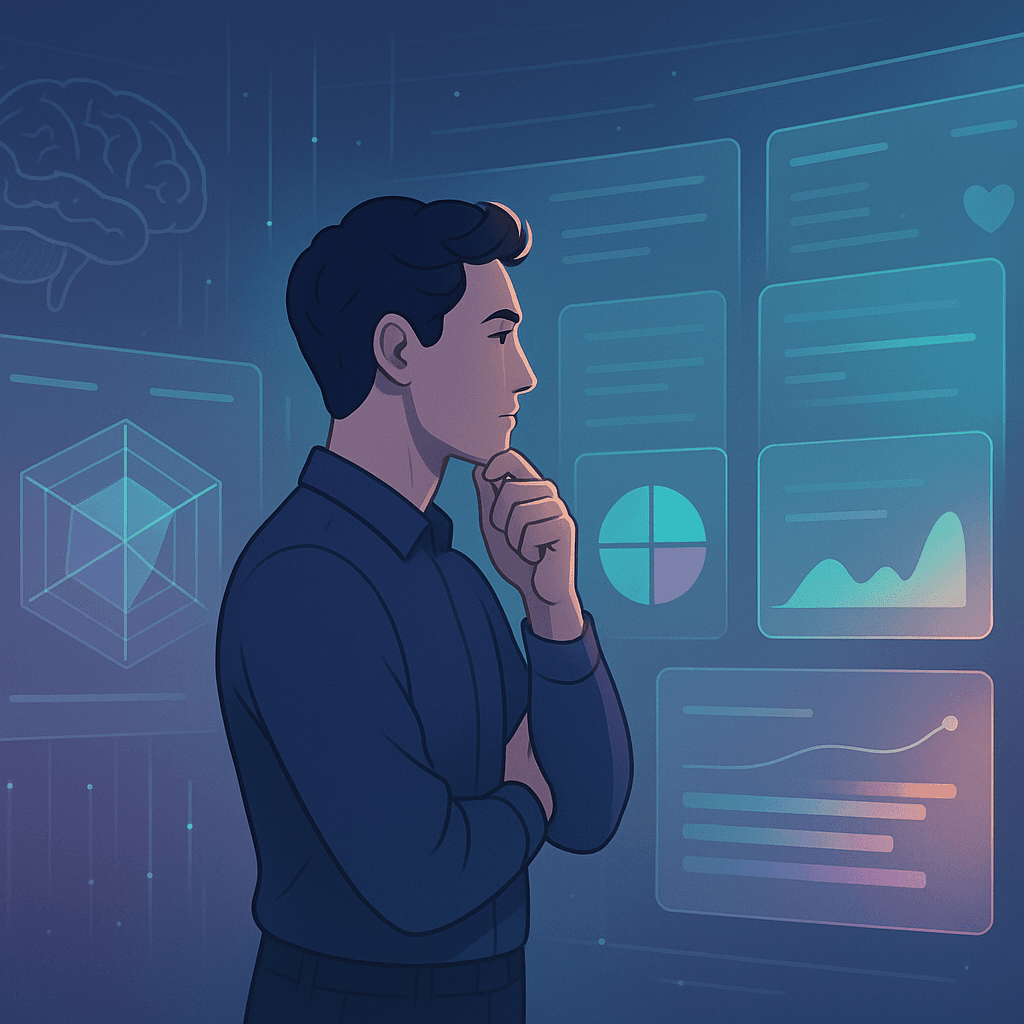
Personal development used to look like a bookshelf full of dog-eared paperbacks and a journal with grand promises scribbled on page one. Now? It looks more like a dashboard. Numbers. Patterns. Insights. Clean, sharp feedback that doesn’t just feel inspiring - it’s measurable.
Here’s the truth: guesswork is fading. Data-driven growth is taking over, and honestly, it was about time.
People don’t want vague advice anymore. They want clarity. Direction. Evidence. They want to know why they behave the way they do and what to actually do about it. Not someday. Today.
Why Personal Development Is Entering a New Era
For decades, self-improvement has lived in motivational speeches and inspirational quotes. Helpful? Sometimes. Precise? Rarely.
Think about it. Imagine trying to navigate a new city without GPS. You might eventually find your way. You might also waste hours taking wrong turns. That’s what traditional self-help often feels like - wandering with hope.
Data-driven personal development flips on the GPS.
Instead of broad advice like “be more confident” or “find your purpose,” modern psychometric tools analyze personality traits, motivations, emotional patterns, and values. Suddenly growth becomes specific. Actionable. Tailored.
The Shift From Inspiration to Information
This doesn’t mean motivation disappears. It means motivation gets smarter.
- Instead of guessing strengths, individuals see them mapped clearly.
- Instead of assuming weaknesses, patterns become visible.
- Instead of copying someone else’s path, people build their own strategy.
That shift changes everything.
What Is Data-Driven Growth, Really?
Data-driven growth is the practice of using scientifically grounded assessments to guide decisions about career, relationships, productivity, and long-term direction.
It’s not about labels. It’s about understanding systems.
Human behavior isn’t random. It follows patterns shaped by personality traits, intrinsic motivation, values, and emotional intelligence. When those layers are measured accurately, personal development stops feeling abstract and starts feeling strategic.
The Core Ingredients of Modern Psychometric Insight
Strong platforms rely on established psychological frameworks rather than internet trends. The most advanced systems integrate multiple research-backed models at once, including:
- OCEAN - Big Five Personality Traits for measuring openness, conscientiousness, extraversion, agreeableness, and neuroticism.
- Jungian Typology for understanding cognitive functions and energy orientation.
- DISC Behavioral Styles to clarify communication tendencies.
- VIA Character Strengths to identify natural virtues.
- Self-Determination Theory for intrinsic motivation drivers.
- Schwartz’s Theory of Basic Values to uncover core guiding principles.
- Emotional Intelligence Assessment for emotional awareness and regulation.
- Motivational Levels Analysis to detect underlying behavioral forces.
That combination creates a 360-degree psychological mirror. Not a flattering one. A useful one.
The Rise of Integrated Platforms Like Lifematika
Here’s where things get interesting.
Instead of taking separate quizzes scattered across the internet, users can now access unified systems that combine multiple methodologies into one streamlined experience. One example is lifematika.com, a scientific psychometric platform designed for structured self-discovery.
It offers a single 95-question assessment that takes roughly 15 minutes. No account required to begin. Instant analytical report. Practical recommendations. Clear breakdowns.
Simple on the surface. Sophisticated underneath.
What Makes This Approach Different?
- Holistic analysis using eight validated psychological models simultaneously
- Free entry point without mandatory registration
- Immediate detailed reporting
- Full confidentiality and data protection
- Cross-device compatibility - mobile, tablet, desktop
- Ability to retake the test to track growth over time
That last point matters more than most people realize.
Growth Isn’t Static - Why Retesting Changes the Game
People evolve. Careers shift. Relationships reshape priorities. Major life events recalibrate values.
So why would anyone rely on a personality snapshot taken years ago?
Retesting allows individuals to measure internal change the way athletes track performance metrics. Improvement stops being a vague feeling and becomes visible progress.
Imagine reviewing your motivational drivers after switching industries. Or reassessing emotional intelligence after leadership training. That’s not self-help fluff. That’s measurable development.
The Psychological Models Behind Smarter Decisions
Let’s break this down further.
1. Career Alignment
Big Five traits combined with motivational levels reveal environments where someone will likely thrive. High conscientiousness paired with strong intrinsic motivation? Structured, goal-oriented fields might fit. High openness with strong creative values? Innovation-heavy roles could feel energizing.
It’s like matching soil to plant type. Growth depends on alignment.
2. Communication and Relationships
DISC behavioral mapping clarifies how individuals express ideas, handle conflict, and respond to pressure. Emotional intelligence scores show how effectively emotions are managed.
When those insights are understood, misunderstandings decrease. Friction softens. Conversations improve.
3. Motivation and Burnout Prevention
Self-Determination Theory highlights three psychological needs: autonomy, competence, and relatedness. When one of these drops too low, burnout creeps in quietly.
Data surfaces that imbalance early. Prevention becomes possible.
Privacy in the Age of Personal Data
Here’s a fair question: Is sharing psychological information safe?
It should be. And if it’s not, that’s a problem.
Modern platforms must prioritize strict confidentiality, secure storage, and transparent usage policies. Lifematika, for example, states that user data is protected and used solely for generating individual reports.
In a world hungry for analytics, privacy becomes a cornerstone of trust. Without it, the entire system collapses.
Why Scientific Personality Analysis Beats Generic Advice
Generic advice treats everyone like the same puzzle piece. Scientific personality analysis recognizes that each person is a different shape entirely.
Consider two individuals aiming to “become more productive.”
- One lacks structure and needs better systems.
- The other feels unmotivated because values are misaligned.
Same surface goal. Different root causes.
Data exposes the difference. And once the root cause is visible, solutions become precise.
The Future - Personalized Development Plans Powered by Data
Where is this heading?
Expect deeper integration between psychometric assessments and daily tools. Imagine productivity apps adjusting based on personality traits. Leadership programs tailored automatically to motivational profiles. Educational tracks aligned with cognitive strengths from day one.
It’s not science fiction. It’s a logical next step.
As more than 1,000 users already engaging with platforms like Lifematika demonstrate, people are ready for smarter growth systems. They want feedback grounded in peer-reviewed research, not viral trends.
How to Start With Data-Driven Personal Growth
For anyone curious about stepping into this new era, the process can be simple:
- Choose a scientifically grounded assessment platform.
- Complete the evaluation honestly and without overthinking responses.
- Study the detailed report carefully.
- Identify two or three actionable adjustments.
- Retest after significant changes or milestones.
Growth doesn’t require dramatic reinvention. Often, it requires calibration.
Final Thoughts on the Data-Driven Future
Personal development is no longer just about ambition. It’s about awareness.
When psychological insight meets technology, self-discovery becomes structured. Measurable. Strategic.
And perhaps most importantly, repeatable.
The future of personal development won’t belong to those who shout the loudest motivational slogans. It will belong to those who understand themselves deeply - and adjust intentionally.
Data doesn’t replace intuition. It sharpens it.
That’s the difference. And that’s where growth gets interesting.