The Best Career Paths for High Openness Personalities
 Yaro Pry··4 min read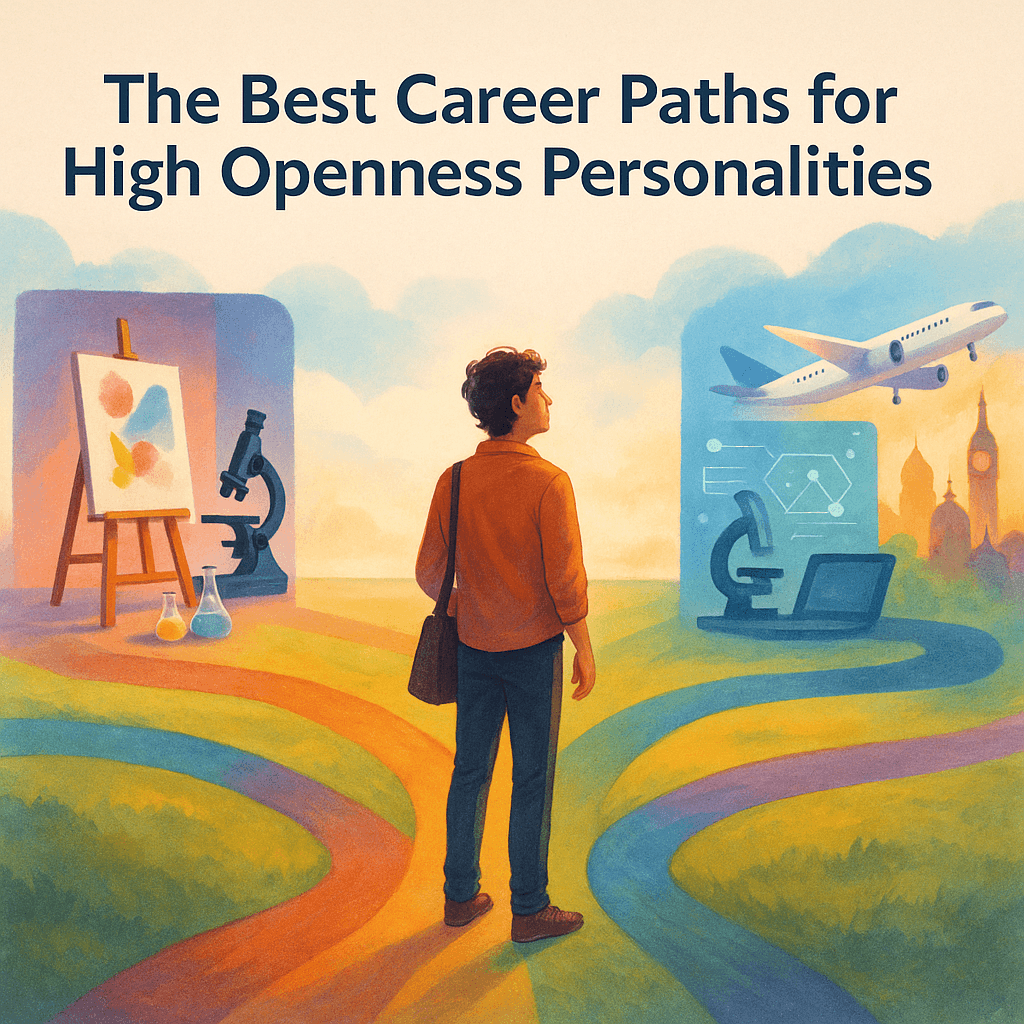
Some people walk into a room and immediately notice the art on the walls, the music in the background, the subtle mood shift in the air. They ask big questions. They chase ideas. They get bored fast when life feels repetitive. That’s high Openness in action. In the world of personality psychology, Openness to Experience - one of the Big Five traits - describes curiosity, imagination, creativity, and a hunger for novelty. People high in Openness don’t just think outside the box. They sometimes forget the box exists. So where do they actually thrive? What careers light them up instead of draining them? Let’s dig in.
What High Openness Really Means
High Openness isn’t just about liking art museums or indie films. It’s deeper than that. It often includes:
- Strong imagination and abstract thinking
- Curiosity about philosophy, science, culture, or innovation
- Comfort with change and ambiguity
- Desire for variety and intellectual stimulation
- Interest in unconventional ideas
Sounds exciting, right? It is. But here’s the catch. Highly open individuals can struggle in rigid, repetitive, rule-heavy environments. Micromanagement feels suffocating. Predictable routines? Energy killers. That’s why choosing the right career path matters so much. For anyone unsure about their personality profile, platforms like lifematika.com offer a surprisingly deep look into traits like Openness, using eight scientific psychological models. In about 15 minutes, users get a detailed breakdown of strengths, motivation patterns, and decision-making tendencies. No fluff. Just data-driven insight. And when someone understands their Openness level, career clarity gets sharper. Fast.
Why Career Fit Matters for High Openness
Work is not just a paycheck. It’s a daily environment. Imagine putting a tropical plant in a dark basement. It won’t die immediately. But it won’t flourish either. High Openness personalities need sunlight - metaphorically speaking. They crave:
- Intellectual exploration
- Creative freedom
- Room for experimentation
- Exposure to diverse perspectives
Without those elements, boredom creeps in. Then frustration. Then burnout. So let’s talk about careers that actually align.
1. Creative Fields - Where Imagination Pays the Bills
This one feels obvious. Still, it’s worth unpacking.
Graphic Design, Writing, Film, Music
Creative industries reward originality. They demand new angles, fresh perspectives, bold expression. High Openness individuals naturally generate ideas like popcorn in a microwave - rapid, surprising, sometimes explosive. Writers build worlds. Designers reimagine visuals. Filmmakers translate abstract emotion into moving images. That kind of work feels less like labor and more like play for the right personality. Of course, creative careers come with uncertainty. Income can fluctuate. Feedback can sting. But for someone high in Openness, the trade-off is often worth it. Freedom beats predictability.
2. Research and Academia - Curiosity as a Career
Ever met someone who falls down intellectual rabbit holes for fun? That’s textbook Openness.
Scientific Research
Whether it’s neuroscience, environmental science, psychology, or artificial intelligence, research roles reward deep thinking and constant learning. Questions drive everything: - Why does this happen? - What if we tried a different approach? - Could we challenge the current theory? High Openness professionals thrive in environments where uncertainty is not feared but embraced.
University Teaching
Teaching at higher levels allows space for debate, exploration, and idea exchange. It’s not just about delivering lectures. It’s about shaping conversations. And conversations are fuel for the open mind.
3. Entrepreneurship - Building Something New
Here’s a hot take: many high Openness individuals are natural entrepreneurs. Why? Because starting a business is controlled chaos. There’s no script. No fixed blueprint. Just experimentation, iteration, risk. Launching a startup feels like standing at the edge of a blank canvas with a bucket of paint. Terrifying? Yes. Thrilling? Absolutely. Entrepreneurial paths work particularly well when they involve:
- Innovative technology
- Creative services
- Social impact ventures
- Consulting in emerging industries
Monotony rarely survives in a startup environment. That unpredictability, while stressful for some, energizes the highly open.
4. Psychology, Coaching, and Human Development
People high in Openness often possess strong emotional insight and curiosity about human behavior. They don’t just ask, "What happened?" They ask, "Why did it happen? What does it mean?"
Psychologist or Therapist
These careers involve exploring inner worlds - emotions, motivations, values. No two clients are identical. Every session brings nuance. That variability keeps the mind engaged.
Career or Life Coaching
Helping others navigate transitions requires creativity and adaptability. Coaches must think flexibly, tailoring approaches to each person. It’s less assembly line, more improvisational jazz. And for a highly open personality, that dynamic rhythm feels natural.
5. Technology and Innovation Roles
Not all tech jobs are rigid coding marathons. Many innovation-focused roles require visionary thinking.
UX Design
User experience design blends psychology, aesthetics, and problem-solving. It’s analytical yet imaginative.
Product Development
Building new products demands experimentation and cross-disciplinary thinking. Engineers, designers, marketers - all collaborating. High Openness professionals often excel when they can connect dots others don’t even see.
6. Travel, Culture, and Global Work
Routine kills enthusiasm for many high Openness individuals. Exposure to new cultures revives it. Careers in:
- International relations
- Travel journalism
- Cultural consulting
- NGO field work
These paths offer constant novelty. New languages. New customs. New systems to understand. For someone wired for exploration, that’s not exhausting. It’s oxygen.
What High Openness Personalities Should Avoid
Let’s be honest. Not every stable, respectable job will feel fulfilling. Roles that may feel restrictive include: - Highly repetitive administrative tasks - Strict compliance-driven positions with little autonomy - Work environments resistant to change - Jobs with rigid hierarchies and zero creative input This doesn’t mean high Openness individuals can’t succeed there. They can. But success without engagement feels hollow.
How to Confirm If You’re High in Openness
Guesswork isn’t enough. Serious career decisions deserve solid data. That’s where structured personality assessments matter. The assessment on lifematika.com uses the OCEAN model alongside Jungian typology, DISC, Emotional Intelligence metrics, motivational analysis, and more. Ninety-five questions. Around fifteen minutes. Instant detailed report. No registration walls. No waiting. Users can even retake it after major life changes to track personal evolution. That’s powerful, especially for high Openness individuals who tend to evolve frequently. Understanding one’s Openness level isn’t about labeling. It’s about alignment.
Final Thoughts - Designing a Career That Feels Alive
High Openness personalities are explorers in a world that sometimes prefers predictability. They question assumptions. They chase meaning. They feel restless when boxed in. The right career won’t eliminate challenges. Every path has stress. Deadlines. Conflict. But when work allows experimentation, creativity, and growth, something shifts. Energy replaces dread. Curiosity replaces boredom. And ambition feels natural instead of forced. So the real question isn’t, "What job is safest?" It’s this: "Where will imagination have room to breathe?" Answer that honestly - preferably with solid personality data in hand - and career decisions become less confusing, more intentional. Because when high Openness individuals find the right environment, they don’t just perform. They innovate. They inspire. They build futures the rest of us didn’t even see coming.