The 5 Components of Emotional Intelligence Explained
 Yaro Pry··5 min read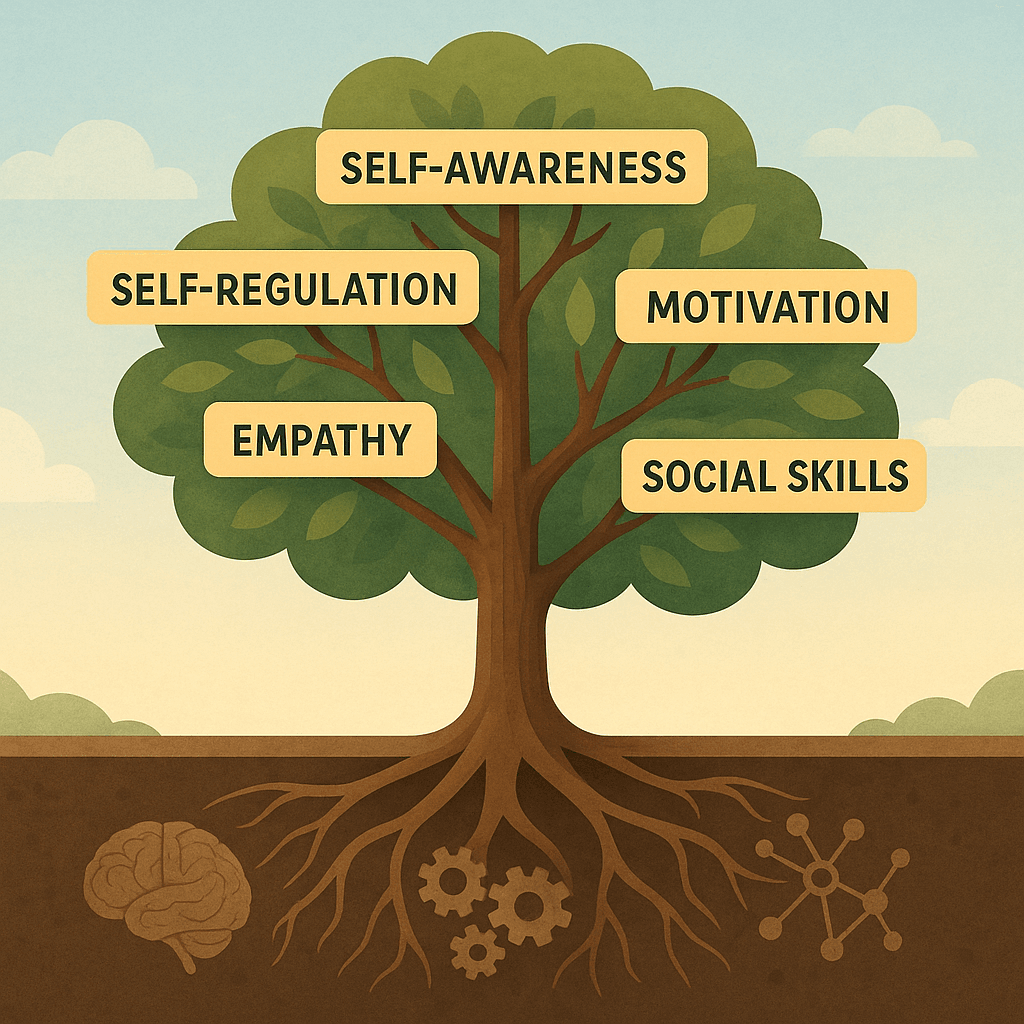
Some people walk into a room and instantly shift the atmosphere. Tension softens. Conversations flow. Decisions get made without unnecessary drama. It’s not magic. It’s not luck. It’s something far more practical - and learnable. It’s called emotional intelligence. If you ask most people what it means, they’ll mumble something about “being good with feelings.” That’s part of it. But the real picture is richer, sharper, and far more useful in daily life. Emotional intelligence is the ability to recognize, understand, manage, and influence emotions - both your own and those of others. And it’s built on five core components. Miss one, and the whole structure wobbles. Let’s break them down. ## What Are the 5 Components of Emotional Intelligence? Psychologist Daniel Goleman popularized the concept and identified five key elements: 1. Self-awareness 2. Self-regulation 3. Motivation 4. Empathy 5. Social skills Think of them as five fingers on the same hand. Separate, each has a function. Together, they create grip, precision, strength. ### 1. Self-Awareness - The Foundation Self-awareness sits at the base of everything. It’s the ability to recognize your own feelings as they happen and understand how they influence thoughts and behavior. Sounds simple, right? It isn’t. Most people move through the day on emotional autopilot. They snap at a coworker, feel drained after a meeting, procrastinate on an important task - and never pause to ask why. A self-aware person notices patterns: - “I get defensive when my ideas are questioned.” - “I lose focus when I’m overwhelmed.” - “I feel energized when I help others solve problems.” That clarity is powerful. It turns reactions into choices. Without self-awareness, growth is guesswork. With it, improvement becomes intentional. Interestingly, tools grounded in psychological science - like the assessment offered by lifematika.com - can reveal personality traits, core values, and motivational drivers that aren’t obvious on the surface. Sometimes the blind spots are exactly what hold people back. ### 2. Self-Regulation - Control Without Suppression Here’s a hot take: controlling emotions doesn’t mean suppressing them. Self-regulation is about managing reactions in healthy, constructive ways. It’s the pause before sending that angry email. The deep breath before responding to criticism. The ability to stay composed when things don’t go according to plan. Picture emotions like weather. You can’t stop a storm from forming, but you can decide whether to grab an umbrella or walk straight into the rain. People strong in self-regulation tend to: - Stay calm under pressure - Adapt to change more easily - Avoid impulsive decisions - Take responsibility instead of blaming others This doesn’t mean they never feel frustrated or anxious. They do. They just don’t let those feelings run the show. And that distinction changes careers, relationships, and leadership outcomes. ### 3. Motivation - The Inner Engine Not all drive is created equal. External rewards - money, praise, status - can push someone forward for a while. But intrinsic motivation? That’s the engine that keeps running when nobody’s watching. Within the framework of emotional intelligence, motivation refers to a deep, internal desire to achieve for the sake of growth, meaning, or mastery. People with strong internal drive often: - Set long-term goals - Stay optimistic despite setbacks - Pursue improvement consistently - Focus on purpose over recognition Have you ever met someone who treats obstacles like puzzles instead of threats? That’s motivation intertwined with emotional awareness. Understanding what truly drives a person is crucial. Scientific models like Self-Determination Theory and Schwartz’s Theory of Basic Values - both integrated into comprehensive psychometric platforms - highlight how autonomy, competence, and core values shape ambition. When motivation aligns with identity, burnout decreases. Progress accelerates. ### 4. Empathy - Beyond Sympathy Empathy is often misunderstood. It’s not simply feeling sorry for someone. It’s the ability to understand another person’s emotional state and perspective - even when it differs from your own. Imagine standing on a balcony looking down at a city street. You see movement, noise, chaos. Now imagine walking at street level. Completely different view, right? Empathy is choosing to step down from the balcony. It allows people to: - Anticipate how decisions affect others - Communicate with sensitivity - Build trust faster - Resolve conflict more effectively In leadership, empathy isn’t soft. It’s strategic. Teams perform better when members feel understood. Clients remain loyal when they feel heard. And here’s something often overlooked: empathy starts with self-awareness. If someone struggles to understand their own emotions, understanding others becomes significantly harder. ### 5. Social Skills - The Visible Outcome If emotional intelligence were a tree, social skills would be the visible branches. This component involves the ability to manage relationships, influence others, and navigate social environments effectively. It includes: - Clear communication - Conflict resolution - Collaboration - Persuasion - Active listening Some people assume social skills are about being outgoing. Not necessarily. Introverts can be exceptional communicators. The difference lies in awareness and adaptability. Strong relationship management depends on all the earlier components. Without self-regulation, conversations escalate. Without empathy, trust erodes. Without motivation, connection feels transactional. When all five elements work together, interaction becomes fluid instead of forced. ## Why the 5 Components of Emotional Intelligence Matter Let’s be practical. Research consistently links these five elements to: - Better leadership performance - Higher job satisfaction - Improved mental well-being - Stronger personal relationships - More effective decision-making Technical skills might open a door. Emotional intelligence determines what happens once someone walks through it. In high-pressure environments, IQ gets people hired. Emotional competence gets them promoted. And in personal life? It’s the difference between recurring arguments and meaningful conversations. ## How to Strengthen Each Component Improvement doesn’t require a personality overhaul. It starts small. ### Practical Steps to Build Emotional Intelligence 1. **Develop Self-Awareness** - Keep a daily reflection journal - Ask for honest feedback - Notice emotional triggers 2. **Improve Self-Regulation** - Practice pause techniques before responding - Use breathing exercises during stress - Reframe setbacks as learning moments 3. **Increase Motivation** - Clarify personal values - Set meaningful long-term goals - Track progress consistently 4. **Cultivate Empathy** - Listen without interrupting - Ask open-ended questions - Consider alternative perspectives intentionally 5. **Enhance Social Skills** - Practice assertive communication - Address conflict early - Build networks based on mutual value For deeper insight, scientifically grounded assessments can provide structured feedback across personality traits, behavioral styles, character strengths, and motivational patterns. A platform like lifematika.com combines eight respected psychological models into one streamlined evaluation - 95 questions, about 15 minutes, instant detailed results. No registration barrier. Fully confidential. Understanding oneself at that level can feel like turning on a light in a dim room. Patterns become clearer. Strengths feel validated. Growth areas stop feeling vague. ## The Bigger Picture Here’s the truth - emotional intelligence isn’t a fixed trait. It’s a skill set. Dynamic. Adaptable. People can retake assessments over time, reflect after major life changes, and track development. Growth doesn’t happen in a straight line. It zigzags. Sometimes it stalls. Then it leaps forward. Have you ever noticed how some individuals seem grounded no matter the chaos around them? They aren’t immune to pressure. They’ve simply built the internal architecture to handle it. That architecture rests on five pillars: - Self-awareness - Self-regulation - Motivation - Empathy - Social skills Strengthen those, and everything else becomes more manageable. Better conversations. Smarter decisions. Healthier relationships. Not because life gets easier. Because you get better at navigating it. And honestly, that might be the most valuable skill set anyone can develop.