Teaching Emotional Intelligence to Children: A Parent’s Guide
 Yaro Pry··5 min read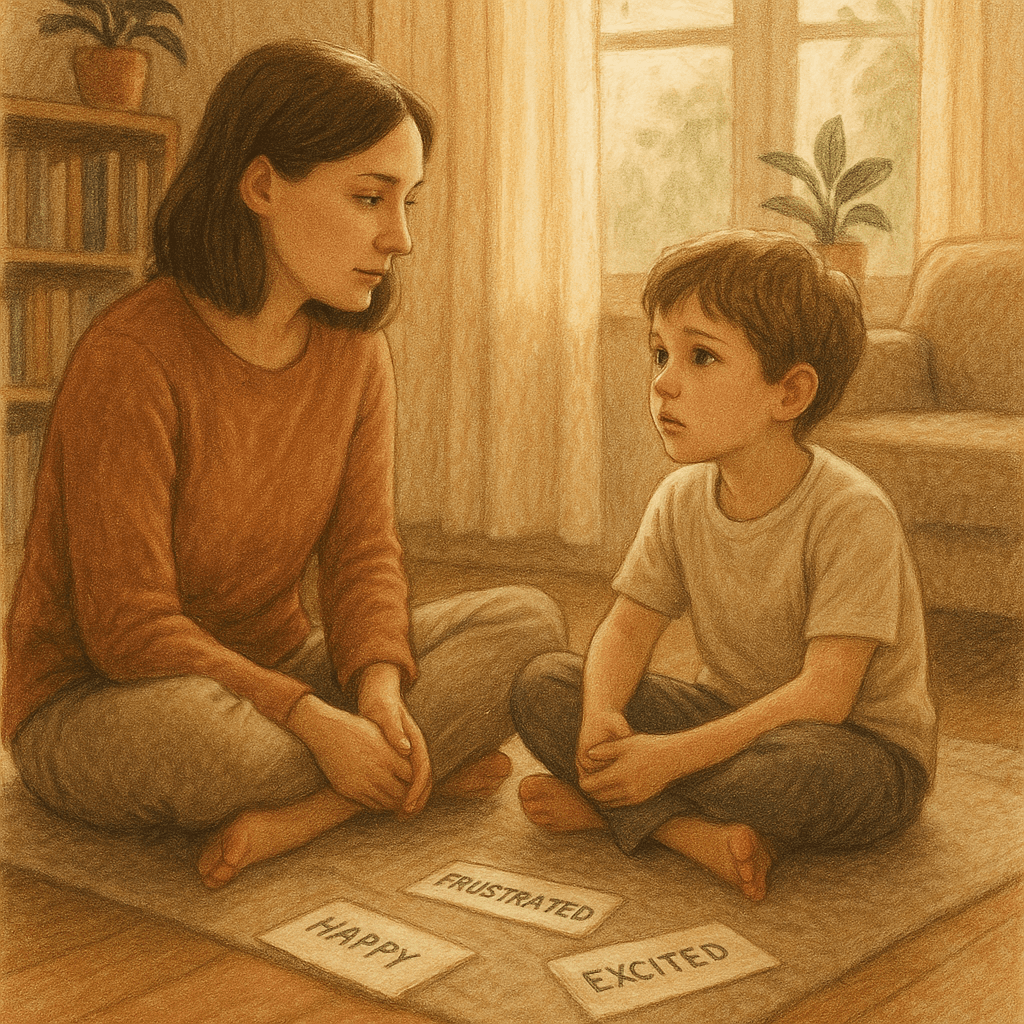
Emotional intelligence isn’t a “nice-to-have” anymore. It’s survival gear for modern life.
Grades matter. Skills matter. But the ability to recognize feelings, manage reactions, and connect with other people? That’s the quiet superpower. And children who learn it early carry it like a compass for the rest of their lives.
If you ask most teachers what separates thriving students from struggling ones, it’s rarely raw IQ. It’s self-awareness. Empathy. Emotional regulation. In other words - emotional intelligence.
So how can parents actually teach it? Not preach it. Not force it. Teach it in a way that sticks.
What Is Emotional Intelligence, Really?
Emotional intelligence - often called EQ - is the ability to understand, manage, and express emotions effectively. It also includes recognizing emotions in others and handling relationships with care.
Think of it as the operating system running quietly beneath every decision, argument, friendship, and goal.
The Core Components of Emotional Intelligence
- Self-awareness - recognizing one’s own emotions
- Self-regulation - managing impulses and reactions
- Motivation - channeling feelings toward goals
- Empathy - understanding others’ perspectives
- Social skills - building healthy relationships
Sounds simple, right? It’s not. These skills take years to develop. And they don’t grow automatically just because a child gets older.
Why Teaching Emotional Intelligence Early Changes Everything
Children aren’t born knowing how to say, “I feel overwhelmed.” They show it by slamming doors. Or going silent. Or melting down in the cereal aisle.
When parents teach emotional intelligence, they give children language for what feels chaotic inside. That language becomes power.
Research consistently shows that kids with higher EQ:
- Perform better academically
- Handle stress more effectively
- Build stronger friendships
- Experience fewer behavioral problems
- Develop resilience in adulthood
Here’s the hot take - emotional intelligence predicts life satisfaction more reliably than test scores.
Step 1: Model Emotional Intelligence Daily
Children learn more from observation than instruction. A parent can deliver a brilliant lecture on calm communication, then undo it by yelling during traffic.
Kids are always watching.
Modeling emotional intelligence means:
- Naming personal feelings out loud
- Admitting mistakes
- Apologizing sincerely
- Showing controlled responses during stress
For example: “I’m feeling frustrated right now, so I’m going to take a few deep breaths.” That one sentence teaches emotional vocabulary, coping skills, and self-awareness in real time.
It’s subtle. But powerful.
Step 2: Help Children Name Their Emotions
Many adults struggle to identify what they feel beyond “fine” or “angry.” Expecting children to do better without guidance is unrealistic.
Emotions are like colors. If a child only knows red and blue, everything gets labeled as one or the other. Expand the palette.
Practical Ways to Build Emotional Vocabulary
- Use emotion charts with varied feeling words
- Pause during conflicts and ask, “What are you feeling right now?”
- Reflect emotions back: “It seems like you’re disappointed.”
- Read stories and discuss characters’ feelings
This doesn’t require hour-long therapy sessions at the dinner table. Just small, consistent moments of curiosity.
Over time, children begin to differentiate between frustration, embarrassment, jealousy, and fear. That awareness reduces impulsive behavior because feelings become identifiable rather than overwhelming.
Step 3: Teach Regulation - Not Suppression
Here’s where many parents get tripped up. They try to eliminate big emotions instead of guiding children through them.
Emotions aren’t enemies. They’re signals.
Teaching emotional regulation means showing children how to respond constructively. Not telling them to “calm down” while offering no tools.
Effective Emotional Regulation Techniques for Kids
- Deep belly breathing exercises
- Counting slowly to ten
- Creating a quiet “reset” space at home
- Drawing or journaling feelings
- Physical movement - jumping, stretching, walking
Imagine emotions like ocean waves. Parents can’t stop the waves. But they can teach children how to surf.
Step 4: Build Empathy Through Everyday Moments
Empathy isn’t automatic. It grows when children are encouraged to consider perspectives beyond their own.
After a playground conflict, instead of asking, “What did you do?” try asking, “How do you think the other child felt?”
That small shift rewires thinking patterns.
Dinner conversations can include questions like:
- “What made someone smile today?”
- “Did anyone seem left out?”
- “How would you feel in that situation?”
Empathy turns social interaction from a competition into a connection.
Step 5: Encourage Intrinsic Motivation
Emotional intelligence ties closely to motivation. Children who understand their values and internal drivers tend to show stronger resilience.
Instead of rewarding only outcomes - grades, trophies, wins - parents can highlight effort, growth, and curiosity.
Say, “You worked really hard on that,” instead of “You’re so smart.”
This subtle change fosters self-determination. Kids learn to value progress over perfection.
Understanding Your Child’s Personality Makes It Easier
Not every child expresses emotions the same way. Some are naturally expressive. Others internalize everything.
That’s where understanding personality patterns becomes incredibly helpful.
Platforms like lifematika.com provide a comprehensive psychometric assessment grounded in eight established psychological models, including Big Five traits, Jungian typology, DISC behavior styles, emotional intelligence frameworks, and motivational theory.
In about 15 minutes - 95 questions, no registration required - parents can gain detailed insights into personality strengths, behavioral tendencies, values, and emotional drivers. The report generates instantly and remains fully confidential.
Honestly, tools like this remove guesswork. Instead of parenting blindly, families can better understand how a child is wired - whether they lean toward introversion, high sensitivity, strong dominance, or deep conscientiousness.
And yes, the assessment can be retaken over time. Because children grow. Personalities evolve. Life events reshape perspectives.
Common Mistakes Parents Make When Teaching Emotional Intelligence
Even well-meaning adults stumble. It happens.
1. Dismissing Feelings
Saying “It’s not a big deal” minimizes a child’s internal experience. What seems small to an adult may feel enormous to them.
2. Over-Rescuing
Solving every problem prevents children from building coping skills. Guidance works better than control.
3. Labeling the Child Instead of the Behavior
“You are rude” hits differently than “That comment was hurtful.” One attacks identity. The other corrects behavior.
4. Ignoring Their Own Emotional Growth
Parents who invest in their own self-awareness often raise emotionally intelligent kids. Growth isn’t just for children.
Creating an Emotionally Intelligent Home Environment
Culture shapes behavior.
A home that encourages open communication, respectful disagreement, and emotional honesty becomes fertile soil for EQ development.
Some practical shifts:
- Hold regular family check-ins
- Normalize talking about difficult emotions
- Establish consistent boundaries
- Practice gratitude rituals
Consistency matters more than perfection.
Children don’t need flawless parents. They need responsive ones.
The Long-Term Impact of Emotional Intelligence
Picture a teenager navigating peer pressure with calm self-assurance. Imagine an adult managing workplace conflict without exploding or shutting down.
That foundation starts in childhood.
Emotional intelligence influences:
- Career success
- Romantic relationships
- Mental health stability
- Leadership abilities
- Decision-making skills
It’s like building the roots of a tree. You don’t see them daily. But they determine how tall and steady the tree can grow.
Final Thoughts for Parents
Teaching emotional intelligence to children isn’t about raising perfectly behaved kids. It’s about raising aware humans.
There will still be tears. Arguments. Slamming doors.
That’s normal.
The goal isn’t emotional silence. It’s emotional skill.
Start small. Stay consistent. Stay curious about who your child is becoming.
And if parents want deeper insight into personality, motivation, and emotional patterns, scientific tools like lifematika.com can offer clarity that conversation alone sometimes can’t.
Because at the end of the day, emotional intelligence isn’t taught in one big moment. It’s built in thousands of small ones.
Every calm response. Every empathetic question. Every time a parent chooses connection over control.
That’s where it begins.