Personality Compatibility: Does "Opposites Attract" Really Work?
 Yaro Pry··4 min read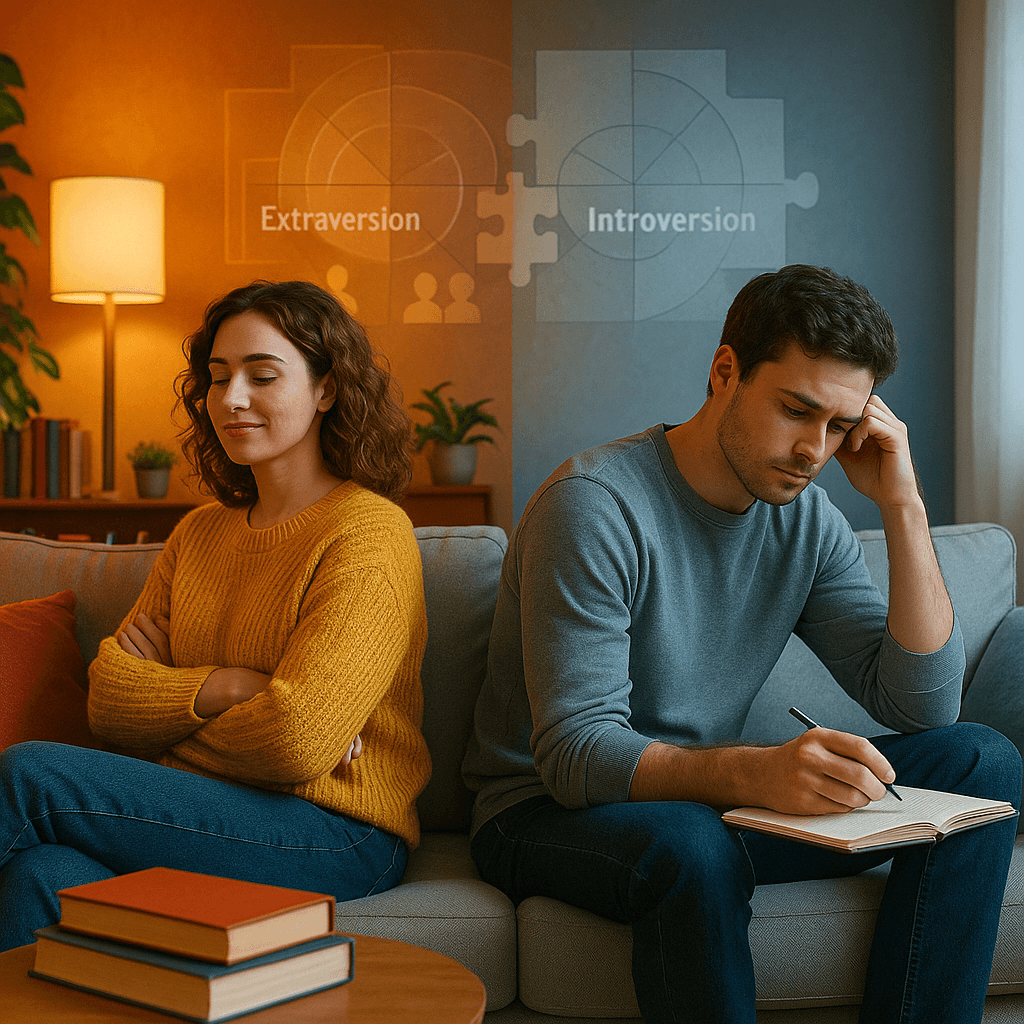
We have all heard it before - opposites attract. It is the kind of phrase that floats around at weddings, sneaks into dating advice columns, and pops up whenever two wildly different people fall head over heels. But is there any truth to it? Or is it just one of those romantic ideas that sounds better than it actually works?
Here’s the thing. Personality compatibility is far more nuanced than a cute slogan. And honestly, reducing relationships to "you like quiet, I like loud" misses the bigger picture.
If you ask most psychologists, attraction and long-term compatibility are not the same beast. One sparks the fire. The other keeps the house from burning down.
Why "Opposites Attract" Feels So Convincing
There is a reason this idea refuses to die.
At first glance, opposites create intrigue. The reserved introvert meets the life-of-the-party extrovert. The meticulous planner falls for the spontaneous adventurer. Sparks fly. Curiosity blooms. Each person feels like they’ve discovered a new world.
It is exciting. New. Almost cinematic.
Psychologically speaking, humans are often drawn to qualities they feel they lack. An anxious overthinker may admire someone calm and decisive. A highly structured personality might secretly envy someone who lives comfortably in chaos.
But admiration is not the same as alignment.
The Attraction vs. Compatibility Divide
Attraction thrives on contrast. Compatibility thrives on harmony.
Think of it like music. Two different instruments can create a beautiful duet. But if they are playing in completely different keys? It turns into noise. Fast.
In relationships, differences can be refreshing. Yet when core values, communication styles, or emotional needs clash, friction becomes constant.
And constant friction is exhausting.
What Science Says About Personality Compatibility
Modern psychology does not rely on slogans. It relies on data.
Research using models like the Big Five - often called OCEAN - suggests that similarity in certain traits predicts relationship satisfaction. Shared levels of conscientiousness, emotional stability, and openness tend to create smoother long-term partnerships.
Does that mean couples must be identical? Not at all.
But it does suggest something important: core personality alignment matters more than surface-level contrast.
Other frameworks, such as Jungian typology or DISC behavioral styles, show that communication patterns and decision-making approaches play a massive role in compatibility. A high-Dominance partner paired with another high-Dominance partner may face power struggles. Meanwhile, two highly avoidant communicators can drown in unspoken resentment.
It is less about opposites and more about how traits interact.
The 3 Types of Differences That Actually Work
Not all differences are dangerous. Some are surprisingly healthy.
1. Complementary Strengths
When one partner excels where the other struggles - without undermining shared values - it can feel like a well-balanced team.
- One thrives in social settings, the other prefers deeper one-on-one conversations.
- One is big-picture focused, the other detail-oriented.
- One acts quickly, the other thinks carefully.
This kind of contrast creates balance rather than chaos.
2. Emotional Regulation Differences
A calm partner can steady someone who runs anxious. A reflective personality can soften impulsive reactions. Emotional intelligence, in particular, often determines whether differences become assets or liabilities.
Without emotional awareness, contrast turns combustible.
3. Growth-Oriented Gaps
Sometimes a partner models qualities the other wants to develop. Not in a "fix me" way. More like inspiration.
That dynamic works when both individuals feel secure, not judged.
Where Opposites Fall Apart
Now for the uncomfortable part.
Opposites tend to struggle when differences hit the following areas:
- Core values - money, family, ambition, lifestyle.
- Conflict style - avoidance vs. confrontation.
- Attachment patterns - anxious vs. dismissive.
- Life goals - stability vs. constant reinvention.
These are not minor preferences. They shape daily decisions.
Imagine trying to row a boat where one person paddles toward calm waters and the other aims for open ocean. It does not matter how attracted they are. Direction matters.
The Role of Self-Awareness in Relationship Success
Here’s a hot take: most compatibility problems are actually self-awareness problems.
Many people enter relationships without truly understanding their own personality patterns, values, or emotional triggers. They chase chemistry. They confuse intensity for alignment.
Then reality sets in.
This is where structured personality analysis becomes incredibly useful. Platforms like lifematika.com offer a scientifically grounded way to explore personality compatibility before friction escalates.
Lifematika uses eight established psychological models - including Big Five, Jungian typology, DISC, Emotional Intelligence, and more - to create a holistic profile. In just 95 questions and about 15 minutes, users receive a detailed report highlighting strengths, behavioral tendencies, and motivational drivers.
No registration required. Instant results. Completely confidential.
Sounds simple, right? It kind of is. And that is the beauty of it.
Why Comprehensive Personality Testing Matters
Single-label systems can oversimplify human behavior. One acronym cannot capture the complexity of someone’s inner world.
Lifematika combines:
- OCEAN trait analysis
- Jungian cognitive functions
- DISC communication mapping
- VIA character strengths
- Self-Determination Theory drivers
- Schwartz’s core values framework
- Emotional intelligence metrics
- Motivational levels assessment
That layered approach paints a clearer picture of compatibility - not just attraction.
And since users can retake the assessment over time, it also tracks personal growth. Because let’s be honest, people evolve. Major life events reshape priorities. What felt compatible at 25 may shift by 35.
Similarity vs. Complementarity: What Works Best?
The real answer is not black and white.
Research often shows that similarity in core values and emotional stability predicts satisfaction. Complementarity in skills and perspectives can enhance teamwork. Problems arise when differences undermine safety, respect, or shared direction.
So does "opposites attract" really work?
Sometimes. In specific ways. Under certain conditions.
But blind faith in the phrase? Risky.
How to Evaluate Personality Compatibility Before It Is Too Late
Instead of relying on chemistry alone, consider asking deeper questions:
- Do we resolve conflict in compatible ways?
- Are our long-term visions aligned?
- Do our core values overlap?
- How do our stress responses interact?
- Do our strengths complement rather than compete?
These questions may not feel as romantic as butterflies. But they are far more predictive.
Compatibility is less like fireworks and more like architecture. It requires structure. Design. Intentionality.
The Bottom Line on Opposites Attract
Opposites can spark attraction. They can inspire growth. They can create dynamic partnerships.
But sustainable relationships usually share deeper alignment beneath the surface differences.
The strongest couples are not carbon copies. Nor are they constant contradictions. They are aligned where it matters and flexible where it does not.
Understanding personality compatibility is not about boxing people into categories. It is about clarity. Awareness. Informed decisions.
And honestly, in a world where relationships often unravel from misunderstandings, a little scientific insight goes a long way.
So maybe the better question is not whether opposites attract.
It is this: do they last?
The answer depends on far more than a catchy phrase.