Judging vs. Perceiving: How You Organize Your Life
 Yaro Pry··4 min read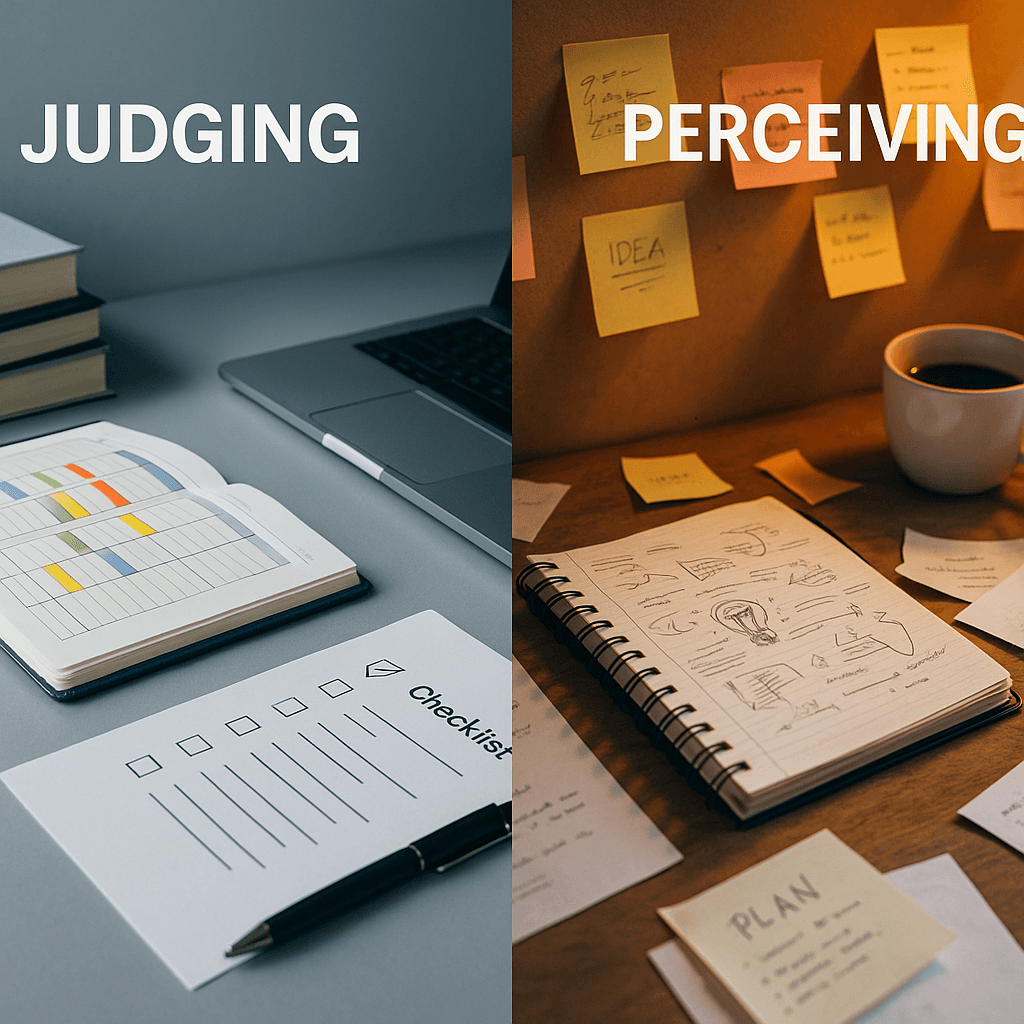
Some people pack their suitcase three days before a trip. Others throw things into a bag an hour before leaving and call it "adventure." Neither is wrong. But the difference? It runs deeper than habits. It’s about Judging vs. Perceiving - two powerful personality orientations that quietly shape how someone plans, decides, works, and even relaxes. If you’ve ever wondered why certain people crave structure while others feel suffocated by it, this is the conversation worth having. ## What Does Judging vs. Perceiving Actually Mean? In personality psychology, particularly within Jungian typology, Judging and Perceiving describe how someone interacts with the outside world. Not whether they’re judgmental. Not whether they “perceive well.” It’s about lifestyle preference. - **Judging (J)** types prefer structure, decisions, and closure. - **Perceiving (P)** types prefer flexibility, exploration, and openness. Think of it like this: Judging personalities treat life like a well-organized bookshelf. Perceiving personalities treat life like a creative studio - dynamic, a little messy, but full of possibility. Sounds simple, right? Not quite. Because this preference influences everything. ## How Judging Types Organize Their World People with a Judging orientation often feel calm when plans are clear. They like: - To-do lists (and actually finishing them) - Defined deadlines - Clear expectations - Structured environments - Making decisions early There’s comfort in certainty. Closure feels satisfying. A checked box is a tiny dopamine hit. Honestly, many J-types would rather make a decent decision today than keep analyzing options for weeks. ### Strengths of Judging Personalities 1. Strong time management 2. Reliability under pressure 3. Goal-oriented focus 4. Clear communication They move projects forward. They create order where there’s chaos. But - and here’s the human part - they can also struggle when life refuses to cooperate. Unexpected change? Delays? Vague instructions? That can feel like someone rearranged the bookshelf without asking. ## How Perceiving Types Navigate Life Perceiving personalities breathe differently. Structure feels optional. Possibility feels exciting. They prefer: - Keeping options open - Adapting in real time - Exploring before committing - Flexible schedules - Spontaneous decisions Where a J-type sees a deadline, a P-type sees a movable boundary. And here’s a hot take: in fast-changing environments, Perceivers often thrive. They pivot quickly. They improvise. They aren’t emotionally attached to one rigid plan. ### Strengths of Perceiving Personalities - Creative problem solving - Adaptability - Curiosity-driven exploration - Calm during uncertainty But flexibility has a shadow side. Procrastination. Difficulty finishing. Decision fatigue from too many open loops. Freedom feels amazing - until everything is unfinished. ## Judging vs. Perceiving at Work This dynamic shows up clearly in careers. A Judging-oriented employee may: - Request detailed project briefs - Create timelines immediately - Follow structured workflows - Prefer defined roles A Perceiving-oriented employee may: - Brainstorm extensively - Work in bursts of inspiration - Adjust strategy mid-project - Thrive in fluid environments Who performs better? Wrong question. It depends on the role, team culture, and industry. A startup in chaos? P-types may shine. Regulated industries with strict compliance? J-types often dominate. Understanding this difference prevents unnecessary conflict. What looks like "rigid" might just be structure-seeking. What looks like "disorganized" might be adaptive thinking. Perspective changes everything. ## Relationships: Where It Gets Interesting Now imagine a Judging partner planning a weekend. Reservations booked. Itinerary printed. Time slots allocated. The Perceiving partner says, “Let’s just see where the day takes us.” Cue tension. But here’s the twist - these pairings can balance each other beautifully. - J brings stability. - P brings spontaneity. Structure meets flexibility. The key isn’t changing personality. It’s recognizing patterns. Have you ever noticed how arguments sometimes aren’t about the issue itself - but about timing, planning, or expectations? That’s often J vs. P underneath the surface. ## Decision-Making Styles Compared Let’s break it down clearly. ### Judging Decision Style - Prefers early closure - Decides once and moves forward - Feels stress when unresolved - Values predictability ### Perceiving Decision Style - Gathers information continuously - Delays commitment if possible - Feels energized by new input - Values adaptability Neither is superior. But mixing them without awareness? That’s like trying to merge two operating systems without updating the software. ## The Psychology Behind It Judging vs. Perceiving isn’t random. It’s rooted in cognitive function theory and broader personality research. Platforms like lifematika.com integrate Jungian typology with seven other scientific models - including OCEAN (Big Five), DISC, Emotional Intelligence frameworks, and Self-Determination Theory - to create a deeper personality analysis. Why does that matter? Because Judging vs. Perceiving is just one dimension. Someone might be highly structured (J) but also high in Openness from the Big Five model. Or flexible (P) yet highly conscientious in DISC. Human personality isn’t a single dial. It’s a mixing board. And understanding the full configuration gives context instead of labels. ## Can You Change From J to P? Short answer? Not dramatically. Long answer? You can develop behaviors outside your comfort zone. A Judging-oriented person can learn to tolerate ambiguity. A Perceiving-oriented person can build stronger planning habits. Growth doesn’t erase preference. It expands capacity. It’s like being right-handed. You can train your left hand. But your natural dominance usually stays. ## How to Discover Your Preference If someone isn’t sure whether they lean Judging or Perceiving, guessing rarely works. Self-perception is biased. We see who we want to be. A structured psychometric assessment provides clearer insight. The assessment on lifematika.com takes about 15 minutes, includes 95 questions, and generates a detailed report instantly - no registration required. It doesn’t just label someone J or P. It analyzes personality through eight scientific methodologies simultaneously, offering strengths, blind spots, motivational drivers, and behavioral tendencies. And yes, it’s free to start. For anyone navigating career shifts, relationship dynamics, or major decisions, clarity helps. A lot. ## When Structure Meets Flexibility The real magic happens when people stop judging the difference. Judging types don’t need to “loosen up.” Perceiving types don’t need to “get organized” in someone else’s image. Instead: - J-types can build planned flexibility into schedules. - P-types can create minimal structure to prevent chaos. Balance beats extremes. Life rarely operates at either pole. Deadlines exist. So does unpredictability. ## Final Thoughts on Judging vs. Perceiving Here’s the honest truth. Most conflict around productivity, planning, and lifestyle isn’t about competence. It’s about orientation. Judging personalities seek control over time. Perceiving personalities seek freedom within time. Two valid approaches. The question isn’t which one is better. The better question is - which one feels natural? And how can someone use that awareness strategically? Because once a person understands how they organize their life, they stop fighting themselves. And that’s where real growth begins.