IPIP Personality Test: A Scientific Approach
 Yaro Pry··5 min read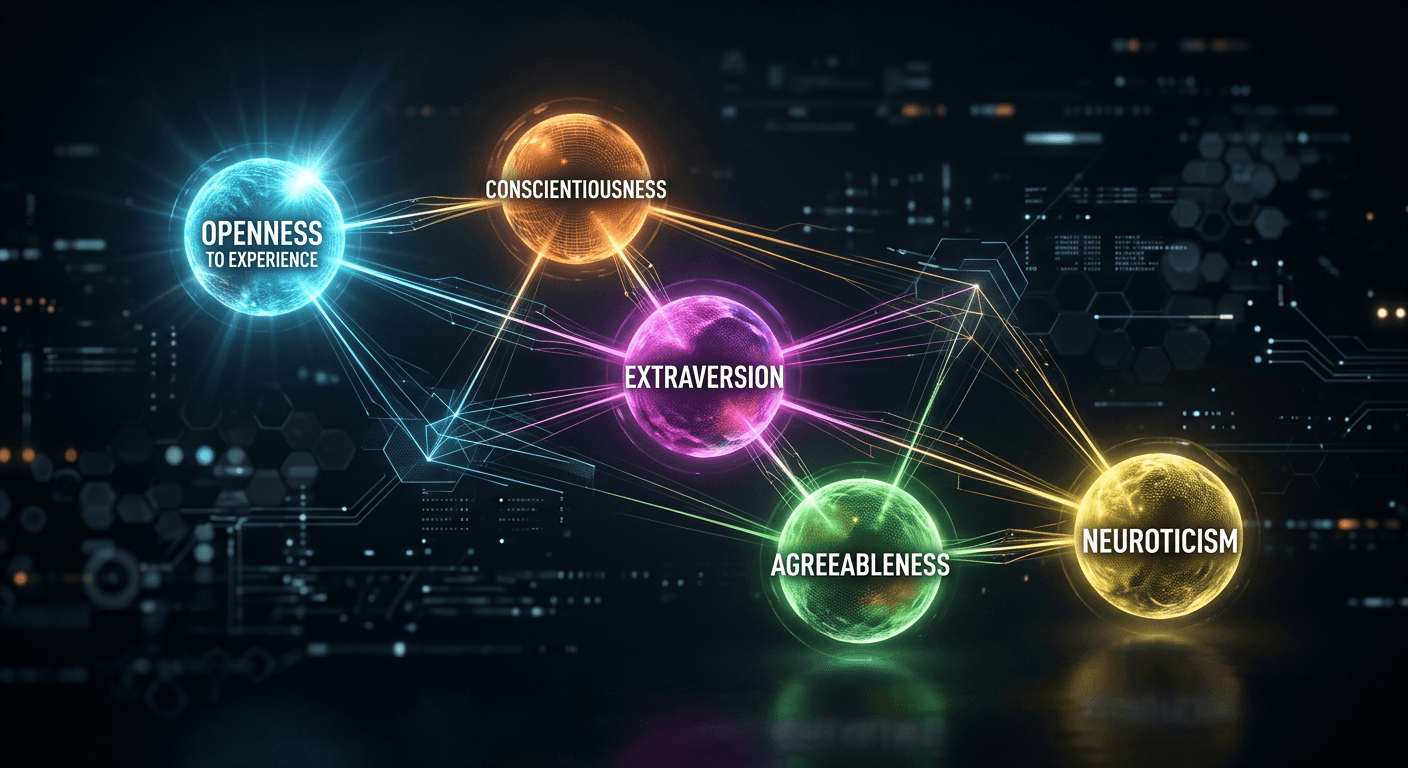
The IPIP personality test represents a sophisticated, open-access alternative to proprietary psychometric instruments, providing researchers and individuals with a robust framework to measure human behavior. By grounding its items in the Five-Factor Model, it bridges the gap between academic rigor and public accessibility, ensuring that personality assessment remains a transparent, data-driven endeavor.
Quick Summary
The IPIP personality test is a public-domain collection of personality items designed to measure the Big Five traits: Openness, Conscientiousness, Extraversion, Agreeableness, and Neuroticism. It provides a standardized, non-proprietary way to evaluate individual differences in temperament and behavior based on established psychometric standards.
- Utilizes the Five-Factor Model to categorize core personality dimensions.
- Operates under an open-source model to encourage psychological research.
- Offers various lengths, such as the IPIP-120 personality test, for different analytical needs.
- Provides high reliability and validity comparable to traditional, expensive clinical measures.
Table of Contents
- Foundations of the IPIP Personality Test
- The Big 5 Project Personality Test and Modern Assessment
- Comparing IPIP-120 and Comprehensive Alternatives
- Open Source Psychometrics Project Personality Test Mechanics
- Technical Validity vs. Neo PI Personality Test
- Real-World Insights and Practical Application
- Frequently Asked Questions
- Recommended Reads

Foundations of the IPIP Personality Test
The International Personality Item Pool (IPIP) was established to provide a standardized set of items that researchers could use to construct personality scales. Unlike proprietary tests that often lock their question sets behind commercial licenses, the IPIP is designed as a collaborative, public-domain resource. This architecture allows for the continuous refinement and validation of items by the scientific community at large.
At its core, the IPIP personality test maps onto the Five-Factor Model (FFM), which describes personality through five broad dimensions. By using this model, the IPIP facilitates cross-cultural studies and allows for a more granular understanding of how individuals differ in their social, emotional, and cognitive patterns. You can explore further information regarding psychometric best practices by visiting https://lifematika.com/test to see how assessment tools are structured.
The Big 5 Project Personality Test and Modern Assessment
"The Big 5 project personality test" often refers to various implementations of the Five-Factor Model that leverage IPIP items. These assessments focus on measuring Neuroticism (emotional stability), Extraversion (sociability), Openness (intellectual curiosity), Agreeableness (cooperativeness), and Conscientiousness (goal-directed behavior). These traits are not binary; rather, they exist on a continuum, and the IPIP framework excels at capturing the nuance of where a person falls on these scales.
Modern assessments utilizing these items are valued for their predictive power. Research has consistently shown that these five dimensions correlate with critical life outcomes, including career success, relationship stability, and physical health. By maintaining an open-source approach, the IPIP ensures that the underlying items remain available for meta-analysis, keeping the field of personality psychology transparent and reproducible.
Comparing IPIP-120 and Comprehensive Alternatives
The IPIP-120 personality test is a medium-length instrument that strikes an optimal balance between administrative brevity and measurement precision. While longer versions provide more granular data, the 120-item format is often sufficient for academic research, organizational surveys, and self-assessment contexts where respondent fatigue must be managed.
Choosing the right version of an IPIP-based test depends on the required depth of analysis. For basic personality profiling, shorter versions are often effective. However, when researchers require a deeper understanding of specific facets - such as the difference between gregariousness and assertiveness within the Extraversion domain - the IPIP-120 or longer variants are significantly more effective. For more insights on how to interpret test results in a developmental context, https://lifematika.com/blog provides helpful resources for personal growth.
Open Source Psychometrics Project Personality Test Mechanics
The open source psychometrics project personality test initiatives play a critical role in data democratization. These projects host, standardize, and analyze the IPIP items, providing users with instant feedback based on normative data. The mechanics are simple: a user responds to a series of statements using a Likert scale, and the aggregate data is scored against established benchmarks for each of the Big Five domains.
Because the items are transparent, they are less prone to the "black box" issues often associated with proprietary psychological assessments. The scoring algorithms are usually visible to the user, allowing for a better understanding of how traits are calculated. This transparency is a hallmark of the scientific method applied to personality measurement, ensuring that the results are based on robust psychometric principles rather than opaque, marketing-driven logic.
Technical Validity vs. Neo PI Personality Test
The NEO PI personality test is often considered the "gold standard" of commercial Big Five testing. However, the IPIP items were specifically developed to provide a free, valid alternative. Studies frequently show a high correlation between IPIP-based measures and the NEO PI, meaning that researchers can achieve similar levels of predictive validity without the financial costs of licensed software.
Pro Tip: When choosing between a commercial instrument and an IPIP-based measure, consider the intended use. Commercial tests often include sophisticated "faking" or "social desirability" scales that are valuable for high-stakes hiring decisions, whereas IPIP tests are generally superior for research, education, and personal self-discovery.
Real-World Insights and Practical Application
In practice, applying the IPIP personality test involves understanding that these traits are not static. While they demonstrate relative stability over an adult lifespan, they can be influenced by major life transitions and conscious behavioral changes. Users often find the greatest value in using the test to identify "growth areas" - such as increasing conscientiousness to improve productivity or developing agreeableness to improve team dynamics.
Furthermore, organizational behavior specialists use these tools to match personnel to roles that fit their temperament. By assessing whether a candidate prefers autonomy (Openness) versus structure (Conscientiousness), organizations can reduce turnover and increase employee satisfaction. The key is to view the test results as a starting point for dialogue rather than an immutable label of character. Always remember to visit https://lifematika.com/ to explore more regarding how data-driven insights influence performance.
Frequently Asked Questions
Is the IPIP personality test as accurate as private professional tests? Yes, the IPIP is widely considered to have high construct validity and reliability, with many studies showing strong correlations with established commercial tests.
What does the ipip-neo personality test actually measure? It measures the five major domains of human personality: Extraversion, Agreeableness, Conscientiousness, Emotional Stability (Neuroticism), and Intellect/Openness to Experience.
Can I use the IPIP for business or research purposes? Most IPIP items are in the public domain, which is why they are so popular for research. However, always check the specific license or terms associated with the specific test implementation you are using.
Why is the IPIP-120 personality test often recommended? It is favored for being long enough to capture nuanced sub-traits while being short enough to prevent respondent burnout, making it highly efficient for both users and researchers.