Introduction to Jungian Typology: Beyond Introversion and Extroversion
 Yaro Pry··5 min read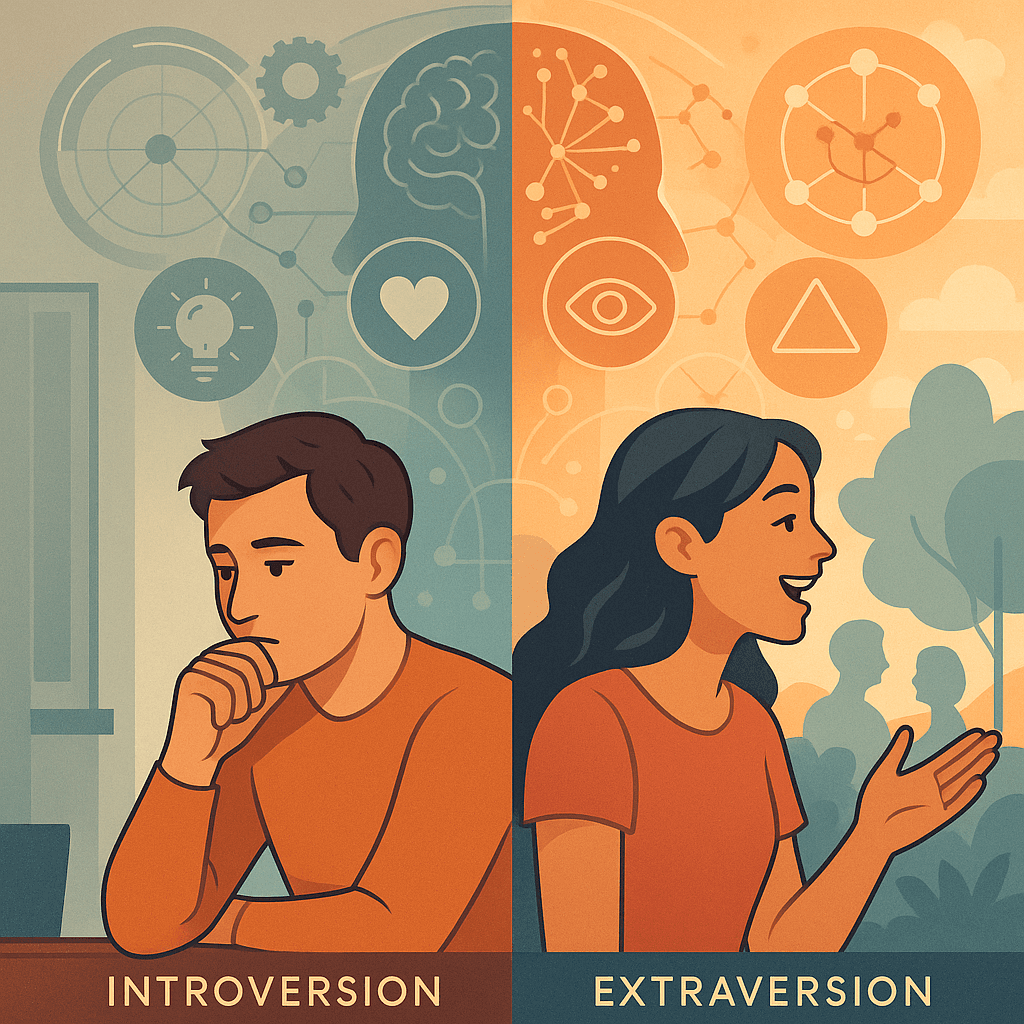
Most people think Jungian typology starts and ends with one question - are you an introvert or an extrovert? That’s the cocktail party version. The pop-psych headline. The simplified meme floating around social media.
But here’s the truth. That binary barely scratches the surface.
Jungian typology is less like a light switch and more like a control panel filled with dials, sliders, and hidden settings. It explores how people process information, make decisions, interact with the world, and recharge their mental batteries. It’s layered. Nuanced. Surprisingly practical.
And when applied correctly - through structured, research-backed assessments like lifematika.com - it becomes more than theory. It turns into a mirror. A strategic tool. Sometimes even a wake-up call.
What Jungian Typology Really Is
Carl Jung, the Swiss psychiatrist who introduced these ideas, wasn’t trying to label people into cute personality boxes. He wanted to understand the machinery of the mind. How perception works. Why two intelligent individuals can see the same situation and interpret it completely differently.
At its core, Jungian typology focuses on:
- Attitudes - Introversion and Extroversion
- Perceiving functions - Sensing and Intuition
- Judging functions - Thinking and Feeling
Sounds simple, right? Not quite.
Each person uses all of these functions, but in different hierarchies. Some operate like dominant drivers. Others sit in the passenger seat. A few hide in the trunk, only emerging under stress.
It’s Not About Shyness
Let’s clear something up. Introversion does not equal social anxiety. Extroversion does not equal charisma.
Introversion refers to energy direction - attention flows inward. Reflection fuels it. Solitude restores it.
Extroversion directs energy outward - interaction stimulates it. Engagement revitalizes it.
That’s it. No value judgment attached.
Honestly, reducing Jung’s framework to "shy versus outgoing" is like describing a smartphone as "something that makes calls." Technically true. Painfully incomplete.
The Four Core Functions Explained Simply
If someone wants to understand Jungian typology without drowning in theory, focusing on the four primary functions helps. Think of them as mental tools.
1. Sensing - The Realist
Sensing types trust tangible data. Facts. Details. What can be observed and measured.
- They notice specifics others miss
- They prefer proven methods
- They value practical application
To them, intuition-heavy speculation can feel like building castles in the clouds.
2. Intuition - The Pattern Seeker
Intuitive types search for meaning beneath the surface.
- They connect abstract dots
- They imagine future possibilities
- They think in metaphors and big pictures
Details matter, sure. But patterns matter more.
3. Thinking - The Analyst
Thinking prioritizes logic. Consistency. Objective principles.
- Decisions follow structured reasoning
- Fairness means applying the same standard to everyone
- Emotional context takes a back seat
Efficiency often wins.
4. Feeling - The Evaluator
Feeling focuses on values and impact.
- Harmony influences choices
- Personal and collective values guide judgment
- Empathy shapes outcomes
And no - it doesn’t mean being overly emotional. It means weighing human factors seriously.
Why Jungian Typology Still Matters Today
Here’s a hot take. Personality frameworks only matter if they improve real decisions.
Career paths. Relationships. Leadership style. Communication. Conflict resolution. Motivation.
Otherwise, they’re trivia.
Jungian typology remains relevant because it explains friction. Why one employee wants structured instructions while another thrives in ambiguity. Why one partner processes conflict through discussion while the other needs quiet reflection first.
It gives language to differences that otherwise feel personal.
Beyond Jung - The Power of Integrated Models
While Jung’s theory forms a strong foundation, modern psychology has expanded the landscape dramatically.
Platforms like lifematika.com don’t rely on a single framework. They integrate eight established methodologies into one streamlined 95-question assessment that takes about 15 minutes.
That includes:
- OCEAN - the Big Five personality traits
- Jungian typology
- DISC behavioral styles
- VIA character strengths
- Self-Determination Theory
- Schwartz’s values theory
- Emotional intelligence metrics
- Motivational level analysis
Instead of receiving a narrow label, users get a layered psychological profile. Strengths. Growth areas. Communication tendencies. Decision-making patterns. All delivered instantly, without registration, and fully confidential.
If someone cares about evidence-based personality analysis, that scientific integration matters.
Common Misunderstandings About Jungian Types
Let’s dismantle a few myths.
Myth 1 - Types Never Change
Personality has stable traits, yes. But development shifts function strength over time. Stress, environment, maturity - all influence expression.
That’s why retaking structured assessments after major life events can reveal meaningful evolution.
Myth 2 - One Type Is Better
No configuration holds moral superiority.
A strategic thinker is not better than an empathetic mediator. A visionary is not superior to a detail master. Context determines advantage.
Myth 3 - It’s Just Corporate Entertainment
Used poorly, yes, it becomes workplace icebreaker fluff.
Used properly - especially when combined with models like OCEAN and emotional intelligence metrics - it becomes a developmental roadmap.
Practical Applications of Jungian Typology
So how does this translate into daily life?
Career Direction
Understanding dominant cognitive functions helps identify environments that energize rather than drain.
- Detail-focused roles align with strong sensing preferences
- Strategic innovation suits intuitive strengths
- Policy analysis may favor thinking dominance
- Human-centered leadership fits feeling-oriented patterns
Alignment reduces burnout. It increases engagement.
Communication Improvement
Ever explained something clearly - only to be misunderstood? Function differences often explain that gap.
Sensing individuals may want step-by-step specifics. Intuitive partners might look for conceptual framing first.
Knowing this shifts frustration into adaptation.
Personal Growth
Jung believed growth involves integrating less-developed functions.
For example:
- A logic-heavy personality practicing emotional attunement
- A harmony-driven individual strengthening analytical boundaries
- An inward-focused thinker building outward engagement skills
Development expands flexibility.
The Science Behind Modern Personality Platforms
Here’s where many online quizzes fall apart - they oversimplify. No validation. No peer-reviewed grounding. Just catchy results.
Scientifically structured systems like lifematika.com operate differently.
- They draw from established psychological research
- They combine multiple theoretical lenses
- They provide detailed analytical reports instantly
- They maintain strict privacy standards
- They allow reassessment over time
That last point matters. Personality isn’t static like a passport number. Tracking shifts can reveal growth patterns after career transitions, relationship changes, or major life decisions.
And accessibility helps. Cross-platform functionality means the assessment works seamlessly across phone, tablet, or desktop.
Jungian Typology as a Self-Discovery Tool
If someone approaches typology as a rigid identity badge, it limits potential.
If approached as insight into cognitive preferences, it liberates.
It answers questions like:
- Why does certain work feel draining?
- Why do some conversations energize while others exhaust?
- Why do conflicts repeat in predictable patterns?
Have you ever noticed recurring friction in similar scenarios? That pattern often traces back to cognitive function clashes.
Awareness interrupts autopilot behavior. And interruption creates choice.
Final Thoughts - Beyond Labels
Jungian typology invites deeper reflection than most personality talk allows.
It suggests that differences are structural, not moral. That perception itself varies from mind to mind. That growth means expanding one’s internal toolkit rather than abandoning core traits.
And when combined with broader frameworks - like Big Five traits, value systems, emotional intelligence, and motivation analysis - it becomes a comprehensive self-discovery system rather than a trendy classification.
Understanding personality is not about boxing people in.
It’s about opening doors.
The door to better decisions. Better communication. Better alignment between who someone is and how they choose to live.
Introversion and extroversion are just the entrance hall. The rest of the house is far more interesting.