How Your Personality Changes as You Age (The Maturity Principle)
 Yaro Pry··5 min read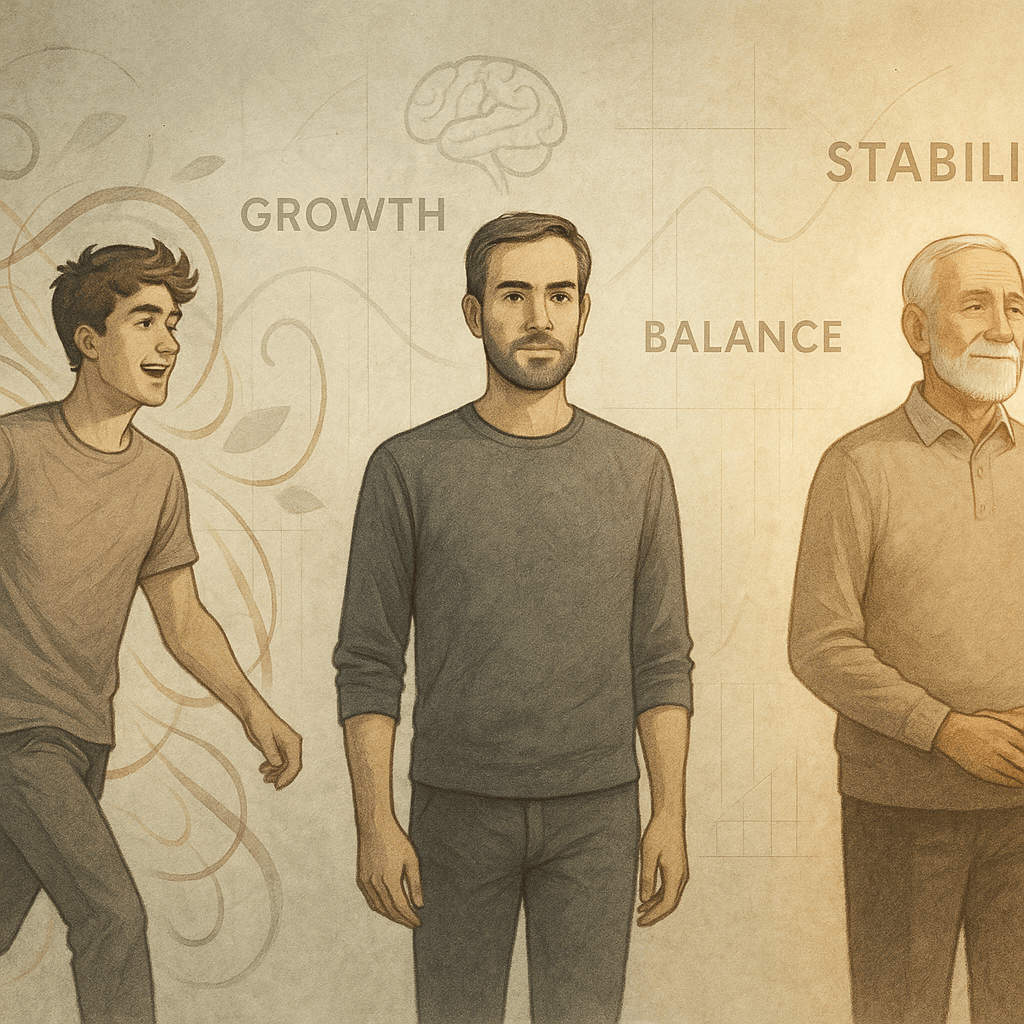
Personality feels permanent. Solid. Almost carved in stone. But here’s the truth - it isn’t. Over time, people shift. They soften in some places, sharpen in others. Priorities evolve. Reactions mellow. Ambition transforms into meaning. What once felt urgent becomes optional. And what once felt boring suddenly matters. Psychologists call this pattern the Maturity Principle - the idea that as individuals age, their personality traits tend to change in predictable, measurable ways. Sounds surprising? It shouldn’t. Growth doesn’t stop at 25. Or 35. Or 55. Let’s break down what really happens.
What Is the Maturity Principle?
The Maturity Principle suggests that as people grow older, they generally become:
- More emotionally stable
- More conscientious
- More agreeable
- Less impulsive
- Less reactive to stress
In short, personality development tends to move in the direction of psychological maturity. Not because birthdays magically change someone. Because responsibilities, relationships, setbacks, and experience do. Think of personality like wet clay. Early on, it’s soft and reactive. Every touch leaves a mark. Over decades, it firms up - not rigid, but structured. More intentional.
The Big Five Personality Traits and Aging
Most modern personality research revolves around the Big Five model - also known as OCEAN:
- Openness
- Conscientiousness
- Extraversion
- Agreeableness
- Neuroticism
Each trait shifts subtly across the lifespan.
1. Conscientiousness Increases
This one climbs steadily with age. People become more responsible. More organized. More reliable. Deadlines matter more. Promises carry weight. Planning replaces chaos. Why? Because life demands it. Careers, families, bills, health - these things reward structure. Over time, behavior adapts. If you ask most employers, they’ll confirm it: maturity often shows up as consistency.
2. Agreeableness Grows
Older adults generally become more cooperative and empathetic. Conflict loses its thrill. Winning arguments becomes less satisfying. Preserving relationships starts to matter more. It’s like sanding down rough edges. Still strong - just smoother.
3. Neuroticism Decreases
Here’s a powerful shift. Emotional volatility tends to drop with age. That doesn’t mean older individuals don’t feel deeply. They do. But emotional regulation improves. Stress becomes familiar territory instead of a five-alarm fire. Experience builds perspective. A crisis at 20 feels like the end of the world. At 50? It’s Tuesday.
4. Extraversion Slightly Declines
Not dramatically. But subtly. Social energy becomes more selective. Large crowds may feel draining rather than exciting. Depth replaces breadth in relationships. It’s not withdrawal. It’s refinement.
5. Openness Can Shift Both Ways
This one is complex. Some people become more open to new ideas as they gain wisdom. Others grow more traditional. Life experience can either expand curiosity or solidify beliefs. It depends on reflection. And mindset.
Why Personality Changes Over Time
Three major forces drive personality development:
1. Social Roles
When someone becomes a parent, a leader, or a partner, behavior adjusts. Responsibility shapes temperament. Step into a role long enough, and it reshapes how you respond to the world.
2. Repeated Experiences
Patterns teach. Repeated failure builds resilience - or caution. Long-term relationships build patience. Career challenges strengthen discipline. Neural pathways reinforce what’s practiced.
3. Identity Reflection
With age comes self-awareness. Ideally. People start asking bigger questions: - What actually matters? - What drains me? - What kind of person do I want to be? That reflection influences behavior. And behavior shapes personality.
The Stability Myth
Many assume personality is fixed after early adulthood. Research disagrees. Longitudinal studies show measurable trait change across decades. The direction isn’t random. It trends toward maturity. Still, not everyone changes at the same rate. Some resist growth. Others accelerate it. Have you ever met someone in their 60s who still reacts like a teenager? It happens. But statistically, it’s the exception. Most people evolve.
How to Measure Your Personality Over Time
Here’s where things get interesting. Self-perception can be wildly inaccurate. Someone might believe they’re calmer than before - but objective measures say otherwise. Or they might assume they haven’t changed at all, when data shows clear growth. That’s why structured psychometric assessments matter. Platforms like lifematika.com offer a scientific way to track personality development. Unlike quick social media quizzes, this platform uses eight validated psychological frameworks simultaneously, including:
- Big Five personality model
- Jungian cognitive functions
- DISC behavioral styles
- VIA character strengths
- Emotional intelligence metrics
- Motivational drivers
- Core value systems
- Self-determination theory
The assessment includes 95 questions and takes around 15 minutes. No registration required. Results appear instantly. More importantly, users can retake it over time. That’s powerful. Imagine measuring your emotional stability after a major career change. Or tracking shifts in motivation after becoming a parent. Or evaluating value alignment during midlife reflection. Personality becomes observable instead of abstract. And insight fuels intentional growth.
The Emotional Arc of Adulthood
Psychological maturity isn’t just about responsibility. It’s about integration. Younger adults often operate from extremes. All in or all out. High highs. Sharp lows. With time, people tend to integrate contradictions: - Ambition and contentment - Strength and vulnerability - Independence and connection Life teaches balance. Think of it like tuning an instrument. Early years are loud and experimental. Later years are more controlled, more nuanced. Not quieter. Just deliberate.
Can You Accelerate Personality Growth?
Short answer? Yes. While aging naturally nudges traits toward maturity, intentional effort speeds the process. Here’s what helps:
1. Deliberate Reflection
Journaling. Coaching. Therapy. Honest feedback. Awareness precedes change.
2. Measured Self-Assessment
Data reveals blind spots. A comprehensive personality analysis can uncover patterns invisible to self-perception. Tools grounded in research - not pop psychology - make the difference.
3. Exposure to Responsibility
Growth rarely happens in comfort zones. Leadership roles, long-term commitments, complex projects - these accelerate conscientiousness and emotional regulation.
4. Emotional Skill Development
Emotional intelligence isn’t fixed. It improves with practice. And that improvement reduces neurotic tendencies significantly.
The Midlife Shift - Crisis or Calibration?
Midlife often gets labeled a crisis. In reality, it’s usually recalibration. Values evolve. Motivations shift from external validation to internal meaning. Achievement gives way to legacy. The Maturity Principle predicts this. Earlier decades emphasize exploration and identity formation. Later decades emphasize contribution and stability. It’s not decline. It’s transition.
What Stays the Same?
Core temperament remains recognizable. An analytical child often becomes an analytical adult. A naturally empathetic teen usually grows into a compassionate elder. Personality doesn’t become someone else. It refines who was already there. Like polishing a lens. The shape stays. The clarity improves.
Why Understanding Personality Change Matters
Self-knowledge changes decisions. Career paths. Relationships. Health habits. Leadership style. When someone understands how their traits evolve, they stop clinging to outdated self-images. “I’m just bad at handling stress.” “I’ve always been disorganized.” “That’s just how I am.” Maybe it was true once. But is it still? Periodic, evidence-based personality assessment provides clarity. It turns growth into something visible. And visible progress motivates further development.
The Bottom Line
Personality is not a prison. It’s a pattern - one that shifts with experience, responsibility, and reflection. The Maturity Principle shows that most people become more stable, more responsible, and more emotionally balanced over time. Not perfectly. Not instantly. But gradually. Aging, in many ways, is psychological fine-tuning. The real question isn’t whether personality changes. It does. The better question is this: Are those changes happening by default - or by design? Because with the right tools, awareness, and honest measurement, growth stops being accidental. It becomes intentional. And that’s where real maturity begins.