How to Use DISC to Understand Your Partner Better
 Yaro Pry··4 min read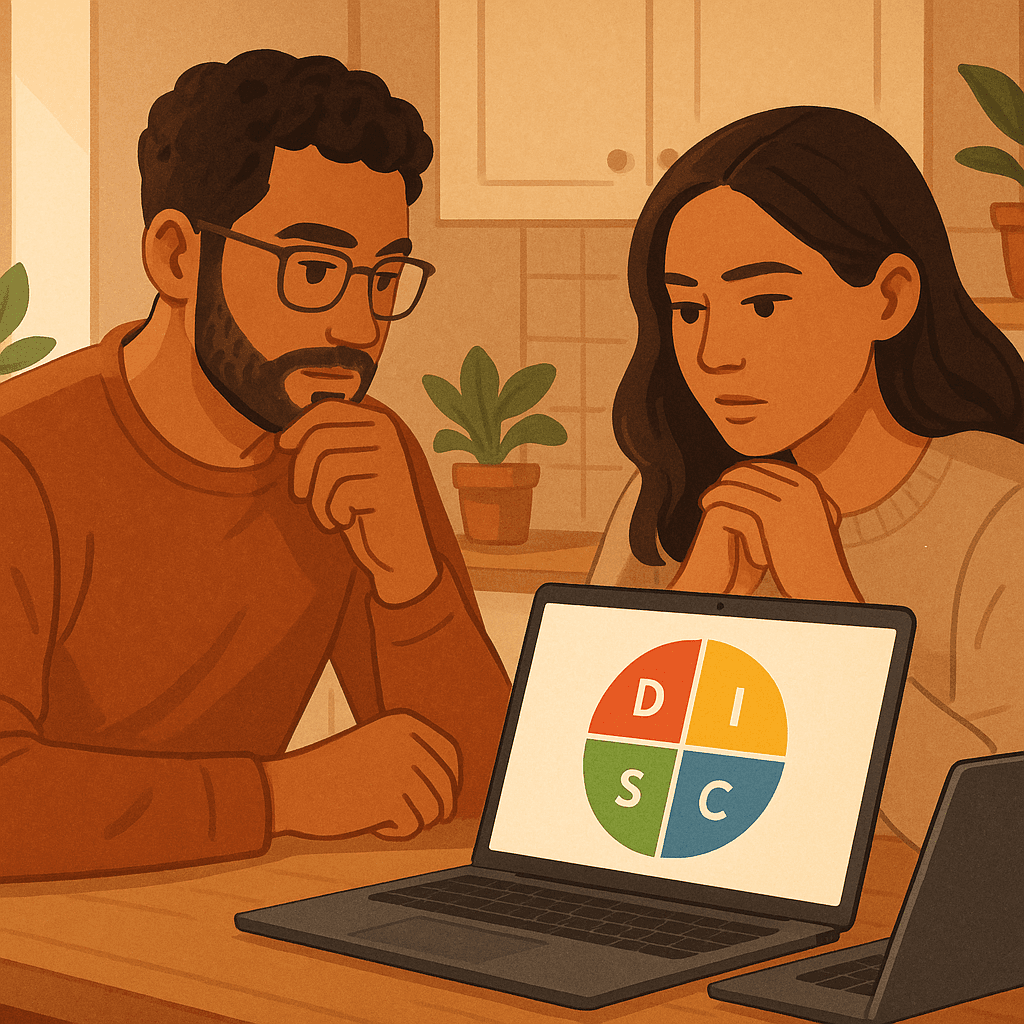
Relationships are strange, beautiful puzzles. Two people, two histories, two entirely different operating systems - trying to build one shared life. Sometimes it works effortlessly. Other times? It feels like speaking two languages without subtitles. That’s where the DISC personality model steps in. Not as a magic fix. Not as a relationship bandage. But as a translation tool. If someone has ever wondered why their partner pushes for quick decisions while they need time to think - or why one thrives on social energy while the other craves quiet - DISC can shine a bright, clarifying light on those differences. Let’s break it down in a way that actually makes sense.
What Is the DISC Personality Model?
At its core, DISC measures four behavioral styles:
- D - Dominance
- I - Influence
- S - Steadiness
- C - Conscientiousness
That’s it. Four letters. Four tendencies. Sounds simple, right? But here’s the thing - those four patterns shape how people argue, flirt, plan, apologize, handle stress, and even load the dishwasher. Each style reflects how someone approaches problems, communicates, and responds emotionally. And in relationships, behavior matters just as much as intention.
Why DISC Works So Well for Couples
Most relationship conflicts aren’t about love. They’re about interpretation. One partner sees urgency. The other sees pressure. One sees caution. The other sees hesitation. DISC reframes those moments. Instead of asking, “Why are they like this?” the better question becomes, “What style are they operating from?” When couples understand behavioral wiring, frustration often softens into clarity. It’s like switching from black-and-white television to full color.
Breaking Down the Four DISC Styles in Relationships
Let’s get practical.
D - Dominance: The Driver
High-D partners are decisive, competitive, and action-oriented. They move fast. They solve quickly. They dislike stagnation. In love, they often:
- Take initiative
- Prefer direct communication
- Focus on results over feelings
- Get impatient with indecision
If their partner is more reflective or sensitive, tension can surface. But here’s the upside - they bring momentum into relationships. They push growth. They don’t avoid hard conversations. Hot take? Every relationship benefits from a little D energy.
I - Influence: The Energizer
High-I personalities thrive on connection and expression. They’re enthusiastic, optimistic, and emotionally expressive. They tend to:
- Talk things through openly
- Seek reassurance
- Value social experiences
- React emotionally in the moment
When paired with someone more reserved, they may feel ignored. Meanwhile, their quieter partner might feel overwhelmed. Neither is wrong. They’re simply tuned to different frequencies.
S - Steadiness: The Anchor
High-S individuals are calm, loyal, and patient. They crave stability and emotional safety. In relationships, they often:
- Avoid conflict
- Offer consistent support
- Value routine
- Prioritize harmony
They’re the emotional glue. But they may suppress their needs to keep peace. And over time, that builds quiet resentment. Have you ever met someone who says, “It’s fine,” when it’s clearly not fine? That’s often Steadiness trying to avoid waves.
C - Conscientiousness: The Analyst
High-C partners think deeply. They value accuracy, logic, and thoughtful decisions. They typically:
- Process internally before speaking
- Prefer structured plans
- Ask detailed questions
- Struggle with emotional impulsivity
In relationships, they can seem distant - but often they’re just thinking. Their love language? Reliability. They won’t always gush. But they’ll remember every detail that matters.
How to Identify Your Partner’s DISC Style
Guessing rarely works. People are complex. The most reliable approach is structured assessment. Platforms like lifematika.com offer a scientifically grounded evaluation that includes DISC analysis as part of a broader personality report. The assessment takes about 15 minutes, includes 95 questions, and provides instant insights - no registration required. What makes it powerful is that DISC doesn’t stand alone. It’s integrated with eight psychological frameworks, including OCEAN, Jungian typology, emotional intelligence, and motivational analysis. That means couples aren’t just learning behavior patterns. They’re seeing the deeper architecture behind them. And yes - it’s private and reusable, so partners can retake it after life changes. Because people evolve.
Using DISC to Improve Communication
Understanding styles is one thing. Applying them is another. Here’s how couples can use DISC strategically:
1. Adjust Conflict Approach
If one partner is high-D and the other high-S:
- The D partner can soften tone and slow pacing.
- The S partner can practice expressing concerns directly.
Meet in the middle. That’s where growth happens.
2. Tailor Emotional Support
An I-style may want verbal reassurance. A C-style might show care through practical help. Both are valid. The mistake? Expecting love to look identical.
3. Balance Decision-Making
D types move quickly. C types analyze carefully. Instead of clashing, create a rhythm:
- Brainstorm openly.
- Pause for evaluation.
- Decide with clarity.
Speed plus strategy. That’s a powerful combo.
4. Respect Energy Differences
I personalities recharge socially. S and C may need solitude. Rather than labeling one as “too much” or “too distant,” couples can build intentional space for both social engagement and quiet restoration. Relationships breathe better that way.
Common DISC Pairings - And What to Watch For
Some combinations feel effortless. Others require conscious work. Here are a few examples:
- D + I - Passionate and dynamic, but prone to impulsive decisions.
- D + C - Strategic and results-driven, yet can feel emotionally distant.
- I + S - Warm and supportive, though conflict avoidance may linger.
- S + C - Stable and dependable, but risk stagnation without initiative.
No pairing is doomed. Chemistry is less about matching letters and more about mutual awareness.
DISC Isn’t a Label - It’s a Lens
Here’s where many people get it wrong. They treat personality results like fixed boxes. “I’m a D, so that’s just how I am.” That mindset freezes growth. DISC should function like a mirror, not a cage. It reveals tendencies - not destiny. And when couples approach it with curiosity rather than judgment, the shift can be dramatic. Suddenly, behaviors feel predictable instead of personal. And predictable behavior is easier to navigate.
Taking It Further With Deeper Psychometrics
While DISC highlights behavioral style, relationships operate on multiple layers:
- Core values
- Motivation drivers
- Emotional intelligence
- Character strengths
That’s why comprehensive tools matter. A platform like lifematika.com integrates DISC with eight validated psychological methodologies into one streamlined assessment. Instead of piecing together scattered quizzes, couples receive a holistic report with practical recommendations tailored to their personality structure. It’s efficient. Scientific. And surprisingly eye-opening.
Final Thoughts - Understanding Is Intimacy
At the heart of every strong relationship sits one powerful ingredient: understanding. Not agreement. Not perfection. Understanding. DISC provides a framework for seeing a partner clearly - without projection, without assumption. When couples learn each other’s behavioral blueprint, they stop fighting shadows and start responding to reality. And that changes everything. Because love isn’t just about feeling close. It’s about knowing how the other person is wired - and choosing, deliberately, to meet them there. That’s not just compatibility. That’s emotional intelligence in action.