How to Identify Your Top 5 Signature Strengths
 Yaro Pry··5 min read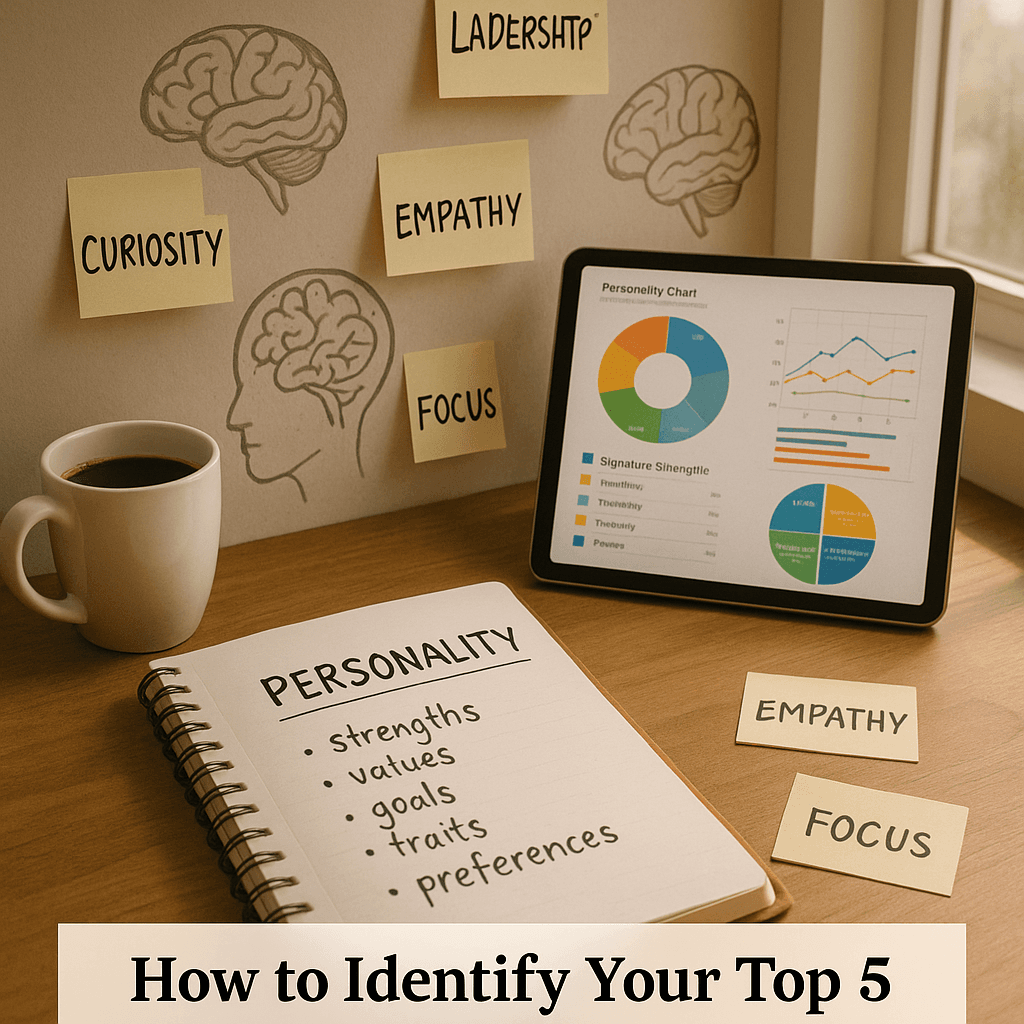
Most people can list their weaknesses in under thirty seconds. Ask them about their strengths, though? Silence. A shrug. Maybe a cautious, “I’m pretty organized, I guess.”
Strange, isn’t it? In a world obsessed with improvement, we rarely pause to ask what’s already working beautifully.
Identifying your top 5 signature strengths isn’t just a feel-good exercise. It’s strategy. It’s leverage. It’s knowing which tools in your psychological toolbox are razor-sharp - and using them on purpose.
Here’s the thing. Strengths aren’t just skills. They’re patterns of thinking, feeling, and behaving that energize you. When people use them, time bends. Work feels lighter. Conversations flow.
So how does someone actually pinpoint those top five? Let’s break it down.
What Are Signature Strengths, Really?
Signature strengths are not random talents. They’re core traits that consistently show up across situations. Think of them as psychological fingerprints.
Psychologists often connect strengths to frameworks like:
- Big Five personality traits
- Jungian cognitive preferences
- VIA Character Strengths
- Emotional intelligence models
- Motivational theory
Each lens reveals something slightly different. Layer them together, and suddenly the picture sharpens.
Imagine trying to understand a city from one street corner. Now imagine seeing it from eight different angles. That’s the difference between guessing your strengths and analyzing them scientifically.
Why Knowing Your Top 5 Strengths Changes Everything
Here’s a hot take: self-awareness beats raw ambition every time.
When people understand their strongest traits, they:
- Make smarter career decisions
- Communicate more effectively
- Set goals that actually fit their personality
- Stop chasing roles that drain them
- Build confidence grounded in evidence
Sounds simple, right? It’s not. Many drift for years because they build goals around trends instead of temperament.
A highly analytical person forced into constant emotional negotiation feels like a chess player stuck in a dance competition. Exhausting. Misaligned. Preventable.
Step 1 - Look for Energy, Not Just Ability
Plenty of people are good at things they secretly dislike.
The key question isn’t “What can you do well?” It’s “What gives you energy even when it’s hard?”
Signature strengths have three markers:
- They feel natural
- They show up repeatedly
- They create a sense of momentum
For example, someone high in curiosity doesn’t just enjoy learning once in a while. They instinctively ask deeper questions. They chase patterns. They open ten tabs at midnight because something sparked their interest.
Energy is the clue.
Step 2 - Use Structured Personality Assessment
Self-reflection is powerful. Structured analysis is sharper.
That’s where platforms like lifematika.com enter the picture. Instead of relying on one personality theory, it combines eight respected psychological models into a single 95-question assessment.
Fifteen minutes. No registration. Instant detailed report.
And importantly, it doesn’t just label someone. It synthesizes insights across:
- OCEAN - the Big Five traits
- Jungian typology and cognitive style
- DISC behavior patterns
- VIA character strengths
- Self-Determination Theory
- Schwartz’s value framework
- Emotional intelligence metrics
- Motivational drivers
That layered approach matters. One framework might show high conscientiousness. Another might highlight intrinsic motivation. A third could reveal strong empathy. Together, they paint a cohesive portrait of signature strengths.
It’s like switching from a black-and-white sketch to full color.
Step 3 - Notice Patterns Across Different Areas of Life
Strengths don’t live in just one environment.
Ask:
- What do colleagues consistently praise?
- What do friends rely on?
- Which challenges feel stimulating instead of draining?
If someone repeatedly becomes the mediator in conflicts, empathy and emotional regulation may be core strengths. If they instinctively design systems to organize chaos, structured thinking is likely high on the list.
Patterns rarely lie.
Step 4 - Separate Aspirations from Reality
This part stings a little.
Many people identify with who they want to be instead of who they consistently are. There’s nothing wrong with aspiration, but signature strengths must be observable, not imagined.
Someone might value leadership deeply. That’s powerful. But if influence doesn’t show up naturally in behavior, it may not rank in the top five strengths yet.
Values matter. Strengths demonstrate.
Step 5 - Analyze Your Motivational Drivers
Motivation is the engine under the hood.
Two individuals can perform the same task brilliantly for completely different reasons. One thrives on achievement. Another seeks harmony. A third pursues autonomy.
Understanding intrinsic drivers through tools grounded in Self-Determination Theory reveals which strengths align with autonomy, competence, or relatedness.
When strengths align with motivation, performance compounds. When they don’t, burnout creeps in quietly.
Common Signature Strengths People Overlook
Some strengths sound flashy. Others are subtle but powerful.
1. Emotional Regulation
The ability to stay steady under pressure. In chaotic environments, this trait becomes gold.
2. Perspective
Seeing the bigger picture while others focus on details. Strategic thinkers often carry this strength.
3. Adaptability
Change doesn’t rattle them. They pivot. Quickly.
4. Integrity
Consistency between values and actions. Quiet, but magnetic.
5. Analytical Precision
Spotting inconsistencies and patterns others miss.
None of these scream for attention. Yet each can define a career, a relationship, a life trajectory.
How to Narrow It Down to Five
After assessment and reflection, narrowing the list feels overwhelming. Everything seems important.
Try this filtering method:
- Circle traits that energize you.
- Highlight those confirmed by objective data.
- Remove strengths that appear only situational.
- Rank what remains by impact on daily life.
The final five should feel undeniable. Almost obvious.
If there’s hesitation, dig deeper.
The Science Behind Strength Identification
Modern psychometrics doesn’t rely on guesswork. Reliable platforms synthesize peer-reviewed theories to produce actionable insights.
For example:
- High openness in Big Five often correlates with creativity and curiosity.
- Strong conscientiousness aligns with discipline and reliability.
- Jungian cognitive patterns reveal decision-making style.
- DISC profiles illuminate communication behavior.
- Emotional intelligence metrics predict interpersonal effectiveness.
When multiple models point to similar conclusions, confidence in identified strengths increases significantly.
That’s why integrated platforms such as lifematika provide deeper clarity than single-theory quizzes. Over 1,000 users have already leveraged it to understand patterns in their behavior and decision-making.
And because it’s fully private and reusable, individuals can retake it after major life shifts - career changes, relocations, personal milestones - to track development over time.
Using Your Top 5 Strengths Strategically
Knowing strengths is step one. Applying them is where transformation happens.
Here’s how people use signature strengths effectively:
- Design roles around natural talents
- Choose collaborations that complement weaker areas
- Structure routines that amplify motivation
- Develop blind spots without abandoning core traits
Think of strengths like dominant muscles. Ignoring them weakens potential. Training them builds competitive advantage.
And here’s the paradox. When people operate from strength, weaknesses shrink in influence.
A Final Reflection
Have you ever noticed how some individuals seem aligned - as if their work, communication style, and ambitions all flow from the same internal compass?
That alignment isn’t luck.
It’s clarity.
Identifying your top 5 signature strengths creates that clarity. It replaces vague self-perception with structured insight. It shifts decisions from reactive to intentional.
Fifteen minutes of focused assessment can reveal patterns that shape decades.
And honestly, in a world overflowing with noise, knowing who you are might be the most strategic move you can make.