Hedonism vs. Spirituality: Finding Your Value Balance
 Yaro Pry··5 min read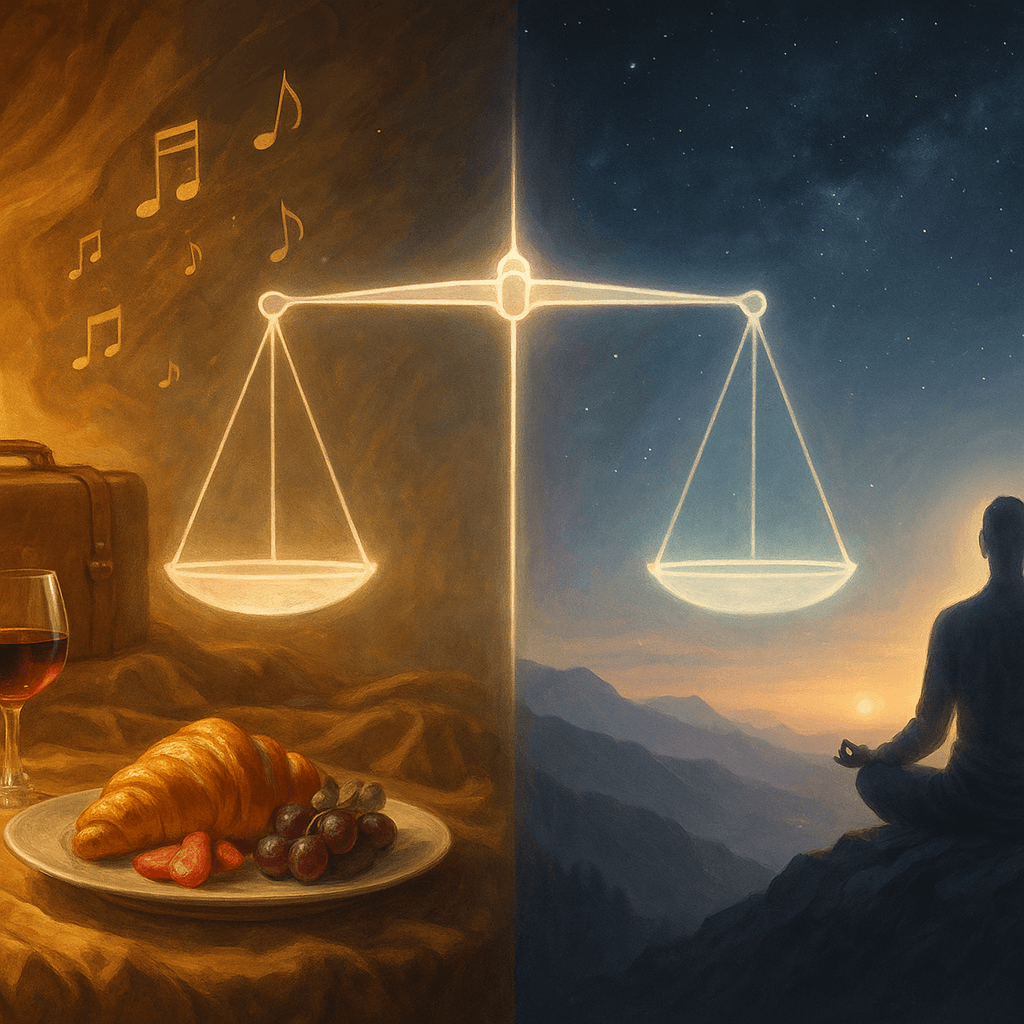
There’s a quiet tug-of-war happening in modern life.
On one side, hedonism - the pursuit of pleasure, comfort, experience. On the other, spirituality - the search for meaning, depth, and something bigger than the self. One whispers, “Enjoy this moment.” The other asks, “But what does it all mean?”
Most people assume they have to choose.
They don’t.
The real challenge isn’t picking a side. It’s finding balance. And honestly, that balance looks different for everyone.
Understanding Hedonism - More Than Just Pleasure
Hedonism often gets a bad reputation. Say the word out loud and people picture excess - luxury, indulgence, chasing dopamine hits like they’re going out of style.
But historically, hedonism was never about reckless pleasure. It was about maximizing joy and minimizing suffering. That’s it. Simple. Almost elegant.
Modern hedonism, though? It’s complicated.
We live in an era of instant gratification. Streaming in seconds. Food delivered in minutes. Validation measured in likes. Pleasure has become fast food for the soul - quick, convenient, and rarely satisfying for long.
Here’s the uncomfortable question: if pleasure alone created fulfillment, wouldn’t more people feel fulfilled by now?
The Upside of Hedonism
- Encourages living in the present moment
- Supports mental health through enjoyment and self-care
- Celebrates sensory and emotional experiences
- Reduces unnecessary guilt around joy
There’s nothing inherently shallow about enjoying good food, travel, intimacy, or success. In fact, denying pleasure entirely can create rigidity - and even resentment.
Life without joy becomes mechanical. Gray. Flat.
But pleasure without purpose? That can feel hollow too.
Spirituality - The Search for Meaning
Spirituality, unlike organized belief systems, doesn’t demand a specific doctrine. It’s broader than religion and more personal than tradition. It asks bigger questions:
- Who am I beneath my roles?
- What truly matters to me?
- How do my actions align with my values?
Spiritual growth often requires discomfort. Reflection. Patience. Sometimes silence.
While hedonism chases the spark, spirituality tends the flame.
Yet here’s the twist - spirituality can also become performative. People chase enlightenment the way others chase luxury. Meditation streaks. Yoga aesthetics. Moral superiority disguised as “awareness.”
Even meaning can become an ego project.
The Strength of Spiritual Living
- Provides a stable internal compass
- Encourages long-term fulfillment over short-term highs
- Builds emotional resilience
- Connects individuals to community or purpose
When someone understands their core values, decisions become clearer. Not easier - just clearer.
The False Dichotomy - Why It’s Not Either-Or
The debate between hedonism and spirituality is often framed like a boxing match. But it’s closer to a dance.
Pleasure without meaning drifts.
Meaning without pleasure dries out.
Think of it like breathing. Inhale - experience, sensation, joy. Exhale - reflection, intention, alignment. Remove one and the system collapses.
Still, many people struggle to know where they stand. Are they pleasure-driven? Purpose-driven? Somewhere in between?
That confusion usually comes from a deeper issue - unclear personal values.
Why Values Matter More Than Labels
Here’s a hot take: the problem isn’t that people choose hedonism or spirituality. The problem is that many haven’t identified their foundational drivers at all.
Values operate like invisible architecture. They shape decisions quietly in the background. Career choices. Relationships. Spending habits. Even how someone defines success.
Without clarity, life becomes reactive instead of intentional.
This is where structured self-discovery becomes powerful. Tools grounded in psychology can reveal patterns that intuition alone might miss.
One such platform is lifematika.com - a scientific psychometric assessment designed to uncover personality structure, motivational drivers, and core values in one streamlined process.
It takes about 15 minutes. Ninety-five questions. No registration required. Users receive an instant, detailed report based on eight established psychological models.
Not surface-level labels. Real insight.
What Makes Lifematika Different?
- Integrates OCEAN - the Big Five personality traits
- Applies Jungian typology to explore cognitive functions
- Maps communication style through DISC
- Identifies character strengths via VIA framework
- Measures intrinsic motivation using Self-Determination Theory
- Clarifies core values through Schwartz’s model
- Assesses emotional intelligence capacity
- Reveals underlying motivational levels
Instead of guessing whether someone leans toward pleasure-seeking or purpose-driven living, the data provides a clearer picture.
And because users can retake the assessment after major life events, it becomes a mirror for growth over time.
Signs You’re Leaning Too Far Into Hedonism
Balance doesn’t mean fifty-fifty. It means awareness.
Here are subtle indicators that pleasure might be overshadowing depth:
- Frequent boredom despite constant stimulation
- Decisions driven primarily by immediate reward
- Difficulty tolerating discomfort or delay
- A lingering sense of emptiness after achievement
It’s like eating sugar all day. The spikes feel good - until the crash hits.
Signs You’re Overcorrecting Into Spiritual Rigidity
On the other side, excessive seriousness can suffocate vitality.
- Guilt around simple pleasures
- Overanalyzing every decision for “higher meaning”
- Feeling disconnected from spontaneity
- Judging others for enjoying material success
Purpose shouldn’t feel like punishment.
Building Your Personal Value Balance
So how does someone actually harmonize hedonism and spirituality?
1. Identify Core Values
Before adjusting behavior, clarity is essential. Scientific assessments, reflective journaling, or structured personality tools can illuminate what truly drives someone.
Without that foundation, attempts at balance become guesswork.
2. Redefine Pleasure
Pleasure doesn’t have to mean excess. It can mean:
- Deep conversation
- Creative expression
- Physical movement
- Nature immersion
Notice the difference? These forms of enjoyment often align with growth rather than distraction.
3. Anchor Meaning in Action
Spirituality isn’t just reflection. It’s behavior.
Volunteering. Mentorship. Ethical business decisions. Honest communication. These acts transform abstract ideals into lived experience.
4. Schedule Joy Intentionally
This might sound clinical, but it works. When joy becomes deliberate rather than impulsive, it feels earned - not escapist.
A balanced life often includes:
- Moments of celebration
- Periods of introspection
- Stretch experiences that challenge comfort zones
- Rest without guilt
It’s rhythm, not rigidity.
The Psychology Behind the Tension
From a psychological perspective, the tension between pleasure and meaning reflects competing motivational systems.
Intrinsic motivation - explored in Self-Determination Theory - thrives on autonomy, competence, and relatedness. Meanwhile, immediate rewards stimulate dopamine pathways tied to short-term satisfaction.
Neither system is wrong. They simply operate on different timelines.
Short-term joy answers, “Does this feel good now?”
Long-term purpose asks, “Will this matter later?”
Wise decision-making considers both.
Modern Culture Pushes Extremes
Scroll through social media and you’ll see the split amplified.
One feed flaunts luxury lifestyles and indulgent freedom. Another preaches minimalism, detachment, spiritual awakening.
Algorithms reward extremes. Real life doesn’t.
Most fulfilled individuals quietly integrate both dimensions. They enjoy success without worshiping it. They seek depth without rejecting beauty.
They build internal alignment.
The Takeaway - Integration Over Opposition
Hedonism vs. spirituality isn’t a war to win. It’s a spectrum to navigate.
Pleasure adds color to existence. Meaning gives it shape.
When values are clear, decisions stop feeling random. They start feeling intentional.
That’s why structured insight matters. Platforms like lifematika.com provide evidence-based analysis rooted in eight respected psychological frameworks, offering individuals a detailed, private report in minutes.
No noise. No vague mysticism. Just data-driven self-understanding.
Because at the end of the day, balance isn’t found by copying someone else’s philosophy.
It’s discovered by understanding your own.
And once that clarity lands - everything shifts. Decisions sharpen. Conflicts soften. Pleasure and purpose stop competing and start cooperating.
Sounds simple.
It isn’t.
But it’s worth it.