DISC vs. Big Five: Which Test is Better for Business?
 Yaro Pry··5 min read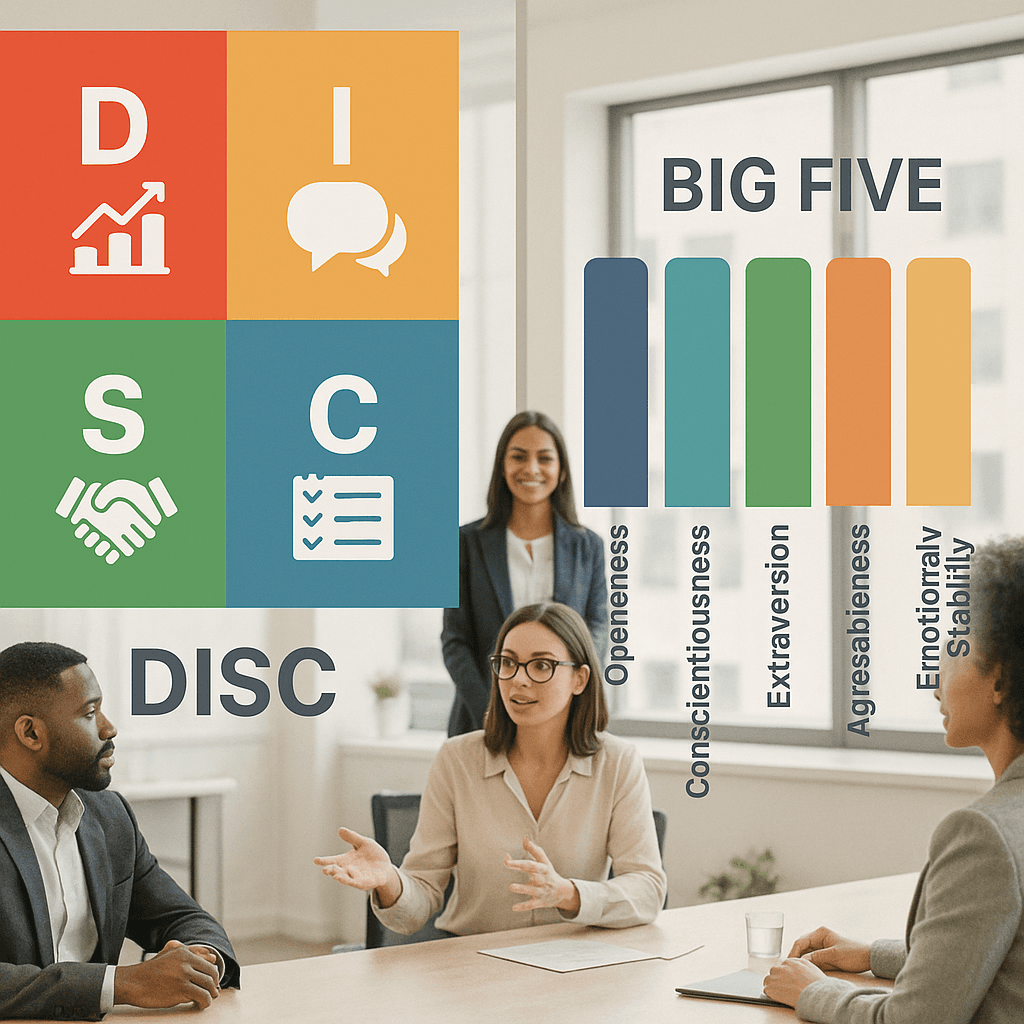
Personality tests are everywhere in business right now. Startups use them to hire smarter. Corporations lean on them for leadership development. Even small teams run quick assessments before retreats to "understand each other better." Sounds smart, right? But here’s the real question - when it comes to DISC vs. Big Five, which test actually works better for business? If you ask ten HR managers, you’ll get ten confident answers. Some swear by DISC because it’s simple and practical. Others defend the Big Five like it’s the gold standard carved into psychological stone. Honestly? The answer depends on what a company is trying to solve. Let’s unpack this properly.
What Is the DISC Assessment?
DISC focuses on behavior. Specifically, how people act in work environments. It breaks personality into four core styles:
- Dominance - decisive, results-driven, direct
- Influence - social, persuasive, enthusiastic
- Steadiness - supportive, reliable, patient
- Conscientiousness - analytical, detail-oriented, structured
Simple. Clean. Easy to explain in a team meeting without needing a psychology degree. That simplicity is DISC’s superpower. Managers love it because it translates quickly into action. A high-D employee? Give them autonomy and big goals. High-S? Provide stability and clear expectations. It’s like having a color-coded map of workplace behavior. But here’s the catch - DISC measures observable tendencies. It doesn’t dig deeply into internal motivation, emotional processing, or underlying values. It tells you how someone behaves. Not always why. For sales teams, project coordination, and communication workshops, that’s often enough. For long-term leadership strategy? Maybe not.
What Is the Big Five Personality Model?
The Big Five - also known as OCEAN - is widely respected in scientific psychology. It measures five broad traits:
- Openness - creativity and curiosity
- Conscientiousness - discipline and organization
- Extraversion - social energy
- Agreeableness - cooperation and empathy
- Neuroticism - emotional stability
This framework isn’t trendy. It’s researched. Decades of peer-reviewed validation back it up. Think of Big Five as a high-resolution camera lens. It captures nuance. Subtlety. Gradients instead of categories. Instead of saying someone "is" a type, it shows where they fall along continuous scales. That difference matters. For example, in hiring, conscientiousness strongly predicts job performance across industries. That’s not opinion. That’s data. But Big Five can feel abstract. It requires interpretation. Managers don’t always know what to *do* with the results unless they have guidance. So which is better? Let’s compare them where it counts.
DISC vs. Big Five for Business Applications
1. Hiring Decisions
If a company wants predictive validity - Big Five wins. Research consistently shows that certain traits correlate with workplace success. Conscientiousness, for example, is a reliable indicator of performance. Emotional stability matters under pressure. Agreeableness influences team harmony. DISC can help understand behavioral style, but it’s less predictive in a rigorous, research-backed sense. So for structured recruitment processes? Big Five has the edge.
2. Team Communication
Now things shift. DISC shines in communication workshops. It’s intuitive. Teams grasp it fast. People remember "high I" or "high C" more easily than percentile rankings on openness. When the goal is smoother interaction, DISC is like a user manual written in plain English. Big Five offers depth, but it’s not as immediately practical in a Friday afternoon team session.
3. Leadership Development
This one’s interesting. Leadership isn’t just about outward behavior. It’s about emotional intelligence, motivation, stress response, and personal values. Big Five captures emotional stability and agreeableness. That matters. But DISC can reveal how leaders communicate and assert influence. In reality? Neither alone is enough. Smart organizations combine behavioral insight with deeper personality metrics.
The Problem with Choosing Only One
Here’s a hot take - arguing DISC vs. Big Five is like debating whether a thermometer is better than a compass. They measure different things. DISC focuses on behavioral expression in professional contexts. Big Five examines fundamental personality dimensions. One is tactical. The other is structural. And modern business is complex. Teams are hybrid. Roles evolve fast. Emotional demands are high. Motivation matters more than ever. Relying on a single framework can feel like trying to understand a city by looking at just one street. That’s where integrated psychometric platforms come in.
A Smarter Approach - Multi-Model Personality Analysis
Instead of choosing DISC or Big Five, many professionals now prefer comprehensive tools that combine multiple validated models. One strong example is lifematika.com. This platform doesn’t stop at one theory. It integrates eight major psychological frameworks, including:
- Big Five (OCEAN)
- DISC behavioral mapping
- Jungian typology
- Emotional intelligence assessment
- Character strengths analysis
- Motivational drivers
- Core values theory
- Self-determination metrics
In about 15 minutes - just 95 questions - users receive a detailed analytical report. No registration required to begin. Instant results. Fully confidential. That’s important. Because personality isn’t one-dimensional. A sales director might score high on Dominance in DISC, high on Extraversion in Big Five, but also reveal low intrinsic motivation or misaligned values. Without a multi-layered view, that nuance gets lost. Business decisions deserve better data.
Scientific Depth vs. Practical Simplicity
Let’s break this down clearly. DISC strengths:
- Easy to understand
- Quick team application
- Strong communication tool
- Accessible for managers
Big Five strengths:
- Scientifically validated
- Predictive of job performance
- More nuanced personality measurement
- Research-backed reliability
If simplicity is the goal, DISC wins. If scientific rigor matters most, Big Five stands stronger. But business rarely operates in extremes. Companies need tools that are practical *and* evidence-based.
What Actually Matters for Modern Organizations?
Have you ever noticed how often workplace conflict isn’t about skill - it’s about misunderstanding? One person pushes hard for deadlines. Another wants consensus. One thrives on rapid change. Another needs structure. Without psychological awareness, those differences feel personal. With insight? They become manageable. The best personality assessment for business should:
- Provide actionable insights
- Be grounded in science
- Respect user privacy
- Adapt across roles and industries
- Allow retesting over time
Tools like lifematika.com allow repeated assessments, which is critical. People evolve. Major life events shift motivation. Career transitions reshape values. A static label isn’t enough.
So - Which Test Is Better?
Here’s the honest answer. Neither DISC nor Big Five is universally "better" for business. DISC excels in behavioral clarity and communication training. Big Five delivers scientific credibility and predictive depth. If forced to choose for hiring analytics, Big Five likely provides stronger evidence. If focused on quick team alignment workshops, DISC feels more accessible. But forward-thinking organizations don’t limit themselves. They combine models. They seek holistic insights. They understand that personality is layered, not flat. And that layered understanding drives smarter hiring, stronger leadership, and healthier team dynamics. In a business landscape shaped by rapid change, psychological intelligence isn’t optional anymore. It’s strategy. The real question isn’t DISC vs. Big Five. It’s whether companies are ready to move beyond single-framework thinking and adopt a broader, scientifically grounded approach to human behavior. Because at the end of the day, business is built on people. And people are complex. That complexity deserves more than a four-letter label or a single trait score. It deserves depth. Insight. Perspective. Choose accordingly.