Can You Change Your Personality? A Scientific Perspective
 Yaro Pry··4 min read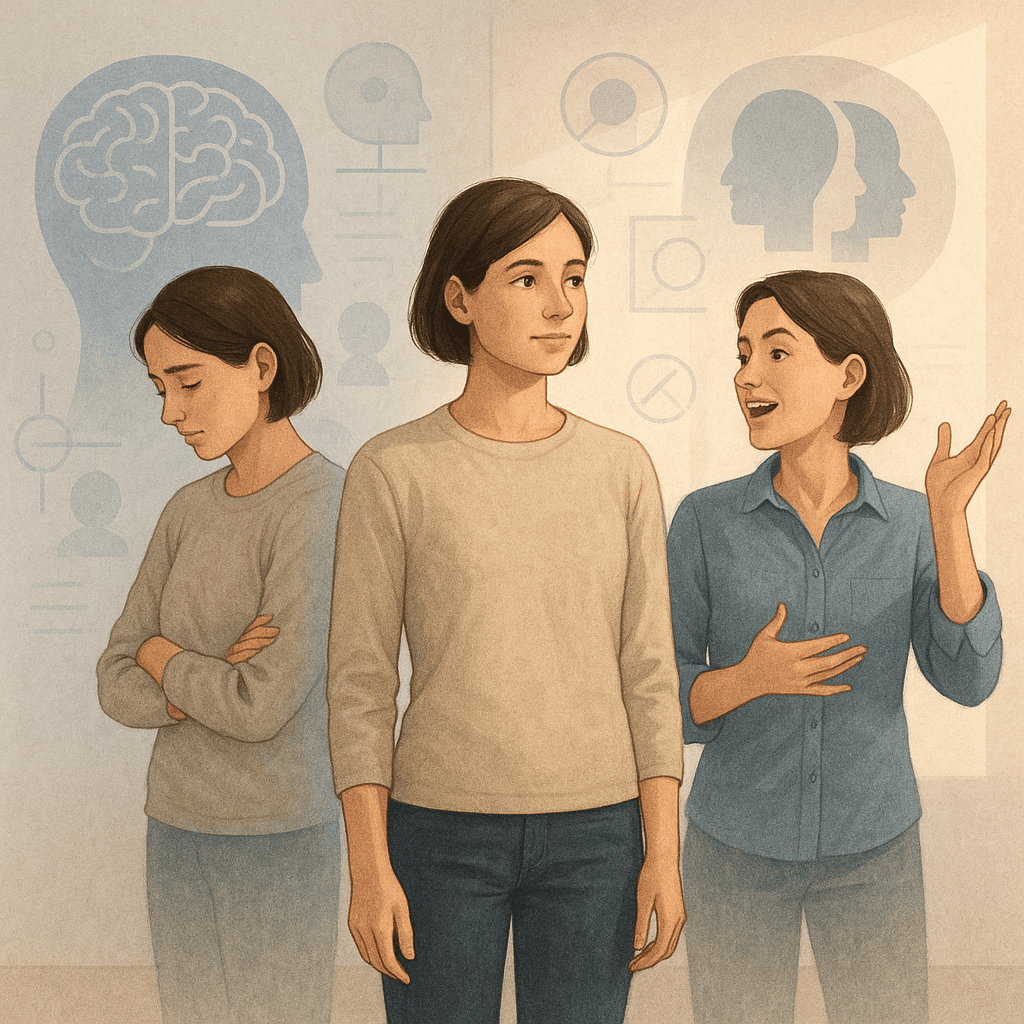
Can someone really change their personality - or is that just self-help wishful thinking?
It’s one of those questions that lingers in the background of late-night conversations and quiet self-reflection. People say, “That’s just how I am.” As if personality were carved in stone somewhere between childhood and high school graduation. Fixed. Final. Unmovable.
Here’s the hot take: personality is more like clay than granite. It has structure. It has limits. But it can be shaped.
Modern psychology doesn’t treat identity as a rigid label anymore. Instead, researchers view it as a dynamic system - influenced by biology, environment, choices, and even deliberate practice. Sounds hopeful, right? It is. But it’s also more nuanced than motivational quotes would suggest.
What Is Personality, Really?
Before diving into change, it helps to define what’s actually being discussed. Personality isn’t a mood. It isn’t a phase. And it definitely isn’t a horoscope description.
In scientific terms, personality refers to consistent patterns of thinking, feeling, and behaving. These patterns tend to show up across situations and over time. That’s why psychologists rely on structured frameworks like:
- OCEAN (Big Five) - openness, conscientiousness, extraversion, agreeableness, neuroticism
- Jungian typology - cognitive preferences and introversion versus extraversion
- DISC - communication and behavioral style
- VIA character strengths - personal virtues and strengths
These aren’t random categories. They’re grounded in decades of peer-reviewed research. And they reveal something important: personality has dimensions. Dimensions can shift.
The Stability Myth
For a long time, psychologists believed personality stabilized around age 30. Game over. End of story.
But longitudinal studies - the kind that track individuals for decades - tell a different tale. Traits such as conscientiousness often increase with age. Emotional stability tends to improve. Social dominance can rise through career development.
In other words, change already happens. Naturally. Gradually.
The real question becomes: can change be intentional?
Nature vs. Nurture - It’s Not a Battle
Genetics play a role. No one denies that. Twin studies consistently show moderate heritability across major traits. But genes are more like a blueprint than a finished building.
Environment adds layers. Culture shapes expression. Experiences reinforce certain responses.
Think of personality as a playlist. Biology loads the default tracks. Life keeps adding new songs. And yes, sometimes you skip the ones that no longer fit.
How Personality Change Actually Happens
Change rarely comes from declaring, “I’ll be different starting tomorrow.” That approach usually crashes by Wednesday.
Instead, research suggests three primary pathways:
1. Role Transitions
Major life shifts - starting a job, becoming a parent, moving countries - push individuals into new behavioral patterns. Responsibilities demand adaptation. Over time, repeated actions become internalized traits.
2. Intentional Effort
Studies show that when people set specific goals like “be more outgoing” or “reduce anxiety responses,” measurable shifts can occur within months. Small behavioral experiments accumulate. Confidence grows. Identity slowly adjusts.
3. Emotional Insight
Awareness changes everything. Understanding personal triggers, strengths, and blind spots creates leverage. Without insight, effort feels random. With clarity, growth becomes strategic.
The Science of Self-Discovery
This is where structured psychometric assessment enters the picture.
Guesswork isn’t growth. Accurate measurement matters.
Platforms like lifematika.com approach personality from a scientific perspective rather than a trendy one. Instead of offering a single simplistic label, the platform integrates eight established psychological models into one streamlined 95-question assessment.
It takes about 15 minutes. No registration. Free to start. Instant detailed report.
What makes this significant?
- Holistic analysis using multiple validated frameworks
- Identification of strengths and growth opportunities
- Insights into motivation, emotional intelligence, and values
- Full privacy protection
- Ability to retake the assessment over time to track development
More than 1,000 users have already explored their profiles. And that number continues to grow.
Why does this matter in the context of change? Because transformation without measurement is like navigating without a compass.
Can Introverts Become Extroverts?
This is the classic example.
Can someone who prefers solitude become the life of the party?
Short answer: they can develop extroverted behaviors. Long answer: core energy orientation may remain stable, but expression can expand dramatically.
An introverted individual might:
- Practice initiating conversations
- Join structured group activities
- Develop public speaking skills
Over time, social confidence increases. Anxiety decreases. Observers might even describe them as outgoing. Yet internally, they may still recharge best in quiet settings.
Change doesn’t erase identity. It refines it.
The Role of Motivation and Values
Here’s something often overlooked: personality change aligns best with core values.
If someone values achievement, becoming more disciplined feels meaningful. If connection matters most, improving empathy feels natural.
Schwartz’s Theory of Basic Values and Self-Determination Theory highlight this interplay between motivation and behavior. Sustainable growth occurs when new habits resonate with internal drivers.
Otherwise, change feels forced. And forced rarely lasts.
Emotional Intelligence - The Hidden Accelerator
Emotional intelligence deserves special attention.
The ability to recognize, understand, and regulate emotions acts like a steering wheel for personality development. When emotional reactions become conscious rather than automatic, choice expands.
Instead of reacting impulsively, individuals respond deliberately. That subtle shift compounds over years.
Imagine upgrading the operating system rather than just installing new apps.
Limits to Personality Change
Now for balance.
Not everything is infinitely flexible. Extreme trait shifts are rare. Someone scoring very low on agreeableness is unlikely to become universally accommodating overnight. Biological temperament sets boundaries.
But within those boundaries lies significant room for movement.
Think evolution, not reinvention.
Tracking Growth Over Time
One powerful strategy involves reassessment.
Taking a scientifically grounded personality test at different stages - after career changes, relationships, or major life events - provides objective feedback. Patterns emerge. Progress becomes visible.
This is why retake options matter. Platforms that allow repeated analysis offer a practical way to observe subtle shifts instead of relying on vague impressions.
Growth that can be measured tends to be sustained.
So… Can You Change Your Personality?
Yes - within realistic parameters.
Traits are stable but not frozen. Biology influences but does not dictate. Environment shapes but does not imprison. Intentional effort, emotional awareness, and aligned motivation can gradually reshape patterns of behavior.
It’s less like flipping a switch and more like adjusting a sail. Small corrections. Continuous feedback. Over time, the destination shifts.
The real breakthrough isn’t becoming someone else. It’s becoming a more intentional version of who you already are.
And that begins with clarity.
Understanding baseline traits through scientifically validated tools - such as comprehensive psychometric platforms - provides that clarity. From there, development stops feeling abstract and starts becoming actionable.
So when someone says, “People never change,” it might sound confident. Definitive. Almost wise.
But science tells a more interesting story.
Humans are patterns in motion.
The question isn’t whether change is possible. It’s whether it’s intentional.