123 Personality Tests: Quick Self-Assessments
 Yaro Pry··4 min read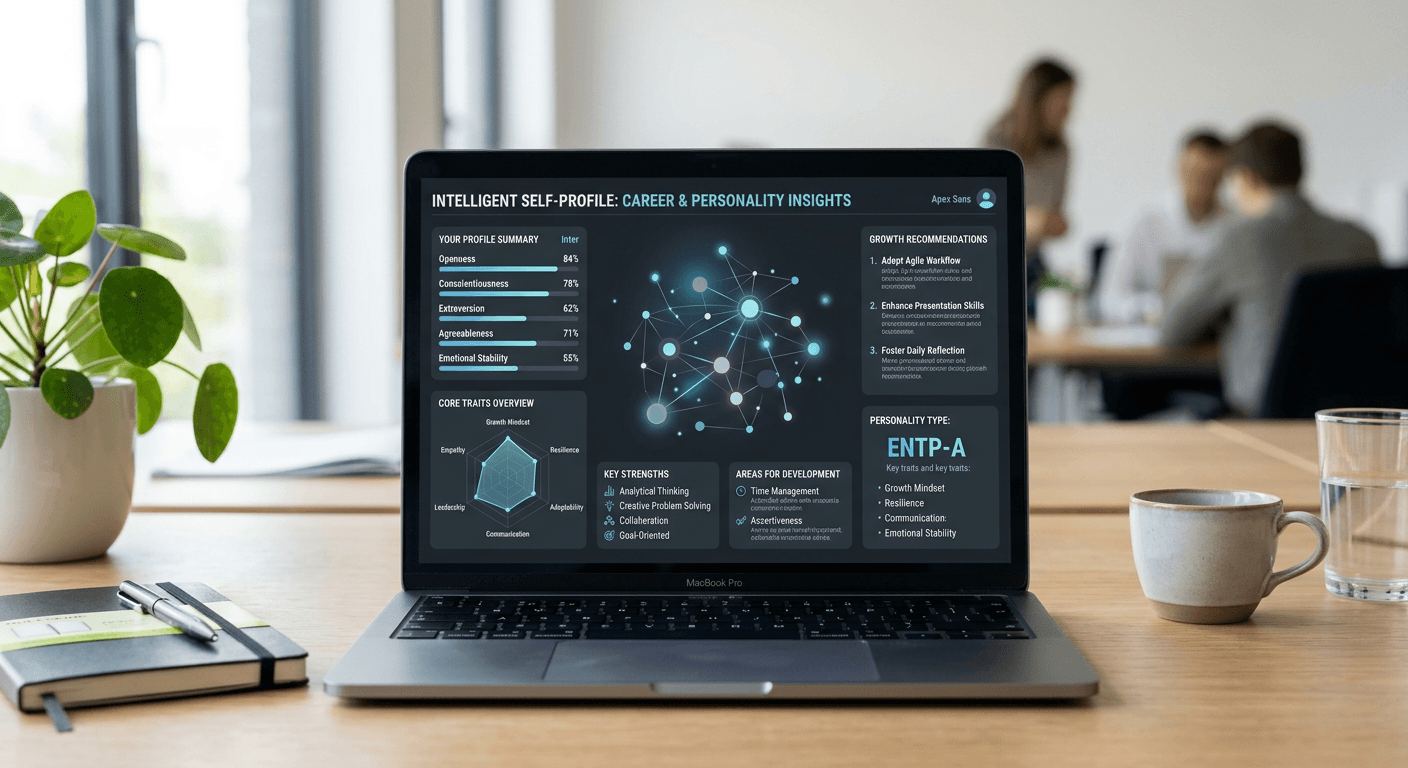
Understanding human behavior through psychometric tools has become a standard approach for both personal development and professional talent management. A 123 personality test serves as an accessible entry point for individuals seeking to decode their workplace tendencies, communication styles, and underlying psychological drivers. These assessments bridge the gap between complex academic psychology and practical, actionable self-awareness.
Quick Summary
123 personality tests are streamlined psychometric instruments designed to categorize individual traits, behaviors, and motivations. By utilizing structured questionnaires, these tools offer users a quantified view of their psychological profile, aiding in career path alignment, conflict resolution, and improved interpersonal dynamics through standardized trait measurement models.
- Categorizes traits using established psychological frameworks.
- Facilitates objective self-reflection and professional development.
- Provides immediate, data-driven feedback on behavioral tendencies.
- Supports team cohesion by highlighting diverse communication styles.
Table of Contents
- The 123test personality test approach
- The 123 DISC personality test framework
- FPTI personality test methodology
- Labs personality test applications
- All in one personality test integration
- How to interpret your results
- FAQ
- Recommended Reads

The 123test personality test approach
The 123test personality test ecosystem focuses on accessibility and rapid delivery. Rather than requiring lengthy, clinically supervised sessions, these tools employ algorithmic analysis to generate personality reports based on user inputs. This approach is designed for the modern user who requires meaningful insights into professional behavior without an exhaustive time commitment.
Why It Matters: By simplifying the user interface while maintaining robust psychometric validity, these tests make high-level psychological profiling available to a broader audience. Users benefit from identifying their primary personality markers—such as openness, conscientiousness, or extraversion—which directly impact their ability to perform in specific work environments or leadership roles.
The 123 DISC personality test framework
The DISC model is a cornerstone of behavioral science, and the 123 DISC personality test adaptation specifically isolates four primary traits: Dominance, Influence, Steadiness, and Conscientiousness. This model ignores "personality" in the sense of moral character and focuses exclusively on observable behavior and communication styles in a social or professional setting.
Why It Matters: Understanding your DISC profile is critical for navigating office dynamics. If you score high in Dominance, you likely value direct results; a high Steadiness score indicates a preference for consistency and team stability. Mastering this knowledge allows you to modify your communication style to better align with colleagues, fostering a culture of professional growth and reducing friction in collaborative projects.
FPTI personality test methodology
The FPTI (Five-Factor Personality Test Inventory) is rooted in the "Big Five" model, which is widely considered the gold standard in contemporary psychology. Unlike models that force users into binary categories, the FPTI measures traits on a spectrum, providing a more nuanced view of the user’s cognitive and emotional landscape.
Why It Matters: The FPTI provides a granular look at how you handle stress, process information, and engage with external stimuli. Because it evaluates traits like Neuroticism and Agreeableness across a sliding scale, it is particularly effective for deep-dive self-assessments. It helps users understand why they might excel in creative environments versus structured, analytical roles.
Labs personality test applications
Labs personality test configurations often refer to experimental, platform-based assessments that iterate on traditional trait theories. These modules frequently incorporate gamification or adaptive questioning, where the difficulty or relevance of the questions shifts based on the user's previous responses to ensure a more accurate "fit."
Why It Matters: These labs offer a more dynamic experience compared to static, linear surveys. By adapting the test path, the tool minimizes the risk of "guessing" patterns and forces the user to provide more authentic, instinctive answers. This leads to higher data integrity, which is essential for HR departments or career coaches using these results to make significant life or hiring decisions.
All in one personality test integration
An all in one personality test represents a centralized platform that combines multiple psychological frameworks into a single reporting suite. Users can often see their results from a DISC lens, a Big Five lens, and an emotional intelligence lens simultaneously, providing a holistic view of their psyche.
Why It Matters: Having multiple frameworks in one place allows for cross-validation of results. If an individual displays low agreeableness on one scale and high independence on another, they can gain a clearer understanding of how those two traits influence their career trajectory. This integration is a powerful starting point for self-improvement efforts.
How to interpret your results
Once you have completed an assessment, the raw data must be contextualized. Many users make the mistake of viewing their personality "scores" as fixed judgments; in reality, these scores are snapshots of your current preferences and habits. Expert interpretation involves looking for clusters—groupings of high scores that suggest a specific work style or leadership preference.
Why It Matters: Interpretation is where the true value lies. Knowing you have high "influence" is useless unless you understand how that plays out in team meetings, networking, or conflict management. Applying these insights to real-world scenarios—such as choosing a job that rewards your natural temperament—is what transforms a standard assessment into a meaningful developmental tool.
FAQ
Are 123 personality tests scientifically accurate? Yes, most reputable tests are based on established psychological models like the Big Five or DISC. However, they are intended for developmental use, not clinical diagnosis.
Can I prepare for these tests? While you can familiarize yourself with the question types, it is generally advised to answer as honestly as possible. The tests are designed to measure natural tendencies rather than skill-based abilities.
How often should I retake a personality test? Personality is relatively stable, but professional preferences can shift. Re-taking a test every 12 to 24 months is generally sufficient to track personal growth.